

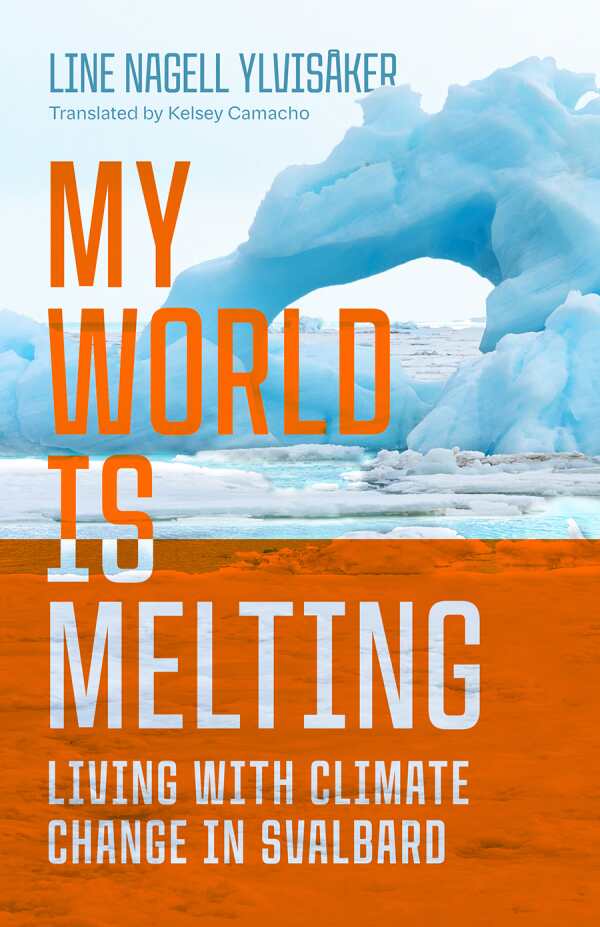
My World Is Melting
Living with Climate Change in Svalbard
My World Is Melting is Line Nagell Ylvisåker’s enlightening essay collection about climate change as observed on a small Norwegian island in the fastest-warming region on the planet.
Ylvisåker reports that temperatures near Svalbard have risen 3.8 degrees Celsius since 1898, melting glaciers, sea ice, and permafrost. The changing climate has had a dramatic impact on local communities too. In December 2015, a tragic avalanche crushed eleven homes and killed a man and a toddler in the city of Longyearbyen. In 2016, heavy rain caused multiple landslides and threatened a graveyard and other structures. In 2017, another avalanche destroyed two apartment buildings. The community responded by moving neighborhoods, erecting avalanche and mudslide barriers, and assessing buildings in the risk zones, including a church, school, and power plant. Ylvisåker contends that such events will become more catastrophic and widespread as temperatures continue rising around the world, though.
Ylvisåker, who’s lived in Longyearbyen for more than a decade, captures the appeal and challenges of living in this “harsh yet stunning” environment. With a population of just over 2,300, the island is known for its rugged beauty and iconic colorful, historic homes. Anecdotes about Ylvisåker’s husband—a firefighter and rescue worker—her family, and her neighbors add texture. Also included are intriguing discussions about reindeer, polar bears, and foxes, as well as the Svalbard Global Seed Vault.
The book’s explanations of climate science are clear and data driven, nodding to meteorologists and marine research vessels. Compelling depictions of the disruptions impacting human settlements, terrain, and wildlife underscore the urgency of addressing climate change while also acknowledging the complexity of finding solutions.
My World Is Melting is a fascinating essay collection about life on a remote Norwegian island and the startling impacts of climate change on Arctic communities and ecosystems.
Reviewed by
Kristen Rabe
Disclosure: This article is not an endorsement, but a review. The publisher of this book provided free copies of the book to have their book reviewed by a professional reviewer. No fee was paid by the publisher for this review. Foreword Reviews only recommends books that we love. Foreword Magazine, Inc. is disclosing this in accordance with the Federal Trade Commission’s 16 CFR, Part 255.


