

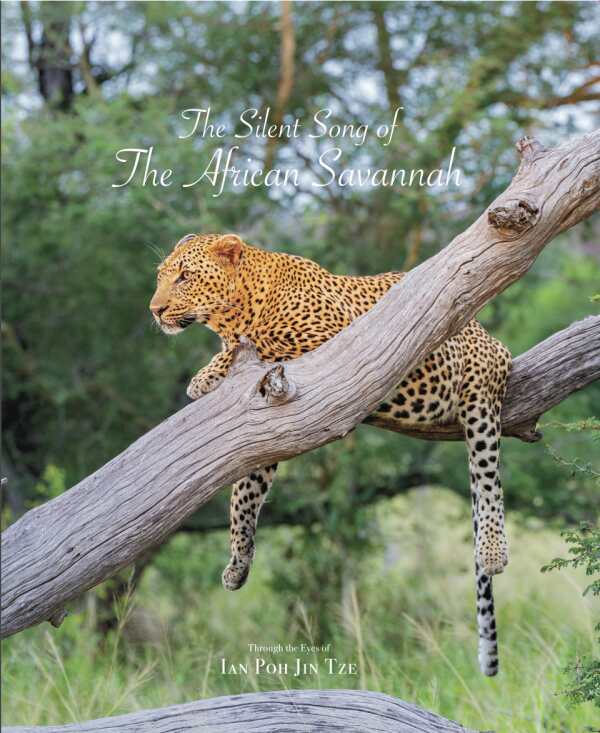
The Silent Song of the African Savannah
- 2025 INDIES Finalist
- Finalist, Photography (Adult Nonfiction)
The Silent Song of the African Savannah is a stunning coffee-table book that captures a variety of life in a singular place.
Ian Poh Jin Tze’s The Silent Song of the African Savannah is an intense and passionate photographic study of a vibrant savanna ecosystem and its inhabitants.
A visual story told in five parts, this collection moves through the African savanna, capturing its beauty and its brutality. It humanizes the animals it portrays as it depicts the savanna from every angle, including through a tasteful series of shots that show a pride of lions feeding on a giraffe carcass, brushing upon predation in its holistic treatment of its animal subjects.
The communities in which the animals live are honored alongside a philosophy that animals “may not speak the same language, but they share mutual respect for each other and the land.” Interspecies relationships are touched upon too: An oxpecker perches on an antelope, looking for parasites to feast upon. A wide array of young and baby animals are shown with their mothers, sometimes in the act of suckling and at other times following close behind their families. The essence of the cycle of the savannas is conveyed, affirming that although all creatures die, their lives can and should be full of love and vitality while they breathe.
The colors of each photograph are bold and pronounced, and the contrasts between the creatures photographed and the green shrubbery and grasses of the savanna highlight each subject well. The framing of each image renders the subject with such precision and detail that individual blades of grass can be seen. In a poignant image of a giraffe crossing a dirt road in the warm light of the golden hour, the intersection of nature and humanity reveals itself as fertile ground for further thought. Other photographs tend to show the subjects in their wild environments: a wildebeest standing among tall grasses; an elephant framed by towering trees and their verdant branches. The focus of each image is set in bold relief against varied backgrounds, the crispness of the details blurring and fading in the furthest distance.
The penultimate section includes monochrome images of similar subjects, which take on intensity in grayscale that is sometimes overshadowed by the majesty of the surroundings in the book’s earlier parts. The final chapter includes snapshots depicting various miscellany, from food and meals to dwellings against the grassland, as well as a sign that provides the context that the Cape of Good Hope is “the most south-western point of the African continent.” Stunning landscapes also populate this section, devoid of animals but far from lifeless, with grand waterfalls, majestic canyons carved from years of running rivers, and a wide variety of plant life populating each crevice and crack in the ancient rock.
Vibrant and full of vitality, The Silent Song of the African Savannah is a stunning photography collection that distills the essence of the timeless place it captures.
Reviewed by
Caitlin Cacciatore
Disclosure: This article is not an endorsement, but a review. The publisher of this book provided free copies of the book and paid a small fee to have their book reviewed by a professional reviewer. Foreword Reviews and Clarion Reviews make no guarantee that the publisher will receive a positive review. Foreword Magazine, Inc. is disclosing this in accordance with the Federal Trade Commission’s 16 CFR, Part 255.


