

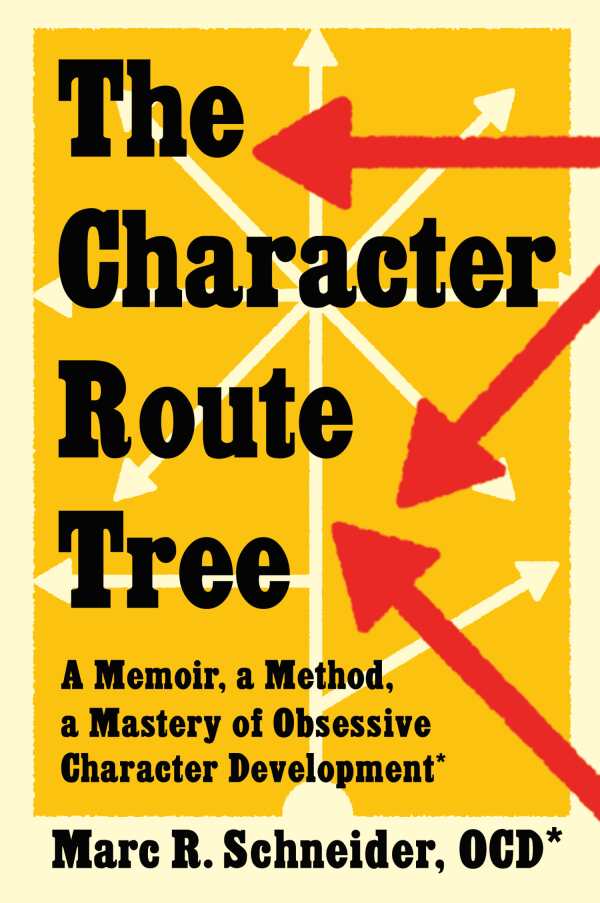
The Character Route Tree
A Memoir, a Method, a Mastery of Obsessive Character Development
Football’s organizing systems are transformed into metaphors for self-improvement in the ambitious self-help text The Character Route Tree.
Part self-help book, part memoir, Marc R. Schneider’s inventive book The Character Route Tree introduces a structured, football-infused philosophy for life.
Split into three parts—a lengthy, straightforward memoir section; a self-help and strategy-oriented section; and a workbook with hundreds of practical, football-style acronyms to put into practice ideas from the previous sections—this tome maps out an encompassing way of approaching life. Humorous recollections of growing up in New Jersey, including a raucous classroom screening of an antidrug film, Dead is Dead, combine with serious reflections on death, suicidal ideation, and the struggles attached to obsessive compulsive disorder in the book’s first portion, with the text in constant motion to reflect Schneider overthinking topics like grape soda. Indeed, this section mimics the endless repetition of his internal mantras. It becomes more refined in time with him learning to harness his compulsive thinking, recalling, for instance, how he followed up on his job prospects and earned his way onto college football coaching teams. These personal stories are distilled into a central tenet: that character can be formed through inner discipline, repetition, and the tenacious desire to improve.
The book’s immersion in the culture and vocabulary of football, whether describing film sessions, practices, or the techniques of routes and coverage, distinguish its self-help approach, which turns football’s system for organizing a pass into a metaphor for the different techniques and elements that can be used toward self-improvement. Each way of running for the ball is a lens for reconsidering familiar ideas like pausing to reassess a situation before acting or setting aside one’s biases to engage with outside ideas. This is mirrored in the prose, which is raw and unvarnished, covering topics as disparate as sex, bowel movements, fights, and the vicissitudes of depression with candor.
Still, the book’s sheer size and ambition to include everyday, sometimes scatological personal details, as of having diarrhea, emails that are copied verbatim into the text, and lengthy self-worth lists and moments of counting, bog it down quite a bit. This comprehensiveness also deprioritizes its central character-building framework. Moments of struggle that are recounted in the first part of the book are also not articulated within the book’s self-help framework, making the transition into the final two sections clumsy. Indeed, the text often feels like distinct books forced to share space rather than a combination of complementary sections. In addition, ideas are often repeated, hindering the book’s momentum and pacing even more.
An ambitious self-help guide, The Character Route Tree presents a singular vision for transforming one’s life through a football-inspired system.
Reviewed by
Willem Marx
Disclosure: This article is not an endorsement, but a review. The publisher of this book provided free copies of the book and paid a small fee to have their book reviewed by a professional reviewer. Foreword Reviews and Clarion Reviews make no guarantee that the publisher will receive a positive review. Foreword Magazine, Inc. is disclosing this in accordance with the Federal Trade Commission’s 16 CFR, Part 255.


