

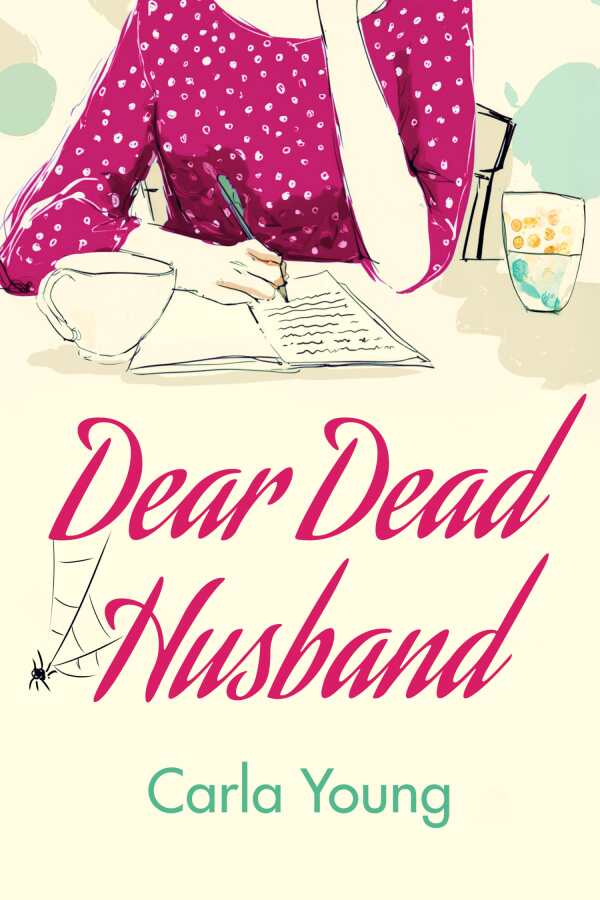
Dear Dead Husband
Dear Dead Husband is an emotive novel that stands out for its honest portrayal of loss.
In Carla Young’s elaborate novel Dear Dead Husband, a young woman grapples with the loss of her husband by writing letters.
After Eliza’s husband dies, it feels like everyone around her pities her. Her mother-in-law blackmails her to go to therapy; her nosy neighbors spy on her, bringing her casseroles and telling plentiful platitudes about her loss. A writer and barista, Eliza refuses to appreciate this “squad of busybody, casserole-making, know-it-alls.” All she wants is to be ignored.
When Eliza’s therapist asks her to write letters addressed to her husband, she begins to pour her rage and grief into words, opening her letters with “Dear Dead Husband.” What begins as a tedious exercise to get through therapy so her mother-in-law will transfer her cottage to Eliza soon turns into a cathartic exercise, allowing Eliza to process her grief.
Eliza is an engaging heroine, both perceptive and creative. She uses humor and sarcasm to deal with her emotions. Her exchanges with other characters, including a spider she befriends, Hilda, is full of jovial elements. The secondary characters are also developed with purpose and emotional depth, supporting Eliza’s growth without overshadowing her central voice. Eliza’s friends Caz and Eleanor and Eleanor’s handsome son David are interesting in their own rights, and their insights create a more rounded profile of Eliza. Eliza’s relationship with David in particular represents her willingness to move on with her life after her loss.
Split into two sections representing the periods before and after the death of Eliza’s husband, the novel does a masterful job of capturing the nuances of grieving a loved one. “I am mad at you for leaving me because I can’t imagine going on without you, but I know I have to and that’s worse. You made everything better,” Eliza writes in vulnerable terms, showing that grief can be as absurd as it is devastating, and that healing often emerges in unexpected, even absurd, ways.
Beyond its exploration of grief, the novel also reflects on autonomy and the pressures placed on those who mourn. Eliza’s resistance to social expectations adds a layer of critique, suggesting that healing is deeply personal and often at odds with what others perceive as care. The novel’s ability to blend sharp wit with profound sorrow makes it emotive and sympathetic, capturing the contradictions inherent in mourning. It stands out for its honest portrayal of loss.
Tragic and hilarious at the same time, Dear Dead Husband is a captivating novel in which a widow processes her husband’s death.
Reviewed by
Defne Tekin
Disclosure: This article is not an endorsement, but a review. The publisher of this book provided free copies of the book and paid a small fee to have their book reviewed by a professional reviewer. Foreword Reviews and Clarion Reviews make no guarantee that the publisher will receive a positive review. Foreword Magazine, Inc. is disclosing this in accordance with the Federal Trade Commission’s 16 CFR, Part 255.


