

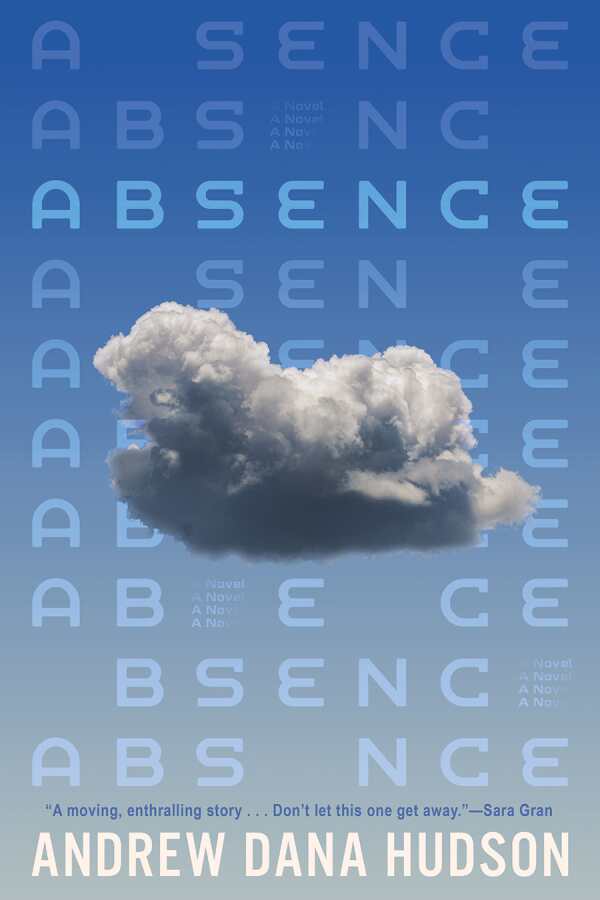
Absence
In Andrew Dana Hudson’s unsettling science fiction novel Absence, unexplained disappearances strain people’s faith in their institutions and reality.
In this future setting, the phenomenon of popping, or sudden vanishings marked by a sharp sound, breeds panic, violence, and spiritual fervor. Federal agents investigate incidents across the thinning nation. In rural Kansas, agents Shonda and Harvey are assigned to assess Gabriela, a woman who claims to have returned after multiple pops into other worlds. Meanwhile, new disappearances unsettle people, intensifying the scrutiny of Gabriela’s account.
The prose is direct, controlled, and driven by incremental revelations. Sparing descriptions lead to a subdued atmosphere. Indeed, as it is built on interviews, field reports, and debates, this speculative story has a bureaucratic texture. As such, popping is seen through the lens of civic responses to it and the communal strain it leaves. There are extended discussions of theory and the credibility of people’s accounts, diffusing the tension of the book’s middle stretch. Moments of confrontation punctuate Harvey’s investigation, though these spikes in conflict do not offset the story’s deliberate pace in full.
Harvey, whose family vanished, is a composed hero who hides his grief behind his analytical focus. At his opposite, Shonda is guarded, and their dynamic shifts as the novel progresses and their professional identities shift. Gabriela herself is a persistent question mark, forcing others to confront their private convictions about absence and return. Beyond this central trio, society is seen to adapt to the popping, adopting new surveillance methods and experiencing altered relationship norms. Guarded scenes of public life reinforce the scale of the losses without diverting attention from Harvey’s investigation.
A measured meditation on belief and institutional strains, this intriguing science fiction novel focuses on a government agent who searches for answers within a vanishing community.
Reviewed by
Brandon Pawlicki
Disclosure: This article is not an endorsement, but a review. The publisher of this book provided free copies of the book to have their book reviewed by a professional reviewer. No fee was paid by the publisher for this review. Foreword Reviews only recommends books that we love. Foreword Magazine, Inc. is disclosing this in accordance with the Federal Trade Commission’s 16 CFR, Part 255.


