
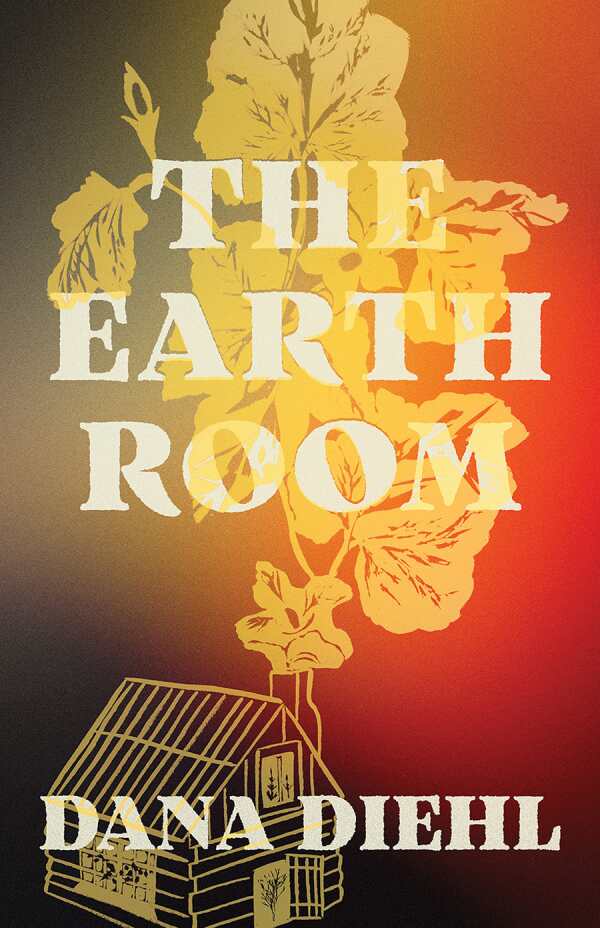
The Earth Room
In Dana Diehl’s haunting short story collection The Earth Room, spectral women are alienated from themselves and others.
In “Daughter,” a woman births a floating ghost daughter following a pregnancy where “Things happened without me making them happen.” Her fragile understanding of her newborn leads to discomforting introspection about her family’s unhappy marriages, her own marriage’s uncertainties, and the persistent, eerie unknowability of her offspring, of whom she asks, “‘Who are you?’” In “At the End of a Tunnel,” a woman who is unable to experience happily-ever-after with others finds solace in trekking through an abandoned mine, where an encounter with mysterious, quasi-fantastical knocking is frightening and exhilarating.
The title story is grimy and enriching. After the all-too-common disorientation and heartbreak of losing a “boyfriend I thought I’d marry,” a woman finds comfort in an intimate’s semi-magical room filled with peat moss and dirt. As her gravitation towards this earth room and what it buries intensifies, she excavates the memories, losses, and parts of herself that she suffocated.
Alongside their earthiness, the vignettes abound with startling, supernatural images. In “I Change You,” a man feels a toxic obsession with how his girlfriend can morph him into animals; he revels in being “a buck in the king’s wood, pursued by baying hounds … a buck on the tundra, wolves’ breath hot against my flank.” Characters’ encounters with other living creatures are bleak and unsettling: a guilty woman who rejects motherhood is haunted by the graphic visual of a piglet’s rotting corpse in “The Sanctuary.” The iciness in some relationships is literalized: on their honeymoon, a woman’s husband disappears without warning into the “‘unpredictable animal’” that is a dangerous glacier.
Frosty and blistering, The Earth Room’s short stories feature mothers, daughters, and lovers unearthing their pasts and thawing their presents.
Reviewed by
Isabella Zhou
Disclosure: This article is not an endorsement, but a review. The publisher of this book provided free copies of the book to have their book reviewed by a professional reviewer. No fee was paid by the publisher for this review. Foreword Reviews only recommends books that we love. Foreword Magazine, Inc. is disclosing this in accordance with the Federal Trade Commission’s 16 CFR, Part 255.


