
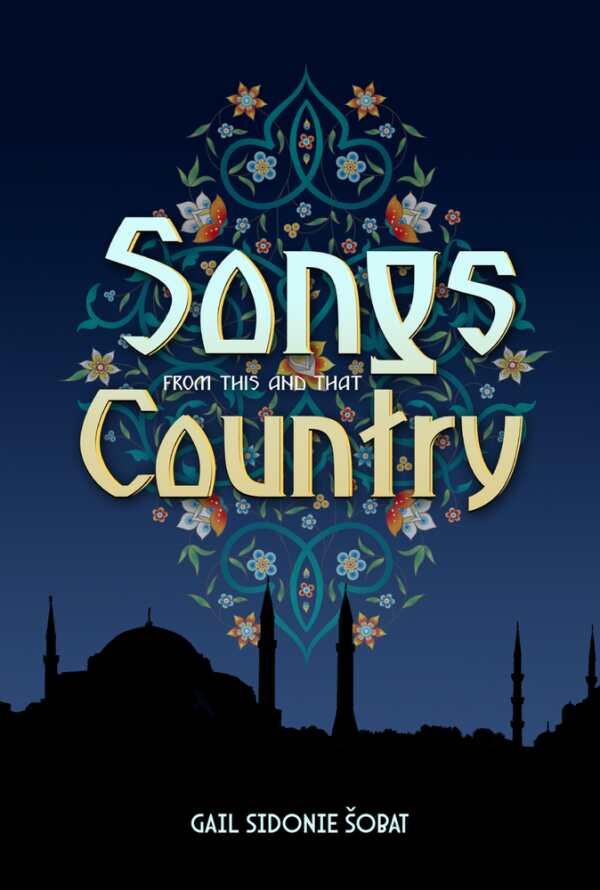
Songs From This and That Country
A tale of family discord set in the context of centuries of Serbian upheavals, Gail Sidonie Šobat’s magic-infused feminist novel Songs From This and That Country is wrenching yet hopeful.
In the fourteenth century, Sudbina, the bibliophilic daughter of a Serbian despot, dreams of “faraway lands, mythical beasts, [and] magical portents,” prompting a venture into the wilds. Endangered in the woods, she is rescued by Baba Roga, whose magic can free seeking girls; she also falls in love with a harpist with worrisome ties to her Ottoman enemies.
In the twentieth century, Dan, born in Canada but raised on his mother’s Serbian resentments, suppresses his wartime traumas, which explode into violence against his wife and child. As his willful daughter, Mirjam—born with a caul and the possible powers that implies–grows, the two war against each other. Indeed, Mirjam breaks with tradition to protect her mother, Luba, landing her father in jail and, subsequently, therapy.
Mirjam flees to Germany in pursuit of operatic greatness, and Luba’s life becomes “a chorus of sighs from missing.” In time, Luba allows herself a tentative new love story with a Kenyan immigrant, and Mirjam endures her own tragedy while trying to understand, and defy, her Serbian roots in the midst of Milošević’s ethnic cleansing campaigns.
In its shifts between centuries, the story exposes the persistent absurdities of xenophobic resentments. On a feast day, those around Sudbina
dance the Hora and drink too much chokeberry wine. They weep for Serbia, telling tales of Croatian betrayal.
Across town, the Croats dance the same dance, tell the same stories, but reverse the villains.
Such behaviors are passed down through the generations––noxious baubles that poison love and prevent growth. But alongside such curses, Mirjam inherits a sort of magic: somewhere in the Balkan memory, Baba Roga still offers varieties of freedom to the brave and defiant.
Songs from This and That Country is a shocking, thoughtful novel about the complexities of family love, cultural pride, and forgiveness.
Reviewed by
Michelle Anne Schingler
Disclosure: This article is not an endorsement, but a review. The publisher of this book provided free copies of the book to have their book reviewed by a professional reviewer. No fee was paid by the publisher for this review. Foreword Reviews only recommends books that we love. Foreword Magazine, Inc. is disclosing this in accordance with the Federal Trade Commission’s 16 CFR, Part 255.


