
Residual
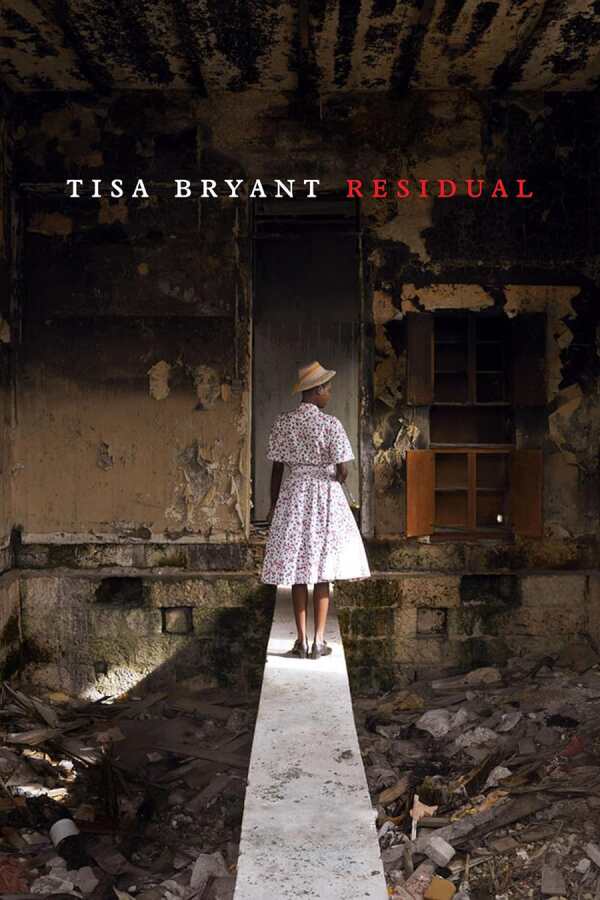
Queer Black author and professor Tisa Bryant’s bold, inventive autobiographical essay collection is about memory, grief, home, and belonging.
The hybrid essays combine poetry, stream-of-consciousness prose, scraps of dialogue, lists of favorite books, quotations, handwritten notes, and old family snapshots. Fragmentary passages capture the unresolved complexity of Bryant’s thoughts and feelings: “my penchant for narratives and story assembled from pieces, associations, pointillism and accretion…stems from the life-puzzle of my mother’s story.” Indeed, enigmatic, powerful essays address Bryant’s work to come to terms with her mother’s life and death. Bryant experienced complex, conflicting emotions of guilt, rage, sadness, and joy, admiring her mother’s strength, artistic sensibility, and stoic suffering while also feeling the sting of neglect: her mother was “an infernal insect…exhorting against the pest I always felt myself to be.”
Also described is Bryant’s work to gain acceptance and success as a professor, researcher, and writer. Her full-time faculty position was marred by discrimination, including a colleague’s racial slur. A five-month position at a writing program in Iowa had better results, as did a fascinating commission from the Huntington Library to research and write about Octavia E. Butler. Indeed, the book often cites Butler and other Black feminist writers who influenced Bryant.
The writing becomes more cohesive as Bryant contemplates “a hidden thing left for me to find.” Emotional and physical interiors often intertwine; the teal and chartreuse “space age” living room of Bryant’s childhood home reflects her mother’s elegant taste and determination, “rich with Black aliveness.” Elsewhere, the “fabled” stone house in Barbados that her great-grandfather built by hand encapsulates an exotic fantasy of the past.
Featuring experimental prose and poignant insights, this autobiographical essay collection concerns the messy processes of mourning and self-acceptance, as well as the challenges posed by racism.
Reviewed by
Kristen Rabe
Disclosure: This article is not an endorsement, but a review. The publisher of this book provided free copies of the book to have their book reviewed by a professional reviewer. No fee was paid by the publisher for this review. Foreword Reviews only recommends books that we love. Foreword Magazine, Inc. is disclosing this in accordance with the Federal Trade Commission’s 16 CFR, Part 255.


