

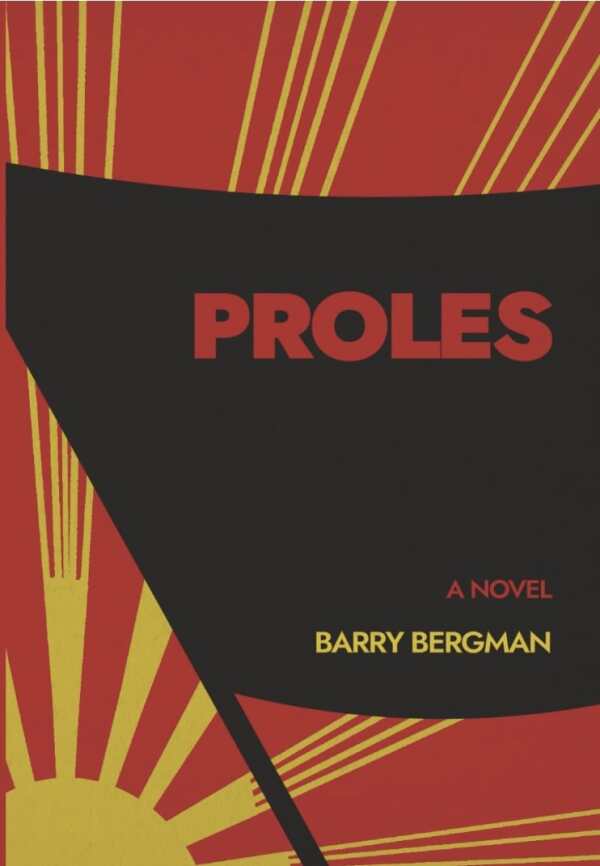
Proles
An aspiring activist has rude awakenings during his efforts to effect change in the revealing coming-of-age novel Proles.
In Barry Bergman’s thoughtful bildungsroman Proles, an idealistic young man endures industrial labor in 1970s Arizona.
Simon is adrift. His sense of identity has been forged more by films and communist manifestos than lived experiences. When a radical labor film encourages him to act in solidarity with hard-working men, he leaves New York for Arizona, finding work with a copper smelter. But the physical demands of the labor and fraught social hierarchies shatter his romantic ideals. Further, his failed attempts to connect with others, including within a burgeoning labor movement and with a kitten, undermine his sense of purpose.
Concerned more with Simon’s inner growth than with action, the plot follows his westward movements, his time at the smelter, the leasing of an apartment, and additional moves in a rote manner. As he accumulates experiences, his worldview expands, but it does so at a gradual pace. His work and daily routines are sometimes overemphasized.
Simon is an evasive hero. Though he is not college educated, he affects pretension; his insecurities are implied amid the resultant interpersonal awkwardness. For instance, he references steel-toed boots as shoes with metatarsal guards, and such diction tends to push him into conflicts, even toward unnecessary violence. Others speak with more efficiency, even using nods and grunts as affirmative responses.
The era is fleshed out with historical references, as to the Watergate scandal and other political issues and civil rights efforts. Simon’s views of these events are limiting, though; he has a sheltered perspective and fails to understand the importance of the period. Dramatic irony results. Elsewhere, references to popular culture appear, though their importance in the story remains ambiguous beyond reinforcing the period.
Though the plot hinges upon Simon’s desire to follow his “burning bush moment” and find his life’s calling, it remains unclear at the novel’s end whether he’s achieved a sense of fulfillment. He starts out isolated and misaligned, searching for anything to latch onto, and his uncomfortable experiences force him to grow up. This awakening, through which he shifts from wanting a new belief system to understanding that there are no easy answers, takes the story over.
In the historical novel Proles, a young man’s lofty ideals give way beneath the quiet force of lived experience.
Reviewed by
John M. Murray
Disclosure: This article is not an endorsement, but a review. The publisher of this book provided free copies of the book and paid a small fee to have their book reviewed by a professional reviewer. Foreword Reviews and Clarion Reviews make no guarantee that the publisher will receive a positive review. Foreword Magazine, Inc. is disclosing this in accordance with the Federal Trade Commission’s 16 CFR, Part 255.


