
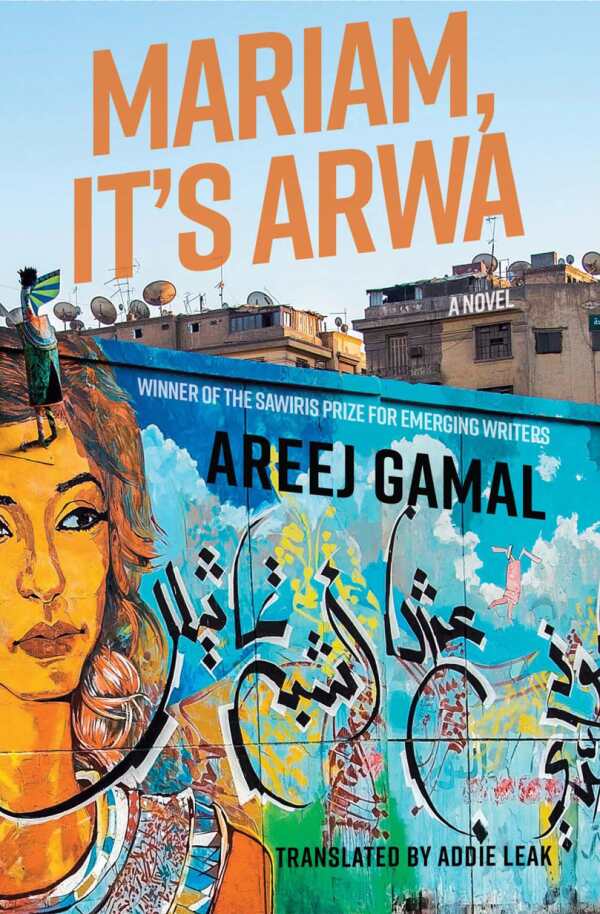
Mariam, It's Arwa
A fateful lesbian relationship grounds Mariam, It’s Arwa, Areej Gamal’s revealing historical novel about sustenance amid grief.
Sent to live with her grandmother in Egypt, Mariam aches to be known. Then, in a metro station amid street protests, she meets Arwa, an oboist who yearns to witness the revolution roiling around them. From this feverish chance encounter that sparked sexual attraction, Mariam launches into a propulsive tale. She recalls being her mother’s hoped-for miracle and covers her upbringing, made tense because of her father’s unfulfilled desire for a son. She includes her mother’s stories, remembering her advice that “storytelling [is] the only thing that could save you from heartache.”
Indeed, the novel is composed of linked mini-stories that tumble with associative girlhood images, as of a video game princess, an illicit film, and a box of dolls. Each probes family alienation or early eroticism. As Mariam’s hypervigilant sketches accumulate, her reasons for divulging them clarify: she’s exorcising her pain over her parents’ deaths.
The heightened prose leans into Mariam’s infatuation, imbuing Arwa’s musical talent and looks with meaning that’s disproportionate to their fleeting time together. In contrast, Arwa discloses her parents’ ill-fated romance and her own exile in Germany at a gradual rate. Throughout, haunting matrilineal burdens are somewhat relieved when they’re shared.
The cinematic, spliced narration elevates love-at-first-sight themes. Prolonged descriptions of lovemaking mix with the revolution’s brutality. The initial scene at the metro station replays from both women’s points-of-view as the political tumult plays against their own internal storms, culminating hope for a deeper relationship.
In the enigmatic historical novel Mariam, It’s Arwa, two women’s stories collide with rhapsodic urgency.
Reviewed by
Karen Rigby
Disclosure: This article is not an endorsement, but a review. The publisher of this book provided free copies of the book to have their book reviewed by a professional reviewer. No fee was paid by the publisher for this review. Foreword Reviews only recommends books that we love. Foreword Magazine, Inc. is disclosing this in accordance with the Federal Trade Commission’s 16 CFR, Part 255.


