
Generator
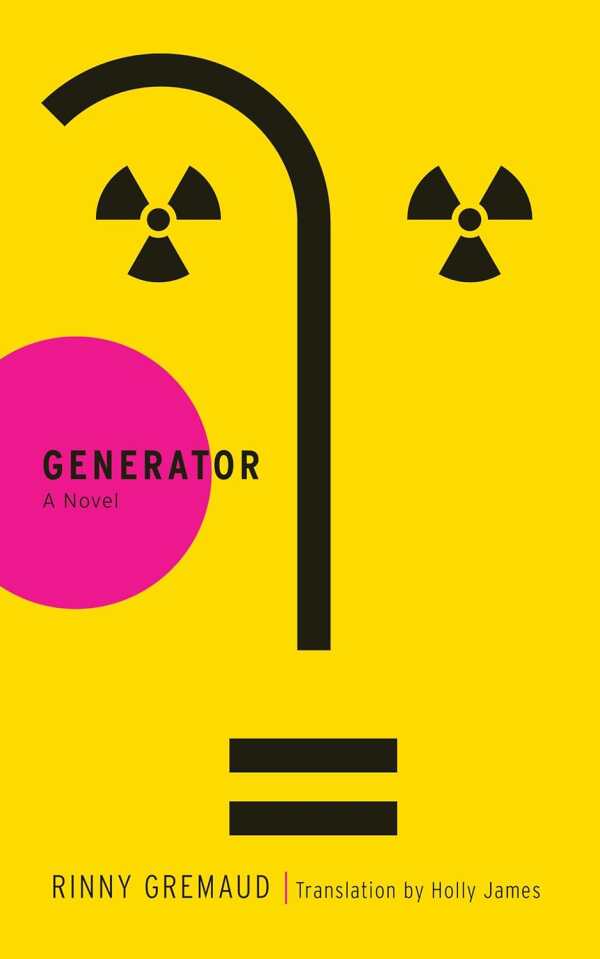
In Rinny Gremaud’s fascinating novella Generator, a woman investigates nuclear energy and her parentage.
“I was born in 1977 at a nuclear power plant in the south of South Korea,” the unnamed narrator opens. She and her mother moved to Switzerland with her stepfather; in 2017, news of Korea’s plans to decommission the Kori 1 reactor prompts her to search for her birth father, a Welsh engineer on the project. As a way of “walking my hypotheses,” she travels to Wales, Taiwan (where he had a wife and family), Korea, and Michigan, her father’s last known abode. In parallel, she researches the history of nuclear power.
Although the heroine’s life story mirrors Gremaud’s, the creative outweighs the autobiographical here. Direct address to her father, who never replied to her letter, makes him responsible: “since I have no choice, I’ll mix the facts with the water of my imagination.” Later, she acknowledges the biographical resources at her disposal, but opts to proceed by intuition instead: “I could have asked my mother questions, but I prefer to make it all up.” By riffing on possible definitions of “generation,” the text comments on creation and legacy.
The style is lyrical and meditative, and the tone balances determination and detachment. Scientific details arise in segments on nuclear energy and disasters caused by human error. Like a travelogue, the book incorporates shrewd observations on places visited too: On the closing road trip, American suburbia is called “a soulless hinterland.” The narrator’s environmentalist conscience also exposes the shadow side of economic growth. The blend of genres and modes of commentary is seamless, and the narrator comes across as both introspective and authoritative.
Generator is an enthralling, genre-bending novella that bridges the past and future, the personal and global, in its dual mission to understand nuclear power and an unknown progenitor.
Reviewed by
Rebecca Foster
Disclosure: This article is not an endorsement, but a review. The publisher of this book provided free copies of the book to have their book reviewed by a professional reviewer. No fee was paid by the publisher for this review. Foreword Reviews only recommends books that we love. Foreword Magazine, Inc. is disclosing this in accordance with the Federal Trade Commission’s 16 CFR, Part 255.


