
Beatrice the Sixteenth
Radium Age Series
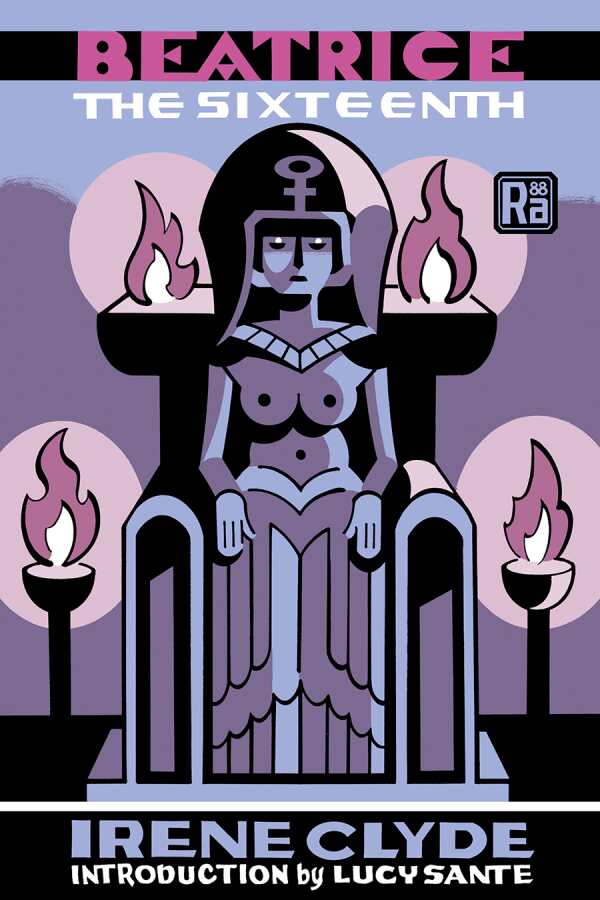
In Irene Clyde’s classic science fiction novel Beatrice the Sixteenth, an explorer experiences a head injury and wakes in a different world.
After a camel kick to the head, Mary is picked up by traveling merchants. Though she’s skilled in linguistics and in familiar-looking desert surroundings, it takes her several days to develop a rudimentary understanding of their language. They bring her to Alzôna, the capital city of Armeria, for medical assistance. There, Mary is taken in by Ilex. While Mary learns the country, which appears on no map she knows, the Armerians observe her for signs of espionage, as Armeria is on the brink of war.
Mary, being an academic, records information about the architecture, commerce, and government structure of Armeria in great detail. She presents her findings within a catalog of the locations she visits, including the palace and city center, though her commitment to providing full descriptions slows the book’s pace. Still, her sociopolitical understanding of Armeria grows as the book continues. She also develops a chaste romance with Ilex. However, where conversations are present to investigate the stark differences between European and Armerian culture, there is no space to explore Mary’s interiority.
The introduction by Lucy Sante places the book in context of its Edwardian author, who would now be considered a transwoman, and her advocacy for the “abolition of gender binaries” and “celebration of female-female intimacy.” The book explores a society that upholds women-dominated communities as utopian, eschewing binaries, and having no men.
Featuring poetic language and a large cast of classically named characters, the revived science fiction novel Beatrice the Sixteenth features a utopian society and a parallel universe.
Reviewed by
Dontaná McPherson-Joseph
Disclosure: This article is not an endorsement, but a review. The publisher of this book provided free copies of the book to have their book reviewed by a professional reviewer. No fee was paid by the publisher for this review. Foreword Reviews only recommends books that we love. Foreword Magazine, Inc. is disclosing this in accordance with the Federal Trade Commission’s 16 CFR, Part 255.


