

An Impossibility of Crows
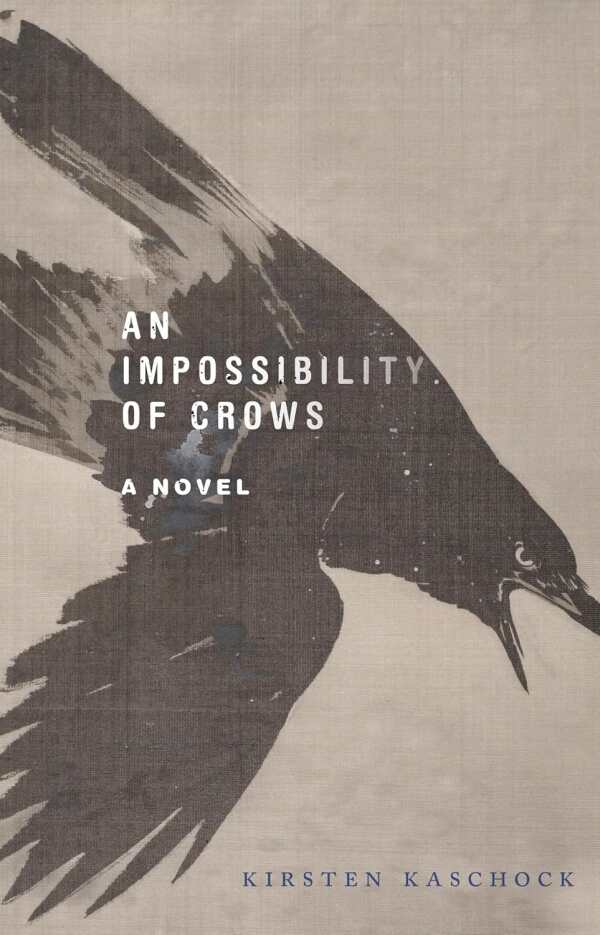
Part maternal and filial lament, part horror story, Kirsten Kaschock’s eerie, enrapturing novel follows a biological experiment gone wrong.
In a Pennsylvania barn, grief-driven Agnes tinkers with crow DNA, hoping to nurture a specimen large enough to carry her disabled daughter, Mina, far from her poisonous family homestead. Her work is too successful—and has ironic consequences. As the largest crow, Solo, grows and consumes more of Agnes’s attention, Agnes’s rift with her husband, Bruce, widens. In time, he takes Mina away himself, leaving Agnes alone with her monster.
When, on an outdoor excursion, Solo breaks away from Agnes’s grasp, she reasons that it is in a crow’s nature to crave the sky. When news that a child has disappeared reaches her, she at first reasons this away, too: “people lose people around here… . People maybe go missing because of the trucks that pass through. Maybe because of fabled powwowers in the woods. Or because who wants to stay?” But the truth cannot be evaded forever, and Agnes is soon forced to reckon with the consequences of her twisted creations.
Though Bruce claims the poet’s spot in his marriage—“fighting mass incarceration with haiku”—Agnes narrates with her own unbridled, sometimes gruesome poeticism, marked by taut ambivalence. She is a magnetic heroine—smart, committed to her denial, and flawed. Feeling trapped, she self-presents as callous, but it’s an unconvincing ruse, an affectation to conceal her true vulnerability. Indeed, her story is directed by her deep feelings: of guilt over Mina’s condition; of inadequacy beside her too-feeling, seemingly all-knowing husband; of regret over choices made and avoided; of innate protectiveness toward others.
Though Agnes’s self-introspection is often purposefully occluded, her insights into those around her are searing. Her ailing, strange, beloved mother was an artist who felt invisible and fragile; her father “was one long threat, from straw hat to resoled boot.” Agnes’s hyperreligious sister was “pruned” from her, leaving a gaping wound; Bruce “wants to help … but not in the way I need help.” Thus the woman who would reject sympathy on the basis of the monstrosity of her choices becomes the novel’s greatest triumph—a tragic figure of incomparable brilliance and contradictory sensitivity.
An Impossibility of Crows is a darkly glorious novel that rides the horrific undercurrents of a scientist-mother’s dual devotion to her child and craft.
Reviewed by
Michelle Anne Schingler
Disclosure: This article is not an endorsement, but a review. The publisher of this book provided free copies of the book to have their book reviewed by a professional reviewer. No fee was paid by the publisher for this review. Foreword Reviews only recommends books that we love. Foreword Magazine, Inc. is disclosing this in accordance with the Federal Trade Commission’s 16 CFR, Part 255.


