

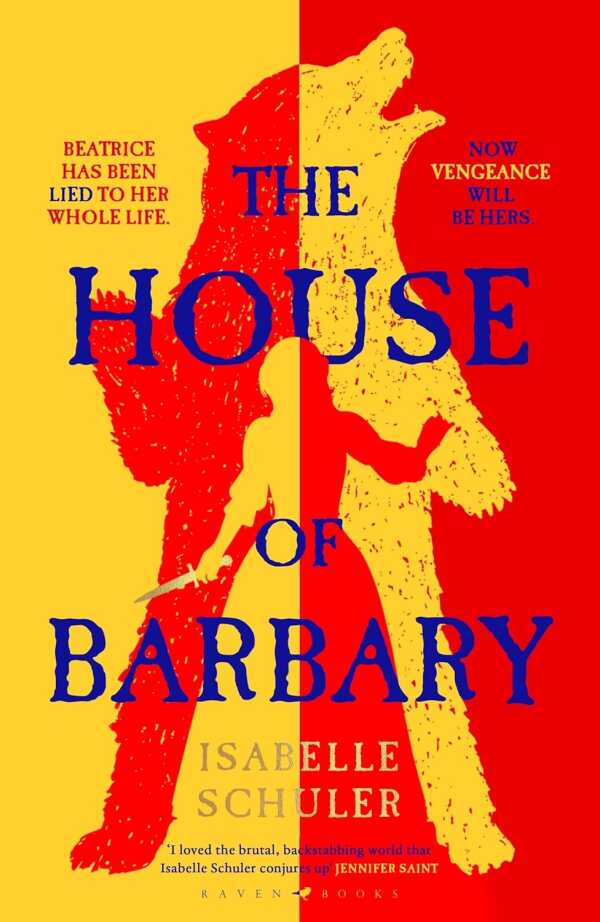
The House of Barbary
A sheltered, orphaned heiress begins to question the secrets in her estate’s basement in Isabelle Schuler’s riveting mystery novel The House of Barbary.
Bern’s citizens marked Beatrice as strange in her childhood. Cut out of her deceased mother’s womb, she was raised apart from most of her neighbors. Her father indulged her curiosity to the point of overseeing her dissections, and he told her that she would never have to marry. By twenty, she was a formidable head-of-house. Or so she believed until her father, Bern’s feared mayor, was murdered in 1653, at a time of revolt.
With the powerful men whom her father protected closing ranks around her, Beatrice starts to ask dangerous questions. Unsure of whom she might trust, she turns to Johann, who painted her father’s portrait when she was young. Then naive, he did his best to think of his subjects in terms of “colour and shape an light and shadow” and to forget what he saw one night in the Barbary cellar. Still, he has keen memories of that season of bacchanalian release. Through his hesitant revelations and the disclosures of others, Beatrice learns about the murderous Order of St. Eve, led by influential local men.
Its cast made up of duplicitous beings, including the town’s violent leaders; Albrecht, once a hopeful for Beatrice’s hand, who finds his easy influence “incapacitating”; and the specter of Beatrice’s bold, charming mother Magdalenie, this is a captivating, feminist take on the legend of Bluebeard. Its mysteries roil around what those in positions of authority might do to command more power. Though their aspirations are supernatural, their methods prove vicious and banal. Determined Beatrice is the first woman in decades with a true chance at upending the Order of St. Eve—but even she has lessons to learn about the futility of seeking vengeance.
Initiated by a murder and leading to the undoing of corrupt men, The House of Barbary is an arresting novel that exposes those who prey on vulnerable women.
Reviewed by
Michelle Anne Schingler
Disclosure: This article is not an endorsement, but a review. The publisher of this book provided free copies of the book to have their book reviewed by a professional reviewer. No fee was paid by the publisher for this review. Foreword Reviews only recommends books that we love. Foreword Magazine, Inc. is disclosing this in accordance with the Federal Trade Commission’s 16 CFR, Part 255.


