
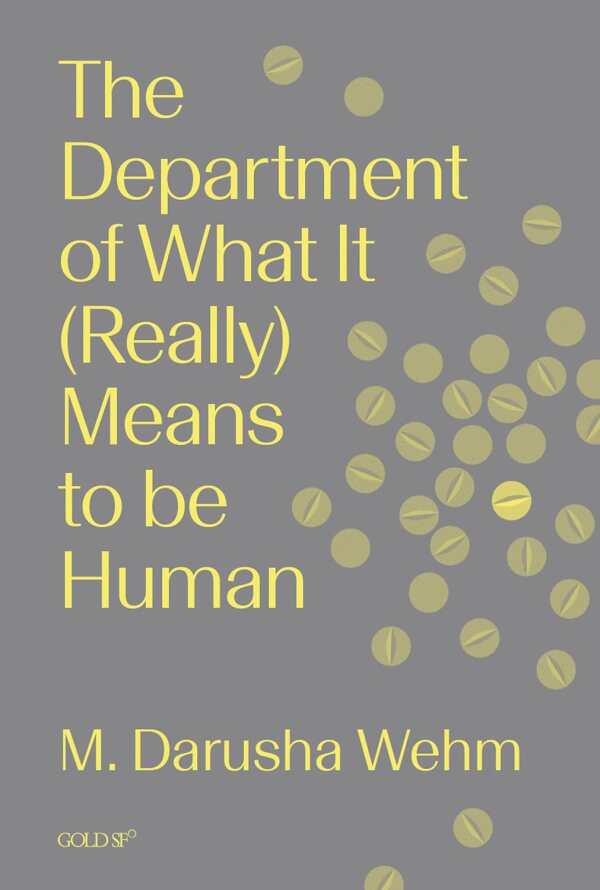

The Department of What It (Really) Means to Be Human
Suffused with supreme empathy, M. Darusha Wehm’s The Department of What It (Really) Means to Be Human is a probing speculative novel about the seductive landscapes of one’s memories.
In New Zealand in 2043, life is more equitable. A universal living wage has been established, eliminating the need for daily work. Neurodivergent Emerald is one of many people who works anyway. They are restless unless they have a task to focus on. A former police officer who has difficulty connecting to other people, but who is magnificent in the kitchen, they are now an investigator for the Grants and Stipends Office, tracking down wayward artists. Their latest subject is Gen Ecks, a famed installation and performance artist in her sixties, of whom Emerald’s justice-driven roommate, Anya, is a fan.
Emerald learns that Gen Ecks has been taking Moneta, a repurposed Alzheimer’s treatment drug whose effects are akin to “a kind of time travel.” Subject to unintended side effects, Gen Ecks is lost in her memories, experiencing them as if in real time. Though Emerald knows they should just report Gen Ecks to their office and move on, with Anya’s encouragement, they instead get involved—learning all that they can about the drug and what might be done to pull the artist back to the present. Complicating their pursuits is a person from their past who follows them, representing abandoned values and unanswered needs.
Even in this near future setting, which is marked by holographic experiences, neurological implants, and extended life expectancies, “progress doesn’t mean perfection.” The novel’s tension is wrapped up in understanding the melancholy that sets in when what’s new stops being novel and begins to feel normal. Emerald, who in their previous life was “careful to never actually care,” is an ideal guide through this somewhat surreal futurescape, learning as the audience does about the chasm between ideals and realities. The concern that they develop for Gen Ecks is heartening, and their increased comfort with taking righteous actions, coupled with their realization that they’ve formed a true partnership by accident, leads the novel to a satisfying close.
Set in a post-capitalist society wherein better does not yet mean great, and wherein some still wait to forgive and be forgiven, The Department of What It (Really) Means to Be Human is an enthralling speculative novel.
Reviewed by
Michelle Anne Schingler
Disclosure: This article is not an endorsement, but a review. The publisher of this book provided free copies of the book to have their book reviewed by a professional reviewer. No fee was paid by the publisher for this review. Foreword Reviews only recommends books that we love. Foreword Magazine, Inc. is disclosing this in accordance with the Federal Trade Commission’s 16 CFR, Part 255.


