

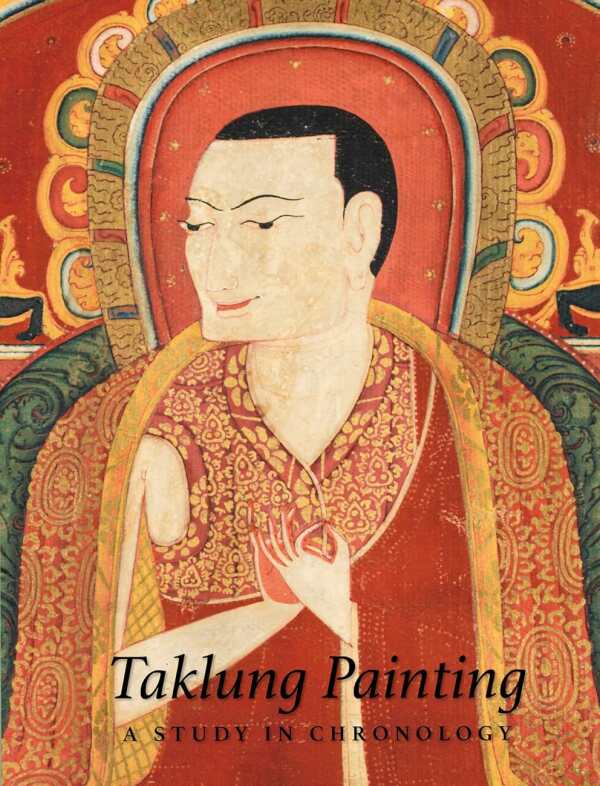
Taklung Painting
A Study in Chronology
Taklung Painting is a comprehensive text that reveals much about an ancient tradition.
Jane Casey’s Taklung Painting is a systematic art history that stays focused on its aim to “establish a reliable foundation for assigning dates to Taklung paintings.”
The Taklung paintings are a series of ninety-five paintings, often of Buddhist teachers and deities, connected to the twelfth-century Taklung and Riwoche monasteries within the Taklung Kagyu lineage of Tibetan Buddhism. In the intervening time, the paintings have been scattered among museums, archives, and private collections, making study of the full corpus difficult. In part because of this, art historians have conflicting ideas about dating and determining the meanings of the surviving paintings.
The book acknowledges these debates and addresses surrounding scholarship in direct and respectful terms. Its analyses are thorough and split into two volumes. The first volume explains the four tools used to date each painting, including visual lineages, narrative scenes, inscriptions, and style. A catalog of all ninety-five paintings, dated and analyzed using these tools, follows.
The second volume includes a parallel transliteration catalog of the inscriptions that accompany each painting, made up of Sanskrit expressions written in Tibetan script. There’s also an overview of a body of related works, the Tsakli paper drawings, and several detailed indices. This structure is engaging and easy to follow, explaining how to do art history while doing art history. In each case, the book is clear about which teachers historians can identify and which they cannot.
The book’s language is clear, though some historical context is missing for particular names and references. Still, its examinations of minute details, like which buildings are present in the narrative scenes and what color garments the subjects in the paintings wear, are edifying. Indeed, its concise but detailed insights make the catalog accessible, even to those unfamiliar with the paintings.
Each catalog entry is brief and includes high-quality pictures of the painting in question and zoomed-in snapshots of specific areas under discussion. The book notes where scholars have dated pieces differently and takes the time to explain the conflict and where both perspectives come from. Sometimes, these analyses reveal additional details, varied translations, or unconsidered aspects of a painting’s style that point more toward one date than the other. At other times, the book admits that either conclusion could be correct.
Demonstrating just how much careful, researched art history can reveal, Taklung Painting is a comprehensive text that teaches much about an ancient tradition.
Reviewed by
Laurie Sara Oliver
Disclosure: This article is not an endorsement, but a review. The publisher of this book provided free copies of the book and paid a small fee to have their book reviewed by a professional reviewer. Foreword Reviews and Clarion Reviews make no guarantee that the publisher will receive a positive review. Foreword Magazine, Inc. is disclosing this in accordance with the Federal Trade Commission’s 16 CFR, Part 255.


