

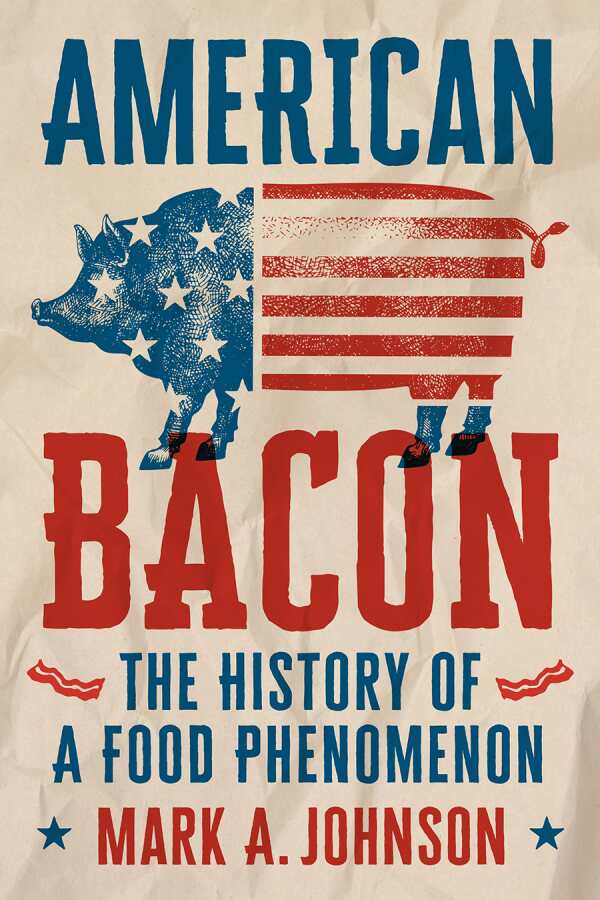
American Bacon
The History of a Food Phenomenon
Mark A. Johnson’s thorough history text American Bacon situates bacon as a defining element of American identity.
The book utilizes archival evidence, historical works, and interviews to explore the trajectory of bacon in American history and culture, from being a maligned rural standby to becoming a prized symbol of gourmet taste and independent thinking. When bacon arrived in America with the colonists, the book notes, it maintained dominance as a cheap, long-lasting food, even as the upper classes began to distance themselves from its low-class connotations. A salty symbol of status, bacon became associated with the South and with enslaved people; indeed, the book claims, bacon stores were a determining factor in how the Civil War ended.
When the low-fat craze swept the US in the late twentieth century, bacon was demonized. Later, it made a comeback when high-protein diets were in. Bacon’s folksy and unrefined associations drove up demand for it among gourmet city dwellers—a paradox, the book asserts, that encapsulates the American fascination with the Wild West and roughing it alongside the cosmopolitan drive toward epicurean pleasures. Extensive quotes from doctors and regular folks alike flesh out this authoritative, at times repetitive, retrospective, which is comprehensive in its documentation of how food trends respond to social concerns.
An academic cultural survey, American Bacon reinterprets US history through a pork-fatty lens of race, nationality, and nostalgia.
Reviewed by
Jeana Jorgensen
Disclosure: This article is not an endorsement, but a review. The publisher of this book provided free copies of the book to have their book reviewed by a professional reviewer. No fee was paid by the publisher for this review. Foreword Reviews only recommends books that we love. Foreword Magazine, Inc. is disclosing this in accordance with the Federal Trade Commission’s 16 CFR, Part 255.


