
There is so much more to life than mislaid hopes and dreams—An interview with Shana Mavournin, author of "Lost in Perdition"
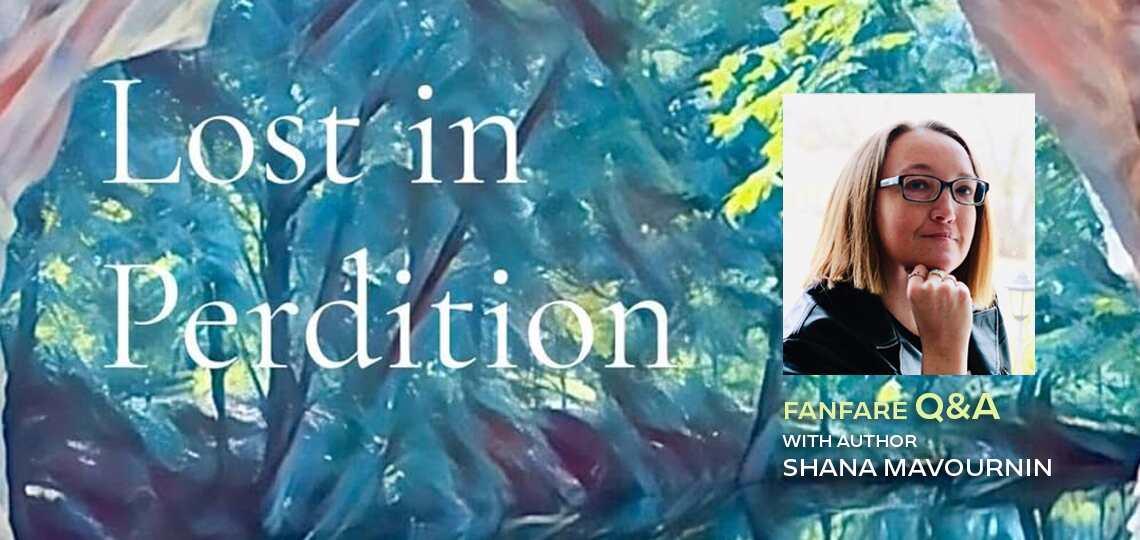
Reviewer Meg Nola Interviews Shana Mavournin, Author of Lost in Perdition
Imagination plays a big role in writing fiction but when you break down the plot elements of a great novel, the entirety of the story always leaps beyond the sum of its parts. What we commonly refer to as imaginative writing might better be described as the inspired pacing and rhythm of storytelling.
Take Shana Mavournin’s Lost in Perdition with its themes of substance abuse, homelessness, family estrangement, childhood illness, and friendship. None of these plot elements are earthshattering on their own but Shana skillfully moves the story forward to a resonant, transformative conclusion. Her genius is in her storytelling.
Meg Nola’s glowing review of the book caught our attention and we were thrilled when Shana agreed to take a few questions.
Was there an initial inspiration for the novel—like perhaps seeing a particular unhoused person in your daily life or a more personal connection?
Years ago, I was sitting in a local Starbucks looking at a blank screen on my laptop, thinking of something new to write. I like to people-watch when I’m in certain settings—coffee shops, restaurants, sporting events—places where you’re apt to see a wide variety of people and this particular day brought me Jack.
The shop was fairly busy when this scruffy-looking gentleman came in. He caught my eye. I thought he looked to be in his fifties but it was hard to tell under the long beard and shaggy hair. He came into the shop, looked around briefly then turned and walked right back out. He couldn’t have been in there for more than thirty seconds, but in that brief time he made a lasting impression. I began to think about him as a man, then as a young man and what brought him to that stage in his life. I originally thought it was going to be a simple short story but, the more I thought about Jack, the more his tale grew and I wanted to give him his story. We all have a story and deserve to have it told, don’t we?
Jack’s life changes considerably after he meets a young mother named Kate and her four-year-old son, Jacky. He becomes more focused and purposeful, and he begins to think of Kate and Jacky as adopted family members. Ultimately, their connection becomes even more meaningful. What would Jack’s life have been like if this encounter had never happened?
I can honestly say I never really thought about how Jack’s life would be different if he had never met Kate and Jacky. It goes to show just how life-changing a simple act of kindness can be, not only to the recipient but to the giver as well. Jack was a very lonely man before he met Kate and her son. He was a creature of habit and, while he felt content in his routine, he was not happy. Jack was so focused on his past he never looked to the future because he felt he didn’t deserve happiness. I think he would have continued living in his daily drudgery, repenting for his past transgressions, believing that was all he was ever entitled to in life.
I don’t think he would have ever fully forgiven himself if it hadn’t been for Kate and Jacky. They gave him purpose, they gave him acceptance, and even better, they gave him hope; something he never had before. If not for their meeting, I believe Jack would have lived the remainder of his days in quiet, lonely anonymity, and that thought breaks my heart.
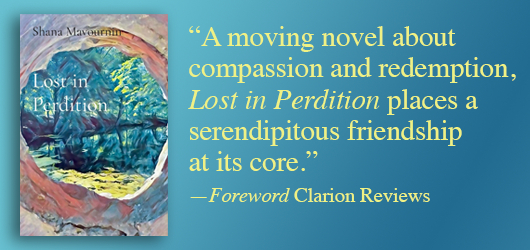
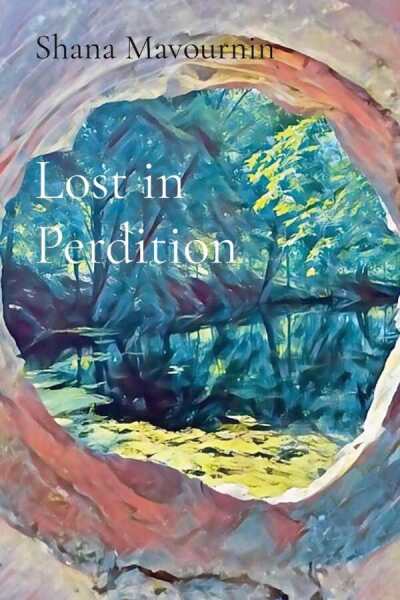
The book’s cover art is both striking and soothing; at first glimpse, it looks like an impressionistic landscape of trees within a circular ridge. But after reading the novel, the cover image shifts: it appears to be Jack’s view from his concrete playground “tube” in the abandoned park where he sleeps and stashes his belongings. Is that right?
That is exactly right! I can’t take any credit for the beautiful artwork, though. My daughter Sasha is the one behind that wonderful painting. She has always been very artistically gifted, even as a young child. When I completed the novel I asked her if she would be willing to come up with the cover design. I can’t imagine anyone would ever consider living in a concrete tube as a peaceful existence, but she looked past the harshness of the situation in which Jack lived and focused on what he sees from the inside looking out. To me, it’s like looking at the light at the end of the tunnel.
Jack meets his future wife, Claire, in college. Claire chides Jack about his drinking and occasional drug use, but she also seems to believe that he’ll stop partying once he’s happily married. Or, as you note: Claire “believed her love could save him. She believed wrong.” Is this sort of emotional optimism common with the partners of alcoholics and substance abusers?
Anyone who has loved someone with an addiction would probably tell you they spend a lot of time and energy on hope. We hope they stop the behavior; we hope they see the pain they cause; we hope they choose to change their ways; we hope our love for them will make a difference. Sadly, hope doesn’t fix a thing. If anything, it causes more pain and grief because hope is a very fragile thing. It’s a false face in which we can escape the pain of reality. The longer we live with hope that is constantly being shattered, the more insignificant that expectation becomes. We can’t fix others, especially if they aren’t ready or willing to accept they have a problem, but we continue to try, often at the expense of our own wellbeing. For those people who are lucky enough to realize we can’t love someone into redemption, we can move on, but we move on wounded. Those scars take time to heal and, even though they never truly leave us, they fade with time.
While living in the abandoned park, Jack maintains a regular routine. He sweeps the concrete tube and rolls up his sleeping bag, and he even cleans the park’s “timeworn restrooms.” He also makes anonymous charitable donations and describes his decision to remain on the streets as a “penance” for his earlier regrettable behavior. Jack grew up in a wealthy family and was doted on by his family, yet he often felt overwhelmed by so much indulgence and like he had “no control” over his life. Judging by his later self-discipline, if Jack had been raised with more structure and boundaries, would he have perhaps avoided his years of addiction?
I do believe Jack’s childhood played a significant role in his addictive behavior. He was coddled by his parents, especially by his mother, his entire life. As the golden child he could do no wrong and never heard the word “no.” So, yes, that played a huge part in his downward spiral. Jack was very loved, that is evident, but instead of giving him discipline and boundaries, his family gave him ephemeral things like toys, parties, and money. Without being given important life lessons, like how to accept defeat or understanding hearing the word “no” is a normal part of life, Jack spent his young adulthood searching for that fleeting feeling of happiness the drugs gave him. He didn’t understand until much later in life that true happiness comes, not from things, but from within, from relationships, and from hard work. There is no guarantee Jack would have avoided his fate if he had been given better life skills, but it certainly wouldn’t have hurt.
This is a bit of a spoiler, but when Claire and Jack reunite decades after their divorce, they go to a diner to talk on Christmas Eve. The diner is almost empty, they sip coffee while snow falls quietly outside. Facing each other with awkward remembrance, they work through various resentments and misunderstandings—but the meeting isn’t overly long and there’s a skilled restraint to the dialogue and their interactions. Later, when Jack leaves alone, his mind and emotions are still “running wild” in contrast to the “silent serenity” of the winter night. Was that a difficult scene to write, in terms of conveying the emotional intensity while still keeping things controlled?
I can’t say it was a difficult scene to write, it really sort of wrote itself. It was necessary for Jack and Claire to have that interaction to move the story forward. One of the best things about writing, in my opinion, is the ability to create new people. It’s much like giving birth, but the labor pains are that of a mental sort rather than physical. As I wrote this scene, I was simultaneously in both character’s heads. I had to put myself in Claire’s position, being surprised into a situation in which she was not ever expecting to be, and I had to put myself in Jack’s position of confronting the woman he still loved but felt betrayed by. They both had so much to say but it was not the time nor the place, and they both understood that. I think we have all had interactions that, on the face of things, was restrained but looking back we wished we had said more. It sets our minds reeling after the fact with “what ifs” and “I should haves.”
Do you write everyday? Are you working on another novel now?
I wish I could say yes, I write every day, but I don’t. If I had the time I would because it is very cathartic to get thoughts out of my head. I do, however, currently have a few short stories in the works, two of which have the potential to be fleshed out into novels. Sometimes I struggle to find the hole in the story to fall into and other times they seem to write themselves. I’m excited to see where they go actually.
Lost in Perdition
Shana Mavournin
IngramSpark (Sep 9, 2023)
Clarion Rating: 4 out of 5
A moving novel about compassion and redemption, Lost in Perdition places a serendipitous friendship at its core.
In Shana Mavournin’s resonant novel Lost in Perdition, an unhoused man seeks redemption and reconnection through friendship.
In a Nebraska park, fifty-one-year-old Jack reflects upon his troubled life. Born into wealth, he was doted upon—handsome, intelligent, and well-liked. Though he began recreational drug use in his teenage years, he balanced partying with studying and earned high marks. After college, he married Claire and took a teaching job. But following the anguish of a miscarriage, Jack’s substance abuse increased; he had an affair, and Claire filed for divorce.
After completing a rehabilitation program, Jack’s access to his trust fund became contingent upon his remaining sober. Hoping to atone, he began making sizable anonymous donations to various charities and institutions. He also chose to remain unhoused as personal penance and to keep himself from relapsing into addictive behaviors. Years later, after being given food by Kate and her son, Jacky, Jack develops a friendship with the two before learning that he and Kate share a bond. Meanwhile, Jacky is diagnosed with leukemia.
Jack’s characterization is complex. In flashbacks, he moves from youthful charm and the benefits of his easygoing charisma to feeling ill-prepared for challenges. His marital strife tests him, and he regards Claire’s objections to his drug use as annoying self-righteousness. His other addiction-related memories are regretful and perceptive; he recalls a girl’s descent into heroin dependence and prostitution, her “empty eyes” staring at him from beneath a “sallow streetlight.” But Jack’s own heroin use is treated in a cursory manner; he notes that he only “ventured into” it once and “woke up in a dumpster behind a frat house.” And while the book builds up Jack’s charitable efforts to reveal his strong moral core, the reasons behind his prolonged exile, which includes enduring brutal Nebraska winters and compromising his general safety and dignity, seem more internalized and evasive.
A single mother and nursing student, Kate regards Jack with pragmatic compassion. Her four-year-old son Jacky is exuberant and generous; upon first seeing Jack at a local McDonald’s, Jacky insists that his mother buy Jack a children’s Happy Meal. Jack’s relationship with Kate and Jacky moves at a measured and convincing pace as the three become closer through their weekly meetings. The later revelation of serendipitous elements intensifies their connection while heightening the book’s poignant undercurrent.
With its entwined themes of family estrangements, homelessness, redemptive desires, substance abuse, and childhood cancer, the book’s progression and conclusion rely on its prolonged emotional dramas. At times, however, the flow of anguished or karmic events seems somewhat forced and undermines the developing breadth of the book’s various characters. Occasional spelling errors prove distracting, too. But engaging details anchor the prose, as of the saltines and applesauce that Jacky eats to help ease his chemotherapy nausea. Elsewhere, Jack enjoys watching the rush of arrivals and departures at the train station, sipping coffee as he sits on a “creaky, paint-chipped” bench.
A man emerges from addiction and self-imposed purgatory in the heartening novel Lost in Perdition.
Reviewed by Meg Nola
January 28, 2026
Meg Nola


