

Book of the Day Roundup: April 6-10, 2026
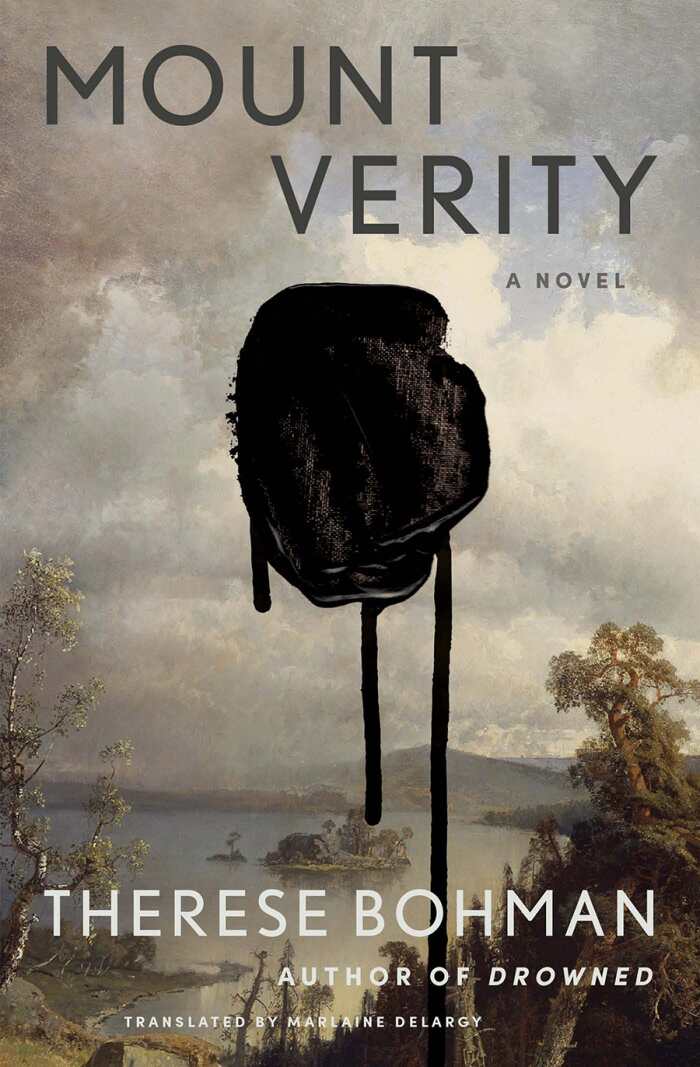
Mount Verity
Therese Bohman
Marlaine Delargy, translator
Other Press
Softcover $17.99 (224pp)
978-1-63542-566-6
Buy: Local Bookstore (Bookshop)
In Therese Bohman’s coming-of-age novel Mount Verity, a childhood tragedy alters the trajectory of an artist’s life.
On Easter Eve in 1989, Hannah’s older brother Erik disappears during a midnight trip to a mountain with a mythic history. He leaves no evidence behind. His disappearance on the infamous mountain leads to unanswerable questions and creates a rift in Hannah’s life. As she moves through young adulthood, forming an intimate connection with her neighbor Marcus and discovering a passion for art, she is plagued by haunting grief and guilt. Both impede her desires for connection and independence.
The first section begins on the night of Erik’s disappearance and follows Hannah through high school, her marred innocence and deft intelligence made clear. As she grows older, she leaves her family home to pursue art school. However, her attempts to lead a more self-determined life are hindered by doubt and uncertainty. Later sections center her trips home to Kolmården, where Marcus’s presence and Erik’s memory are recurring, poignant reminders of the unresolved loss that continues to shape her identity.
Both naturalistic and lyrical, the novel includes nuanced depictions of young adulthood, sexuality, traumatic memory, and self-expression. The prose is both evocative and restrained, bearing the weight of Hannah’s unspoken emotions and the subtle shifts in her understandings of her past. The evolution of Hannah and Marcus’s symbiotic relationship is compelling too. The novel’s pacing and structure heighten the sense of longing and unresolved tension.
A dreamy and intimate novel, Mount Verity is about grief lingering beneath the surface of a girl’s life, influencing her decisions, relationships, and self-perception long after the initial trauma of losing her brother.
BELLA MOSES (February 27, 2026)
The Dead Can’t Make a Living
A Taipei Night Market Novel

Ed Lin
Soho Crime
Hardcover $29.95 (336pp)
978-1-64129-724-0
Buy: Local Bookstore (Bookshop)
An entrepreneur navigates Taiwan’s government, gangs, and corporate culture in Ed Lin’s mystery novel The Dead Can’t Make a Living.
Entrepreneurial, sarcastic, and unlucky Jing-nan runs his late parents’ food stall in Taipei’s famous Shilin Night Market. He also witnesses—and becomes involved in—a handful of criminal investigations. Now, he is enrolled in a college-level business class, hoping to improve operations and take some of the burden off of his girlfriend, Nancy. But when Jing-nan finds the body of a Filipino migrant worker at the night market, he is once again embroiled in a scandal that threatens his livelihood and life.
The Shilin Night Market is a dynamic, exciting setting that Jing-nan fleshes out in great detail. Other food vendors offer both camaraderie and competition, and Mosh, his employee, makes sausages-within-sausages that he both envies and mocks. The varied cast also includes Jing-nan, shady teacher Mr. Chiang, and his gangster uncle, Big Eye, whose powerful underworld friends take an immediate interest in the murder. Each person Jing-nan encounters is memorable, providing both comic relief and a strong backbone of community among the darker themes surrounding the murder.
The mystery is suspenseful and slow, treated at a luxurious pace alongside daily insights into Jing-nan’s life. Indeed, the book trades between the investigation and scenes set in Jing-nan’s business class, as well as those covering the continual difficulties of owning a small business. Then, Taipei’s powerful players escalate the stakes beyond the murder, and Jing-nan is embroiled in a mystery involving Taipei’s government, from which the city’s many gangs are inextricable. Themes related to the inhumane treatment of migrant workers also play in.
In the immersive mystery novel The Dead Can’t Make a Living, an ordinary man navigates Taiwanese industry and the criminal underworld.
LEAH BLOCK (February 18, 2026)
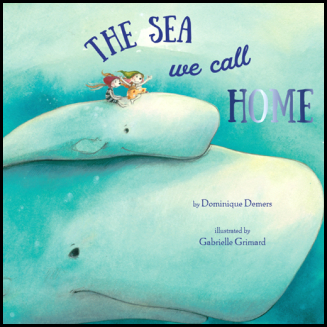
The Sea We Call Home
Dominique DeMers
Gabrielle Grimard, illustrator
Pajama Press
Hardcover $18.95 (36pp)
978-1-77278-367-4
Buy: Local Bookstore (Bookshop)
Two adorable gnomes head off for a seaside adventure in this joyous picture book that models appreciation and care for nature. Little Gnouf is so excited to see the ocean that he spends days reading about it before he and Mirabelle finally arrive to the blue waves stretching wide before them. A cry for help interrupts their reverie; they jump to a beached baby whale’s rescue. The help of other animals is enlisted, too, leading to an underwater adventure and a triumphant ending. Environmental trivia weaves into the story, whose delicate, teal-and-green-favoring illustrations are replete with causes for awe.
MICHELLE ANNE SCHINGLER (March 9, 2026)
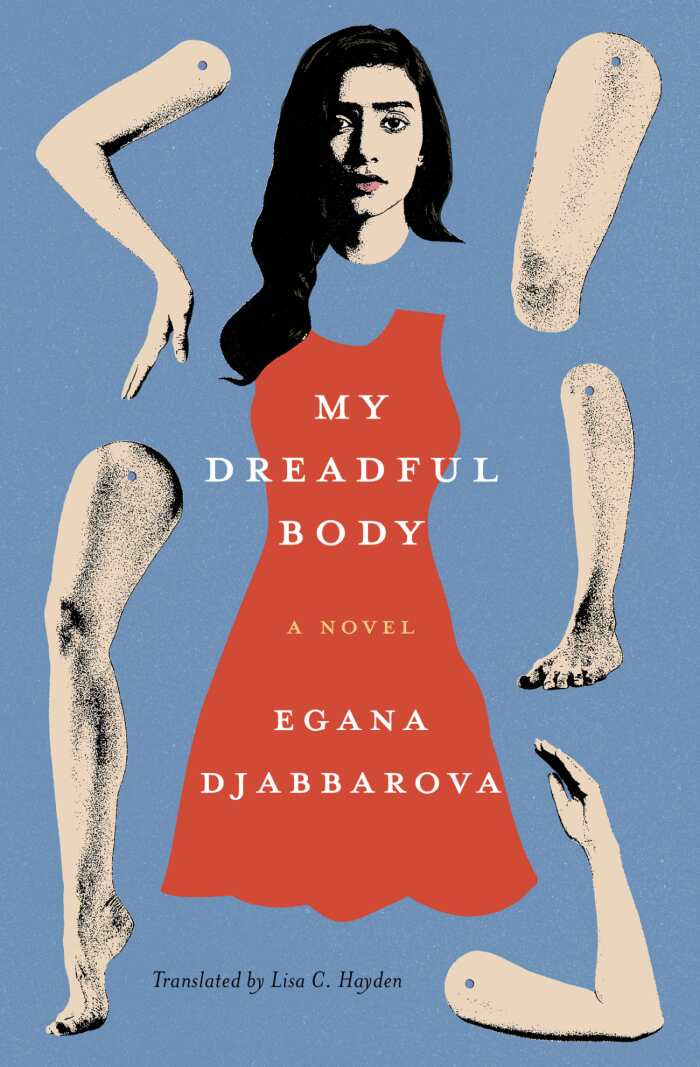
My Dreadful Body
Egana Djabbarova
Lisa C. Hayden, translator
New Vessel Press
Softcover $17.95 (144pp)
978-1-954404-41-0
Buy: Local Bookstore (Bookshop)
A woman maps cultural expectations and desires onto her ailing body in Egana Djabbarova’s singular novel My Dreadful Body.
Tackling one body part per chapter, this bildungsroman follows Egana, an Azerbaijani daughter, as she learns about her neurological condition. Her body, confined by its symptoms, becomes fertile material for her intimate musings on selfhood, home, and her wider world. Zooming in on funny foibles and wrenching social edicts, such as “a woman is not allowed to forget that she is an object in a sentence and not its main subject,” her ranging thoughts are linked by dry observations. From parents who equate long hair with ancestral beauty to a lustful stranger who prompts a slap, people are sketched through their reactions to bodily features. Noteworthy exceptions include a kind grandfather who inspires fond memories.
Egana’s wish to pluck her full eyebrows winds into glimpses of how only married women may defy God by changing their looks. A meditation about eyes spans colonial blue-eyed preferences, evil eye charms, diaspora weddings, and domestic violence. Elsewhere, shoulders highlight the dangers of outsidership amid skinhead nationalism. These and other chapters balance ideas about women’s laborious roles with personal disclosures that prick in their yearnings to defy tradition.
As the book blooms, Egana ages. Details about her diagnosis land on “generalized dystonia.” Her approach to her treatments is brave, even as her parents express disappointment that she is unlikely to wed. Meanwhile, vibrant domestic images of foods and of a grandmother’s embroidery hint at pleasures and beauties still to be found, despite Egana’s excruciating pain. Russian and Azerbaijani words infuse the translation with further vibrancy, hinting that languages are one of Egana’s joys. Indeed, writing becomes a balm for her.
An incisive novel, My Dreadful Body celebrates women’s agency, mourns physical losses, and rebels about inherited boundaries.
KAREN RIGBY (February 27, 2026)
100 Books to Live By
Literary Remedies for Any Occasion

Joseph Piercy
Michael O’Mara Books US
Hardcover $17.99 (224pp)
978-1-78929-885-7
Buy: Local Bookstore (Bookshop)
With an easygoing style, Joseph Piercy recommends one hundred notable works of world literature through the medicinal lens of bibliotherapy.
As a mental health practice, bibliotherapy centralizes writing and literature as a means to help people process difficult emotions and reduce stress, the book says. It bases its one hundred reading recommendations, plus one accompanying alternative each, on each title’s potential to heal, address, negotiate, or embody various states of mind. Its five sections encompass broad areas of well-being, including personal and relationship concerns. And its reading recommendations are akin to prescriptions, curative to particular interior conditions.
The conditions the book addresses range from specific life events to more abstract mental states: For divorce, Piercy suggests Anne Carson’s The Beauty of the Husband; for feeling “lost and uncertain,” Björn Natthiko Lindeblad’s I May Be Wrong and the fourteenth dalai lama’s The Four Noble Truths are named. Leo Tolstoy’s Anna Karenina and Maya Angelou’s I Know Why the Caged Bird Sings are held up as as essentials, or works with “universal themes about human life [that] offer essential values and enrichment.”
Each book recommendation is treated with conversational concision, including a brief contextual description of the author and their work and a quotable line from the work that represents a taste of the author’s style. This approach makes the collection pleasant to peruse, whether it is consumed from cover to cover or at random. Further, the recommendations are diverse, coming from writers across the globe and at different points in history, spanning classic, canonical, and contemporary literature.
The self-help companion 100 Books to Live By answers the bibliophile’s perpetual question of “What should I read next?” from a mental health perspective.
MIKE GOOD (February 27, 2026)
Kathy Young


