

Reviewer Meg Nola Interviews Moira Welsh, Author of The Astonishing Lives of Older Women: How to Create Pleasure Over Peril in Peak Longevity
For mothers and caregivers of aging parents, policy makers in the United States have always seemed keen to fulfill the adage no good deed goes unpunished. Just look at the facts from the US Department of Labor:
-
If you choose to have children, lost income will end up reducing your Social Security benefits by an average of 16 percent. Each additional child you raise will cost you an additional 2 percent in benefits.
-
Leaving the workforce to care for elderly family members means that you will miss out on over $130,000 in Social Security benefits over your lifetime. In total, as an unpaid caregiver, you stand to lose more than $324,000 in lost wages and Social Security benefits combined.
This is the thanks you get from Uncle Sam for raising children and caring for your parents.
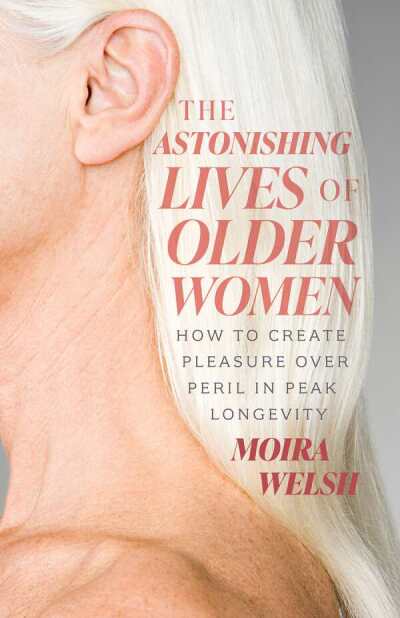
But don’t despair: Moira Welsh, author of The Astonishing Lives of Older Women, is with us today to talk about how women can overcome these obstacles and make their retirement years a peaceful, joyful time. In a recent review, Meg Nola calls the book a “revelatory and engaging” feminist resource—and Meg was all too happy to be asked to connect with Moira for a conversation.
Though medical advancements, healthier diets, and fitness awareness are helping to keep people in better shape as they age, moving into one’s supposed “Golden Years” is often a difficult transition. For women in particular, you note how there’s generally a social disconnect as they grow older—from the “averted gaze” to a sense of being somehow less viable or interesting. How does this aspect of aging differ between women and men?
In the corporate world, ageism can hit men and women but overall, we live within a patriarchal culture that enables men to assume their value is eternal. Women do not generally make these assumptions.
Throughout life, women have been taught that to be pleasing, they must look a certain way and perform certain roles, usually the domestic kind. Once the “pleasing” phase ends, a woman’s invisibility usually begins. For some, this new ability to float through the day unseen offers peace.
From another perspective it also means that policymakers and politicians do not pay attention to the financial, physical, or emotional struggles facing women in the later years, although their life-diminishing circumstances are often caused by the “pleasing” period. And yet, with the rise of women entering their fifties and sixties, we are entering interesting times. Women with a profile are increasingly vocal about the societal discard, pushing back on social media, demanding to be seen not just for their beauty but their accomplishments. Many speak of a new sense of freedom and power and this can be a wonderful phase of life—if you have the financial means to explore it.
Your articles for the Toronto Star’s Third Act Project focus on various aspects of growing older and other “serious age-related issues.” After you published a feature about financial gender disparity, you note how that particular story attracted a remarkable number of readers, along with many online comments and “emotional emails.” As a woman, did this subject also affect you more intensely?
After I started researching my book, I decided to write newspaper articles focused on the financial hurdles facing older women because I realized that these issues were not discussed among the greater public. As a woman, I understand that life can take a path into the unexpected and the cost of that can be high, painfully so. I spoke with a lot of women who did not want their experience included in an article or my book, which I respected but I will not forget the sound of one woman’s voice, describing how easily a good life fell apart, how she now feels so incredibly lonely.
The classic sitcom The Golden Girls avoided stereotypes by depicting older female housemates as unique individuals with active social and romantic lives. In the book, you detail how the show’s living arrangement can work well for contemporary older women in terms of economics, interaction, and housing quality. But you also note how four Ontario women had difficulty obtaining building permits for a home they planned to purchase, which prompted age discrimination charges and proposed “Golden Girls” shared housing legislation in 2019. Is it becoming easier for what you call NORCs—Naturally Occurring Retirement Communities—to develop?
Thank you for asking about NORCs—otherwise known as Naturally Occurring Retirement Communities. It is one of my favourite topics and—for those who can afford rent or condo fees—NORCs offer the opportunity to create on-site programs that support aging in place through exercise, social connections, and better overall health.
On its own, a NORC is simply a demographic description, referencing a building or neighbourhood that is home to a preponderance of older adults. The magic comes when social or fitness programs are added to the mix. And while anyone can start a card night or a walking group with neighbours, there is a growing body of research on best practices in creating NORC programs and how governments can take advantage of the demographic density to better structure services such as home care.
And for the past few years, the NORC Innovation Centre (NIC) at University Health Network has been working with residents to help create programs of interest in their Toronto communities. The NIC, as it is called, had funding for thirty NORC sites but demand was so intense that staff created an additional do-it-yourself “DIY NORC” program, offering advice to leaders in apartments or condos who are moving ahead with their own programs.
While social media helps older women to stay connected, the realm of online dating can be somewhat disheartening or even risky. The book discusses how older men often look for younger mates or women with financial resources equal to their own. And there are predatory types, “professing love but quietly hoping to finagle a partner’s equity.” How can older women pursue romantic relationships while emotionally and legally protecting themselves?
That is the eternal question, as the saying goes. Still, there are ways to avoid predatory relationships using soft skills or the legal option. The former is not readily appreciated but after listening to women in their eighties talk about life, I learned that intuition can be a superpower—if we listen to it. Red flags are obvious but also easily overlooked during the early days of sweeping romance. I am not an advice columnist, nor have I always followed the counsel of others, but pragmatically, the reality check offered by “gut instinct” can be affirming.
For context, there is a social media saying that goes something like this, “No one falls in love faster than a (rogue) who needs a place to stay.” It is fair to say that binding legal agreements can expose true romantic intent.
The book gives details too lengthy to describe here, but the relative cost of a will and a cohabitation or prenuptial agreement in advance of shared living can, should a relationship end, keep a woman financially whole, with her pension, savings and home intact.
In the book you profile free-spirited Susan, who lived in her car for nine months during a period of economic scarcity. Elizabeth is in her eighties and rents a small Toronto basement apartment; in excellent health, she nonetheless worries about rent hikes and outliving her financial savings. Sadly, these aren’t isolated cases. What does this say about the socioeconomic climate in Canada and the United States when women in their late sixties are becoming “vehicular residents” and healthy octogenarians fear their own potential longevity?
This exposes the reality that we do not, as a society, care for women as they grow older. It is a cautionary tale for younger women.
It is true that, for many people of all ages, these are unaffordable times, painfully so. My book focuses on the hidden demographic, the women who live in silence. We have little data on women who are falling out of society through homelessness. Many women are not counted because they do not go to homeless shelters. Some end up sleeping on a friend’s couch. Others end up living in their cars.
Vehicle residency has become a hidden solution to the profound neglect of older women, particularly those who live just above the official poverty line. Since women will statistically live longer than men—on a lower retirement income—the risk of homelessness is real. Longevity will be a blessing for many, but for others, it will become a curse, especially those destined for a long life.
The book includes advice for younger women in terms of fiscal planning and even choosing domestic partners with long-term foresight. An attitudinal shift also seems necessary, to acknowledge the inevitability of aging and proactively advocate for improved age-related legislation. How can younger people prepare for a better societal future as they approach their later years?
This is a really important question. For some context, data shows that the gender pension gap in Canada has barely budged over the last fifty years, so the belief that this is an issue that will depart with the boomers is fantasy, especially with the rise of gig jobs.
The first step is acknowledgment that this problem exists. The narratives of women in my book show how a financially healthy life can easily end based on a few decisions, even those made for the right reasons. Combined with embedded issues, often related to lower income and pensions, women often discover that they have little income.
I hope that mothers share this book with daughters because decisions about education and careers are important. All things being equal, since work should be pleasurable, careers that offer decent pay and, better yet, jobs with a defined benefit pension, create the foundation for a good long life.
There is a lot to contemplate but here are a few truths related to financial planning for younger women to consider: If you are lucky, you will grow old. Statistically, octogenarians will soon be the fastest growing demographic. And, to prepare for longevity, listen to older women.
Meg Nola


