

Reviewer Jeff Fleischer Interviews Virginia McGee Richards, Author of The Inner Passage: An Untold History of Black Resistance along a Southern Waterway
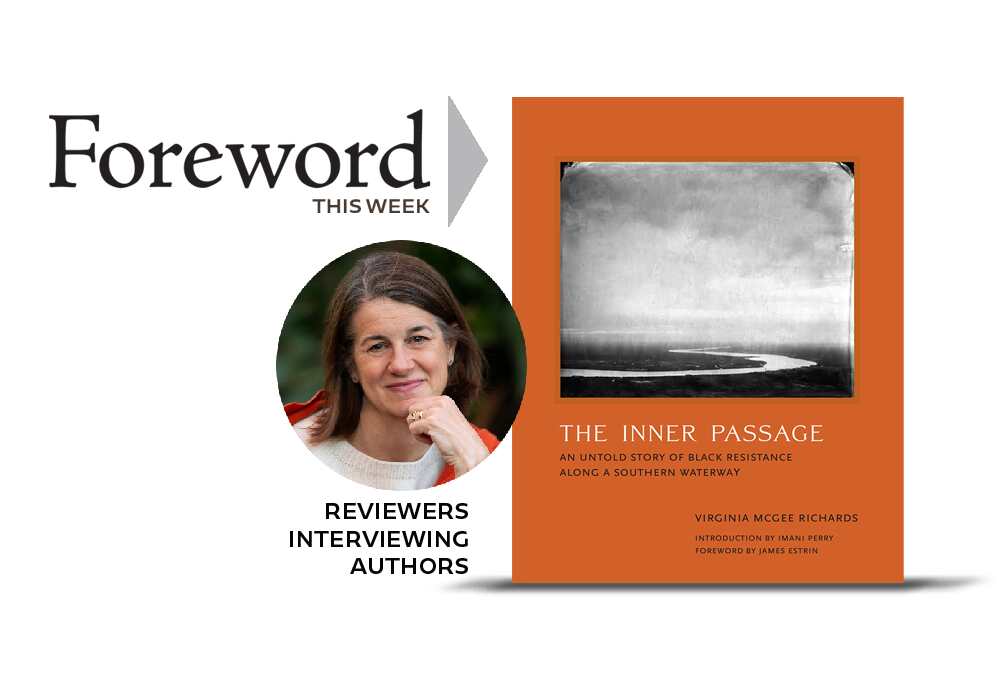
For sailors seeking safe passage, the open ocean can be a scary place thanks to gales and hurricanes, British warships, Nazi submarines—and dragons and the Bermuda Triangle, if you believe in that sort of thing. Which is why, over the centuries, the United States has invested heavily into maintaining thousands of miles of intercoastal waterways up and down the East and Gulf coasts. In the earliest days of construction, as was wont to happen, most of the labor in digging out the canals was provided by the enslaved.
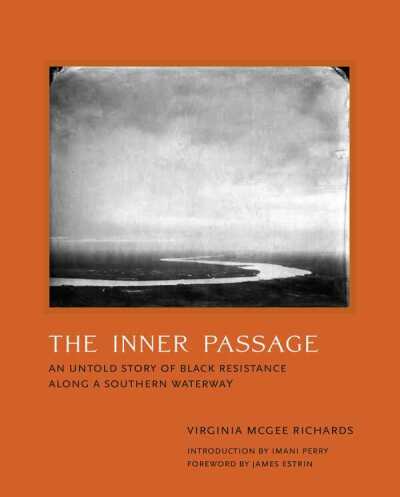
As was also wont to happen, those Black Americans haven’t received the recognition they deserve for building this hugely important work of national infrastructure. In The Inner Passage: An Untold History of Black Resistance along a Southern Waterway—a stunning work of historical narrative and photography—Virginia Richards helps to right that wrong.
Jeff Fleischer’s starred review set this interview in motion with an assist from the talented publicity staff at The MIT Press.
The Inner Passage is one of several projects in which you’ve focused on photography of a specific region and community. How did you decide on the subject for the book?
I grew up in the American South where my brother and I explored the wild, untamed places near our house. We found crawfish in local creeks and searched muddy fields for arrowheads, flint stones, and pottery shards—all artifacts of Indigenous people who lived in these places long ago. My childhood wanderings continue to influence my documentary photographic projects, including The Inner Passage series. From an early age, I understood that the soil we walk on every day holds important stories about the South and our country’s past.
Once you decided on this part of Carolina, what was your research process like? How did you prepare before starting the photography?
I began working on The Inner Passage series fifteen years ago when my family lived nearby in Charleston, South Carolina. Initially I walked the fields and sandy roads of former plantation sites along the waterway, spending lots of time noticing the movement of the water. In the Lowcountry, strong tides push seven to nine feet of ocean water inland every twelve hours and then turn and pull the water seaward. It’s as if the landscape is inhaling and exhaling with the tides. Dry walking paths are covered with water and then revealed again once the tide recedes. The land/water boundary is fluid in the Lowcountry and there’s constant movement under your feet.
As I began making images of Lowcountry waterscapes, I also spent days in the library looking for historical records of the places I explored. I found archival maps and hand-drawn land plats with references to the early canals of the Inner Passage, names like New Cut, Haulover Cut, and New Town Cut. I used the maps to show me which landscapes, trees, and waterways were extant in the 1700s when the canals of the Inner Passage were constructed.
At one point, I spent about a year piecing together ownership memorials from the 1700s in hopes that I could use white planters’ records to find a listing of the enslaved Black men who dug the canal system. I never uncovered a list of names of the Black canal laborers. Ultimately, I was able to discover the names of many Black and indentured laborers who used the Inner Passage waterway as a route to freedom from bondage. Those names are compiled in a list at the end of The Inner Passage.
What surprised you most once you started talking with the people you photographed? What did you learn in the interview process?
When I began the project, I believed that the visual history of the Inner Passage route resided in the waterscapes of the Carolina Lowcountry. I began photographing the waterway and I headed to the local public library, looking for clues about its canals. I discovered colonial maps with detailed drawings that gave life to the waterway and surrounding fields. Maps from the 1700s and 1800s showed pencil markings of live oaks along the waterway that were still visible as I walked agricultural fields along the Inner Passage. Documenting these ancient “witness trees” was my first attempt at portraiture in The Inner Passage series. Fortunately, the trees were patient as I learned to make portraits using the mercurial wet-plate process.
Like the ancient oak trees, the individuals I photographed in the series were born and raised in the South—natives, many of whom trace their ancestry in the Carolinas back to the colonial era when their forebears came from England, France, and Africa. Though I had become more efficient at the wet-plate process through trial and error, by the time I began making images of people, each portrait required about thirty minutes of the sitter’s time. Connections with the people I met enriched the project in many ways. I became friends with many of the people who appear in the book. Their questions, anecdotes, humor, and personal histories fueled my own curiosity. Their memories and insights gave a living voice to the past.
Each person I interviewed talked about their deep connection to the sea islands, the Southern United States, and their own family roots there. They spoke of generations of fishermen, ferrymen, and African field workers and planters in the Carolinas, and relayed stories of survival and resilience. In our current moment, as the US administration continues to aggressively paper over and remove references to Black history and enslavement, regional historians hold important truths. The Carolinians who appear in The Inner Passage are the keepers of both Carolina’s and our country’s complex and layered history.
The book includes a description of your wet-plate process, which gives the photos a timeless quality. How did you develop your process and what do you think it brings to the resulting photos?
I chose the nineteenth-century wet-plate collodion photographic process because it is slow and deliberate while also incorporating alchemy. Wet-plate collodion employs a bit of magic by asking sunlight to react with a sheer coat of silver applied to pieces of tin and glass. Natural conditions on the particular day of the shoot affect outcomes—temperature, humidity, and any chemical drying all affect the quality of the image. The results are unpredictable. On a dim evening, it is a race to record five minutes of light on the plate before the chemical compounds dry out.
This photographic series is about a waterway and water is everywhere in the Lowcountry—in the heaviness of the air, in the sweat on people’s skin, in the rivulets and streams on the landscape. In some of the images, airborne water rises from low fields in a white misty fog. It’s as if the humidity in the ambient air becomes incorporated into the plate itself.
In your editing process of choosing which photos to include, what guided your decision-making? How did you decide which images to select?
The selection and sequencing of the photographs in The Inner Passage evokes the rhythmic tides of South Carolina’s coastal rivers. The images appear in short photographic groups by subject matter—witness trees, water and rivers, landscapes, artifacts, and portraits. Those sequences are repeated, leading the reader through a journey of the waterway that ebbs and flows like the tides.
The people who appear in the portraits speak their own history in their own words so that readers will see the portrait and interpret their oral history simultaneously. Modern-day portraits appear together with the subject’s memories and reflections on the Lowcountry and the waterway, transporting the viewer between past and present.
What do you most hope the audience comes away with after reading The Inner Passage?
I hope the photographs of The Inner Passage create not only a historical record but also a visual poem, allowing the viewer to explore their own understanding of the past. Portraits of the farms, people, and ancient witness trees along the Inner Passage construct a kind of time travel. I’d like for readers to move between past and present, recognizing that geographies and altered landscapes hold and convey history.
Jeff Fleischer


