
Book of the Day Roundup: April 13-17, 2026
The Art of the Clash
A Manifesto Against Mundane Design

Sophie von Oertzen Williamson
Gibbs Smith
Hardcover $45.00 (224pp)
978-1-4236-6856-5
Buy: Local Bookstore (Bookshop)
The sumptuous photography of Sophie von Oertzen Williamson’s The Art of the Clash illustrates the design principles behind her distinctive and colorful approach to interiors.
Williamson’s guiding mantra is based in the power of contrast—think a velvet goldenrod sofa against a backdrop of high-gloss grass-green bookshelves. She eschews white walls and unfilled space. Say yes to cast-offs, she urges, and this philosophy is evident in the layered look of her rooms, which are filled with artwork, textiles, and a good number of antiques. Balance is achieved via uniting threads: red in the picture frames and accent pieces in her compact Swiss flat; lacquered ceilings throughout the first floor of a farmhouse with the delightful name of Puddleduck.
The photographs take pride in place, ample in number and gorgeous in their unexpected combinations: A green-and-gold library is preceded by a Pink Panther–colored living room; a white-and-red checkerboard kitchen floor abuts a set of primary-blue sliding doors, which give way to original oak cabinetry in the butler’s pantry.
Williamson’s mastery proffers simple lessons, as of how to mix midcentury modern furniture with period pieces and on creative ways to repurpose already-owned items. Still, the book has an aspirational quality, its interiors a leap for laypeople. Williamson leans into her yearslong design evolution, presenting her first homes right alongside later ones and detailing how she grew out of her imposter syndrome as a self-taught designer. These charming insights anchor her accomplishments in family history and a circle of friends with good taste; two of the pictured homes aren’t Williamson’s creations at all, but rather spaces she admires, serving to widen the scope of her method past one individual interpretation.
The Art of the Clash is a striking addition to the canon of color-forward interior design.
CAROLYN WILSON-SCOTT (February 27, 2026)
King Coyote
Rachael MeyersJones
Jolly Fish Press
Hardcover $21.99 (256pp)
978-1-63163-989-0
Buy: Local Bookstore (Bookshop)
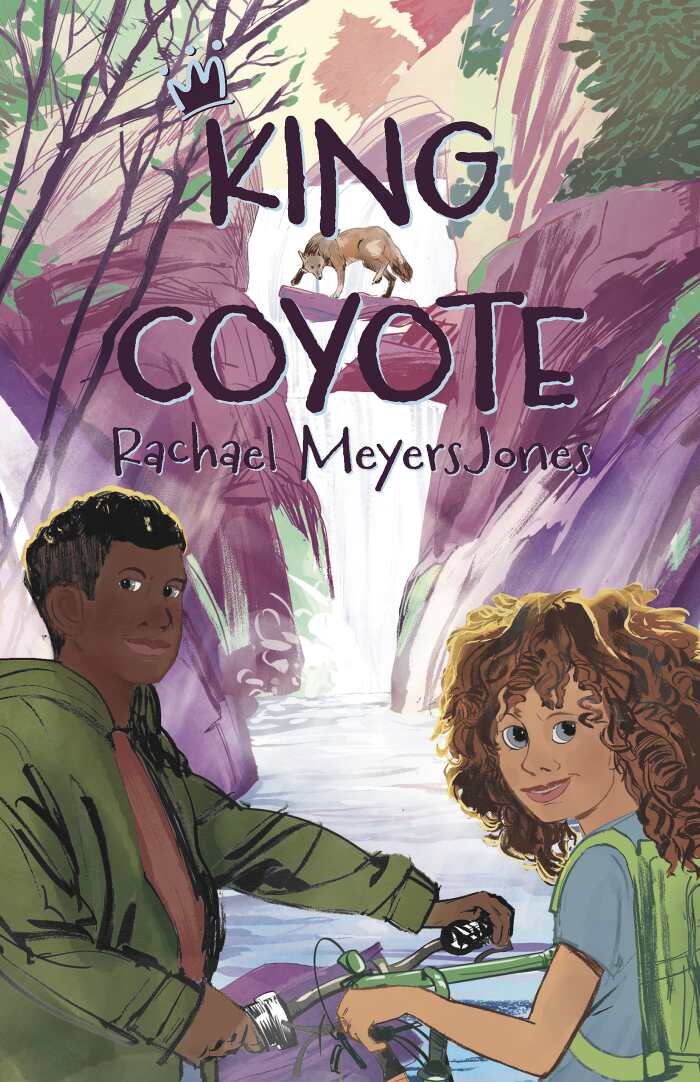
In Rachael MeyersJones’s stirring novel King Coyote, a city boy navigates the rugged Vermont wilderness and the even more treacherous landscape of his family’s dissolution.
Twelve-year-old King is a “soup-brained zombie” of the digital age, resentful of his summer “vacation” to his relatives’ farm while his parents navigate their separation. However, with the help of his cousin Nat—a “walking wildlife encyclopedia” and puckish survivalist—King begins to trade his video games for the sensory-rich reality of the farm. He also forms an unexpected connection with Coal, a scrawny, misunderstood coyote pup with a clipped ear. Indeed, King recognizes his own loneliness and displacement in the animal.
When local trappers are called to remove Coal as an alleged threat to the neighboring farms, the narrative shifts into a high-stakes adventure. King and Nat embark on a perilous rescue mission involving a stolen canoe and a daring trek toward the Canadian border.
Empathy and conservation are among the championed themes of this adventure-filled, heartwarming tale about the lengths one will go to protect the vulnerable. Indeed, King’s evolution into a resilient protector is handled with authenticity and grace. He learns that “a place becomes like a person, when you know it so well.” This transformation is mirrored in the prose, which balances the urgency of the survival plot with quiet, emotional resonance. The settings are developed with immersive details, as of the earthy “guttural chatter” of chickens, the scent of cow manure, and the haunting silence of the deep woods.
A classic wilderness survival tale featuring a Black hero, the evocative novel King Coyote concerns the complex intersections of family change and environmental stewardship.
JOHN M. MURRAY (February 27, 2026)
Home Is a Door We Carry
Constantin Satüpo
Yonder
Hardcover $19.95 (52pp)
978-1-63206-421-9
Buy: Local Bookstore (Bookshop)
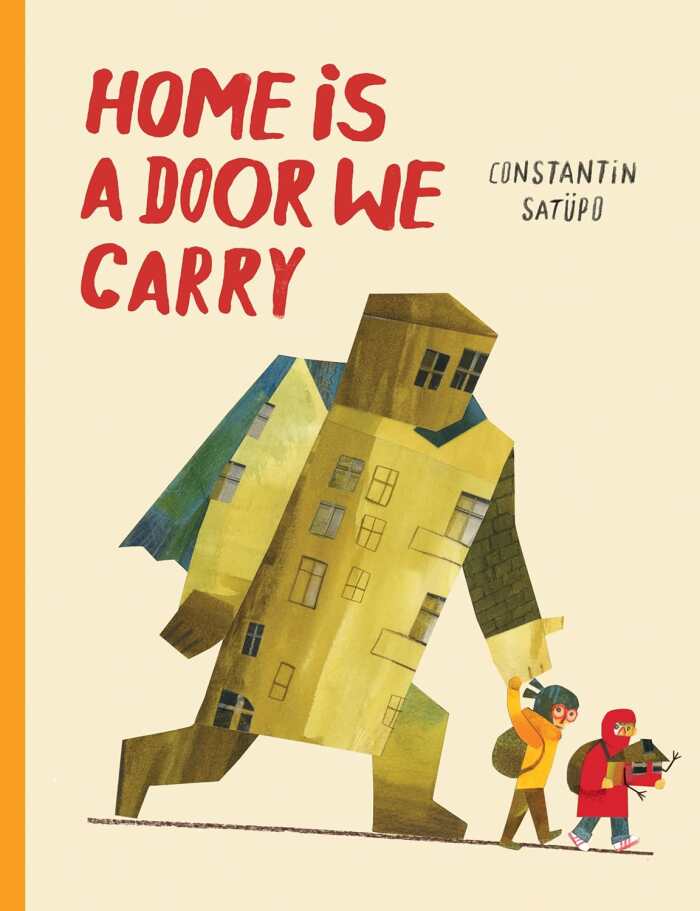
Its exquisite, atmospheric collage art evoking feelings of displacement, this empathy-building picture book focuses on refugee families around the world. Children walk with bowed heads beside their parents, or sneak a few moments of play with other children, as they head for places far away from their first homes. They imagine that their homes miss them, too; they personify those longed-for places in their minds. Wistful and lyrical, the intermittent prose balances out the tough circumstances implied in quiet threads depicting tanks and hints of violence, imbuing the everychild’s innocent wish that all will find homes in time with added power.
MICHELLE ANNE SCHINGLER (February 13, 2026)
Chernobyl, Life, and Other Disasters
A Graphic Memoir
Yevgenia Nayberg
Neal Porter Books
Hardcover $24.99 (144pp)
978-0-8234-6058-8
Buy: Local Bookstore (Bookshop)
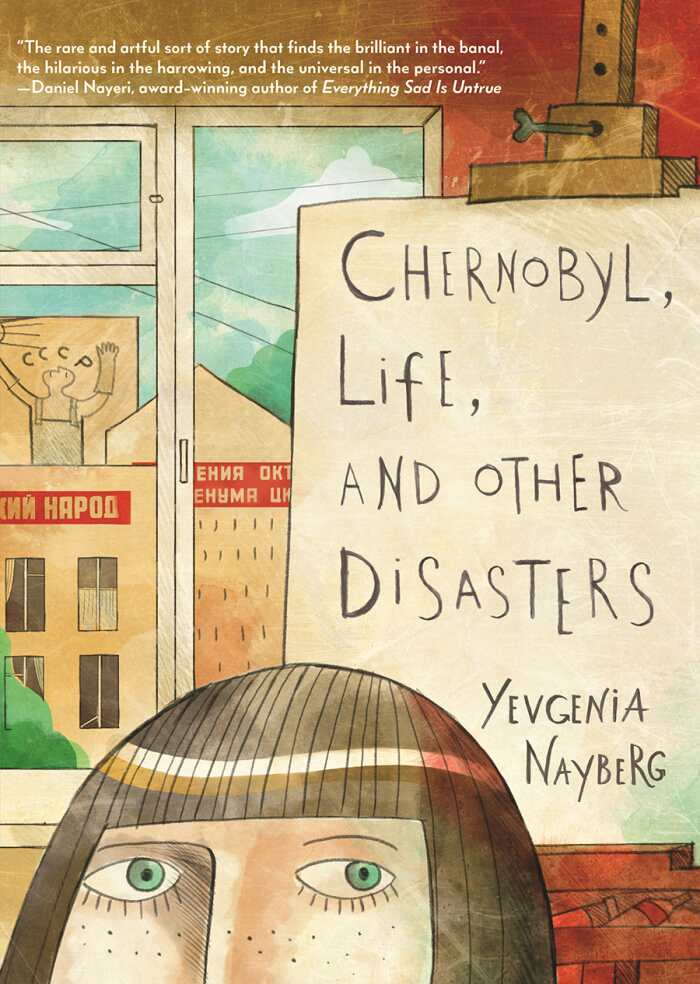
Yevgenia Nayberg’s entertaining graphic memoir recounts her eventful childhood in Ukraine.
In 1986, as Halley’s Comet approaches, eleven-year-old Genya prepares to apply to the prestigious National Secondary School of Art. The competition is fierce—made more so by the fact that Genya is Jewish, a big disadvantage given the school’s unofficial quotas. A tutor trains her to meet the test’s specific demands.
Genya’s lessons are halted when the Chernobyl nuclear disaster occurs. Her family goes to stay with relatives for safety. Still, when Genya returns to Kiev for the weeklong exam, her practice pays off.
The story’s primary focus is 1986, a year filled with monumental personal and national events. It includes illuminating glimpses at life under a Soviet regime: Genya’s grandfather expresses disdain for Leonid Brezhnev, the Communist party’s general secretary; comforting lies are issued by the government about radiation dangers. There is also a prescribed approach to Soviet art, which above all must pay tribute to communist ideologies.
The book’s own art is stylized and lovely, whether portraying dreamy Kiev cityscapes or reflecting subtle differences among children’s drawings. Humor and childhood charm are also a feature: When her mother tells her “Don’t be banal,” Genya responds, “I want to be banal!!” Elsewhere, in an emotional scene, Genya’s family hears that hair traps radiation, and she’s forced to cut her cherished long hair.
Chernobyl, Life, and Other Disasters is a lively coming-of-age graphic memoir set in Soviet-ruled Ukraine.
PETER DABBENE (February 27, 2026)
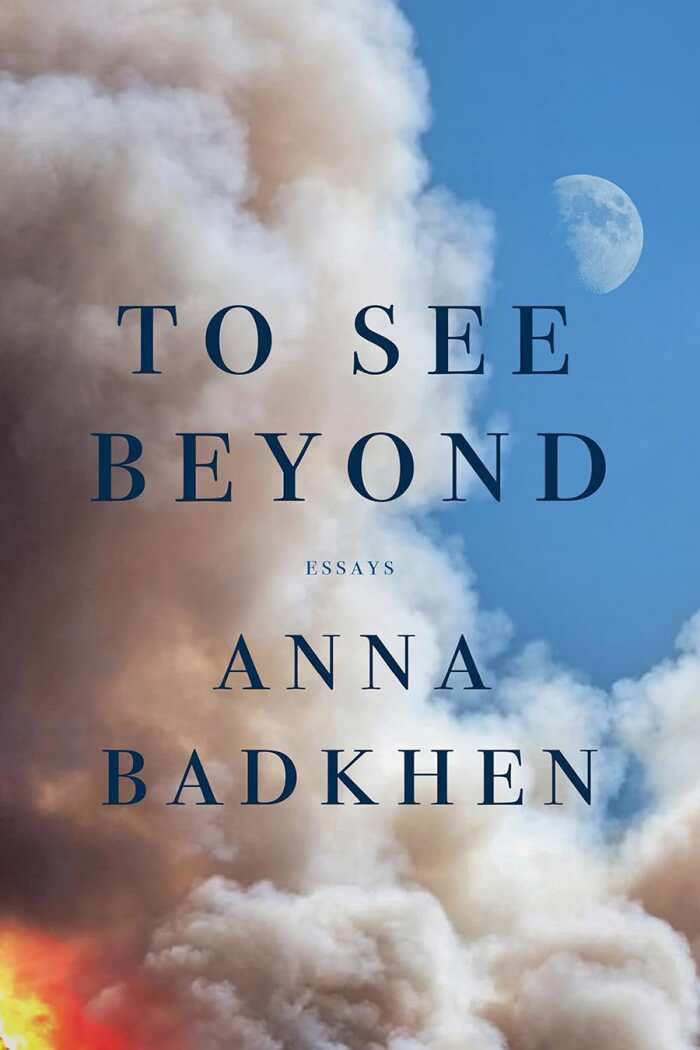
To See Beyond
Anna Badkhen
Bellevue Literary Press
Softcover $17.99 (192pp)
978-1-954276-54-3
Buy: Local Bookstore (Bookshop)
The brave, probing essays in Anna Badkhen’s To See Beyond address global issues including climate change, economic inequality, immigration, colonization, and genocide.
The twenty-three essays in this collection cover a vast physical and intellectual geography, from refugees fleeing ethnic violence in Mali to a light-filled vision at a tiny mosque in New Mexico. They combine piercing personal memories with poignant reflections on universal topics, as when Badkhen’s detailed reflections on her Soviet mother’s only pair of stiletto heels—worn, indented, and eggshell blue—prompt a contemplation of the heaps of shoes left by Jewish people killed at Auschwitz and a tiny pair of flip-flops cradled by an Afghan mother whose child was killed by an American bomb. A family hike in the Canary Islands across a “pathless plain of white volcanic foam” leads to a reflection on pilgrimage, displacement, the “microlove” of passing connections, and what it means to be home. Other passages consider the conflicts in Ukraine and Israel-Palestine, climate change, and the extraction of fossil fuels.
Badkhen describes storytelling as a transformative, imaginative act—the art of creating new landscapes and envisioning “how we can get from here to wherever we are going.” An essay on watching the solar eclipse from a crowded Philadelphia park becomes a meditation on prayer and the “shape-shifting” nature of grief; Badkhen cites Abraham’s biblical supplications for Sodom and the amazement of her neighbors watching the changing sky from beach blankets. Her dense, layered metaphors are both disorienting and reorienting. The essays consider tragic events across eras and cultures, capturing the “infinite ways in which we know how to be full of marvel.”
These deep, thoughtful, multi-faceted essays address timely issues of human suffering and environmental devastation from a unique, ultimately hopeful perspective.
KRISTEN RABE (February 27, 2026)
Kathy Young


