

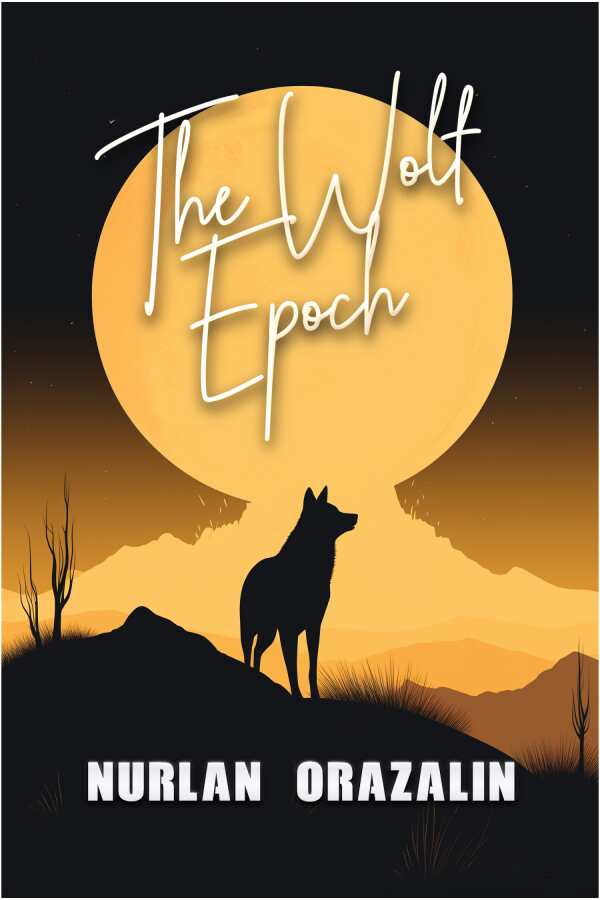
The Wolf Epoch: Diverse Voices of Modern Kazakhstan
Selected Poems
Love for Kazakhstan and its people proves key to The Wolf Epoch, a decades-spanning, moving poetry collection.
Nurlan Orazalin’s stirring poetry collection The Wolf Epoch compiles selections from ten other books of poetry, threading them together via recurrent themes, motifs, and imagery. It includes analyses by two Kazakh scholars, a note by the translator, and detailed notes contextualizing its many Kazakh references too.
Despite its diversity of themes and techniques, patterns arise across the book, in which love for Kazakhstan and its people is key. One entry laments “I weep for my Nation’s plight, / For mountains tall and lakes so bright,” while another closes with “This is my worry, truth be told, I cannot hide. / Will my cherished language somehow survive?” Lyrical imagery, as of a blue wolf that “embodies both freedom and inner spiritual struggle,” pairs with references to significant cultural figures, including historian Shoqan Walikhanov. Topographical descriptions, as of the nation’s steppes, also play in, resulting in atmospheric fullness.
Another reoccurring topic is the love of poetry and occasional frustration with the medium. In one poem, the speaker asserts “In boundless thirst for verse I yearn.” In another, the speaker questions “My Song-Bird! / Did you arrive safely at last?!” Fresh verbiage, such as “stirring wild poetry’s blood within my veins,” mixes with traditional images, as of songbirds that symbolize poetic inspiration, leading to heartfelt and intellectually stimulating turns.
The poems are also touched by grief—over the suffering of the beloved nation; over elusive words. Such grief is soothed by musicality, including frequent rhyming lines whose schemes vary to match the moods of each poem. Assonance is applied to rein in chaos; elsewhere, erratic rhymes convey disappointment with a corrupt, disillusioned century. Free verses also appear to illustrate desperation and the temporary loss of hope.
Repetition is a core technique as well. In “Frosty Night,” a single verse is repeated multiple times and bookends the poem; each appearance emphasizes reflections and regrets, making the night in question its own isolated universe. It’s a haunting act of self-containment. Other instances of repetition, as with the question of how many times something has happened, convey urgency. Further, vivifying instances of personification occur as lakes sing and the steppe speaks, with room made for multiple natural voices amid the book’s constant, diverse activity.
The Wolf Epoch is a lovely poetry collection that pays homage to a homeland alongside considerations of lyrical work that’s necessary to the soul.
Reviewed by
Carolina Ciucci
Disclosure: This article is not an endorsement, but a review. The publisher of this book provided free copies of the book and paid a small fee to have their book reviewed by a professional reviewer. Foreword Reviews and Clarion Reviews make no guarantee that the publisher will receive a positive review. Foreword Magazine, Inc. is disclosing this in accordance with the Federal Trade Commission’s 16 CFR, Part 255.


