

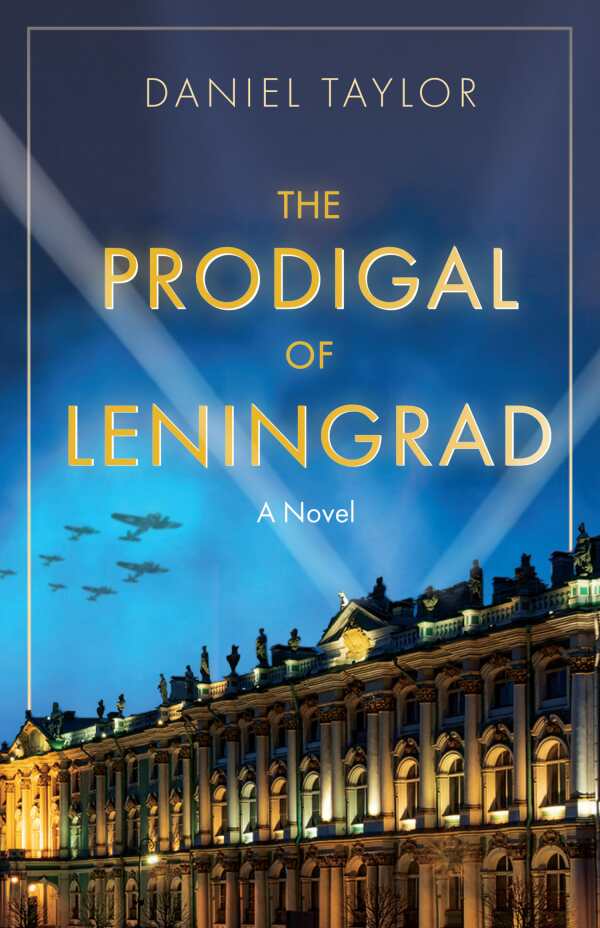
The Prodigal of Leningrad
A man’s reverence for art leads to wartime defiance in the enchanting historical novel The Prodigal of Leningrad.
When the Nazis invade Leningrad, Daniil, a widower and volunteer docent, witnesses the State Hermitage Museum remove treasures to prevent their theft. Despite Stalinist propaganda, Daniil still believes that art is “the highest expression of the human spirit.” In time, he begins to share the stories behind the missing art on tours of their empty frames.
Told with fabulistic clarity that draws on its characters’ moral stances, the novel alternates between Daniil and his grandfather, who was a priest imprisoned in a gulag. Both men reject materialism and share a love for Rembrandt. Quiet in their refutation of harsh regimes, they persist in their dangerous interests, including art and, for Daniil’s grandfather, his unwavering faith.
As the siege in Leningrad advances, Daniil recalls his past. He plays chess with a sardonic friend, endures bread lines, and supports the Hermitage. Taut vignettes focused on Daniil’s neighbors and the priest’s fellow prisoners, who rely on his spiritual guidance despite punishment, suggest philosophical questions about endurance and justice. These sketches coalesce into a moving exploration of what it costs to uphold Christian virtues, including truth and beauty.
Though the story includes executions and bombings, its brutality is mitigated by its evenhanded tone and understated prose. Effusive descriptions of a Shostakovich symphony and Rembrandt’s painting of the prodigal son also exist in contrast to the grimness. Daniil is surprised to see how people respond to atrocities: Some exhibit stoic humor; others develop resolve, pursuing art even while starving. While surviving a war may be instinctive, he learns, it’s also rooted in the hope for redemption.
In the luminous historical novel The Prodigal of Leningrad, two men face Soviet hardships with courage.
Reviewed by
Karen Rigby
Disclosure: This article is not an endorsement, but a review. The publisher of this book provided free copies of the book to have their book reviewed by a professional reviewer. No fee was paid by the publisher for this review. Foreword Reviews only recommends books that we love. Foreword Magazine, Inc. is disclosing this in accordance with the Federal Trade Commission’s 16 CFR, Part 255.


