
Purgatoire
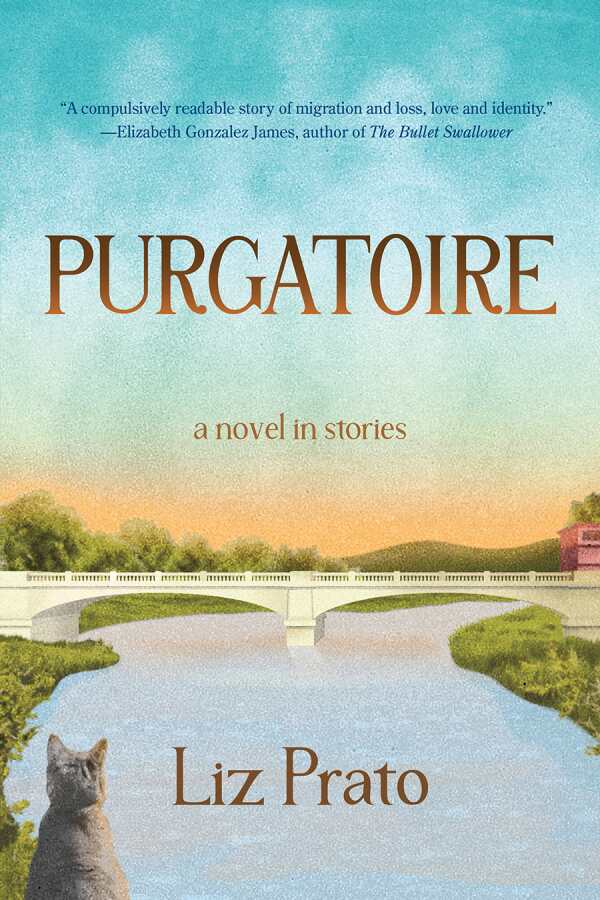
Family secrets have an outsized spiritual influence in Liz Prato’s virtuoso historical novel Purgatoire.
Near the Purgatoire River in Colorado at the turn of the century, mining industries start up, attracting European immigrants. Sabé, a young Italian mother, leaves her home in accordance with a long-held plan to reunite with her husband, Tobia, who works in the Colorado coal mines. But when she arrives, Tobia is gone. The townspeople speculate about whether he left because of another woman, gambling, or alcohol, but the truth about Tobia’s disappearance is far more complicated.
Sabé works hard at pushing memories of Tobia away. She also seeks to make an honest living in her new country. But there is no leaving the past behind, especially once she brings her two young sons to the US. She wonders if she should have known better than to settle near a river named after purgatory.
Representing the early twentieth century’s swirl of migration, wars, and epidemics, the characters’ lives are constructed in terms of circumstance and their observations of others, leading to vast generalizations about their times and places. Combined with elegant metaphors, these revelations become vivid historical truths, as in the multilingual society of the ship on which Sabé and her fellow emigrants use “language like a fire line, passing buckets of understanding.”
Time moves sideways, and the novel achieves profound, multigenerational inclusiveness. Narrative strategies, including letters, personal accounts, interviews conducted by Works Project Administration employees, and an occasional chorus from Las Animas, the souls clinging to the Purgatoire River, are included. Each element is executed with confidence, contributing to the novel’s holistic approach to family storytelling.
An empathetic, historically attuned novel, Purgatoire is about an immigrant family marked by the gifts and scars of inheritance.
Reviewed by
Michele Sharpe
Disclosure: This article is not an endorsement, but a review. The publisher of this book provided free copies of the book to have their book reviewed by a professional reviewer. No fee was paid by the publisher for this review. Foreword Reviews only recommends books that we love. Foreword Magazine, Inc. is disclosing this in accordance with the Federal Trade Commission’s 16 CFR, Part 255.


