

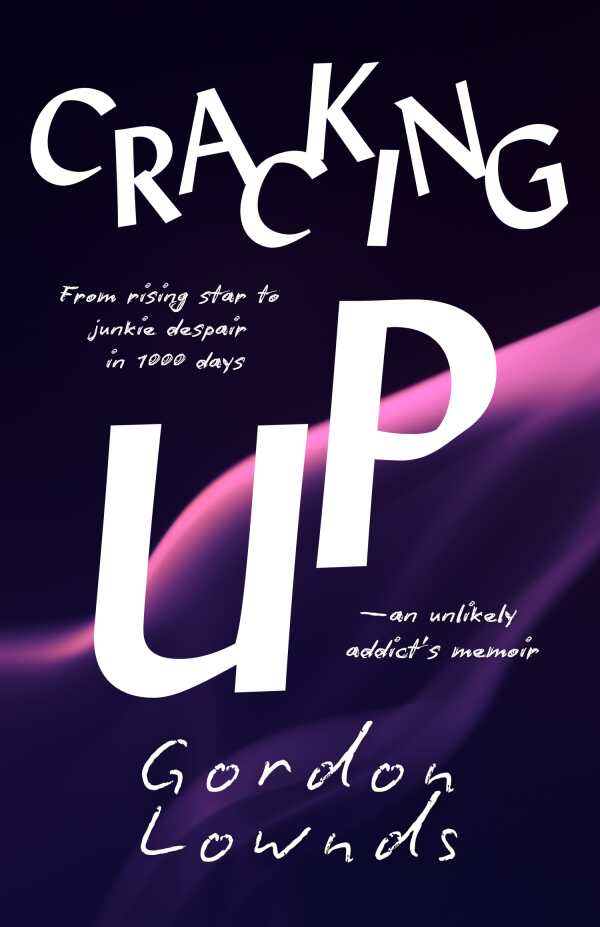
Cracking Up
From Rising Star to Junkie Despair in 1,000 Days-An Unlikely Addict's Memoir
Written with unflinching candor, the memoir Cracking Up considers how debilitating addiction can be and the challenges of recovery.
Gordon Lownds’s raw tell-all memoir Cracking Up leads a harrowing tour through the travails of drug addiction.
The book recalls with gripping intensity how Lownds, the CEO of the startup Sleep Country Canada, became addicted to cocaine, descending into serious, self-destructive habits for just under three years. It chronicles the depths of his drug abuse, showing how the buttoned-up, workaholic businessman and family man chased fixes in downtown Vancouver before seeking help and pursuing recovery, fearing he was on a path toward death. This work starts in medias res, with a scene in which Lownds is kicked out of a treatment center. It then charts how he went from taking a hit on a crack pipe to shooting up and trying to mainline liquid cocaine via an IV before pursuing treatment. Herein, recovery does not follow a smooth, linear route.
Confessional to occasional excess, the prose captures the self-loathing, guilt, and anxiety that Lownds endured. It dramatizes the early exhilaration of drugs and debauchery in a revealing manner. It also steers clear of blaming others or personal circumstances, though it does contextualize Lownds’s decisions somewhat, for instance noting that he was genetically susceptible to addiction.
Colorful in its characterizations, the book chronicles encounters with drug dealers, sex workers, and others in the underworld. It captures caseworkers, counselors, and doctors in a few deft strokes, for instance describing a crabby, sleepy recovery counselor as only having the credentials of having been “a deadbeat drunk living on welfare for thirty years before managing to stay sober for the past twenty years.”
Lownds’s wry sense of humor leavens the book’s darkness, as when he notes that the pun was intended when he claimed to be a high achiever, or when he quips that a treatment center felt like what he “imagined North Korea would be like.” Sarcasm also abounds, as with the description of a quite tattooed woman resembling “a partially finished canvas” and with the declaration “Wow, an addict who lies. Now there’s a first.” Short, staccato sentences mix with indulgent piles of adjectives to vivifying effect, and the book also makes effective use of alliteration and assonance, as with “slinking through the skanky alleys of East Hastings Street in the infamous Lower East Side of downtown Vancouver.” There are tactile details to flesh scenes out further, such as a reference to the smells of onion rings frying, apples being dipped in caramel, and garbage rotting in overflowing trash cans.
However, the narrative is overreliant on conversations, some of which consume pages at a stretch. These call into question the book’s ultimate veracity, suggesting that many creative liberties were taken. Indeed, Lownds admits that his recollections are shoddy at times. Still, his tale is sobering, illustrating how addiction can take hold of anyone at any time.
Recovery is possible with help and resilience suggests the powerful memoir Cracking Up, which charts a fall into drug-fueled debauchery and the hard-earned path to recovery.
Reviewed by
Joseph S. Pete
Disclosure: This article is not an endorsement, but a review. The publisher of this book provided free copies of the book and paid a small fee to have their book reviewed by a professional reviewer. Foreword Reviews and Clarion Reviews make no guarantee that the publisher will receive a positive review. Foreword Magazine, Inc. is disclosing this in accordance with the Federal Trade Commission’s 16 CFR, Part 255.


