

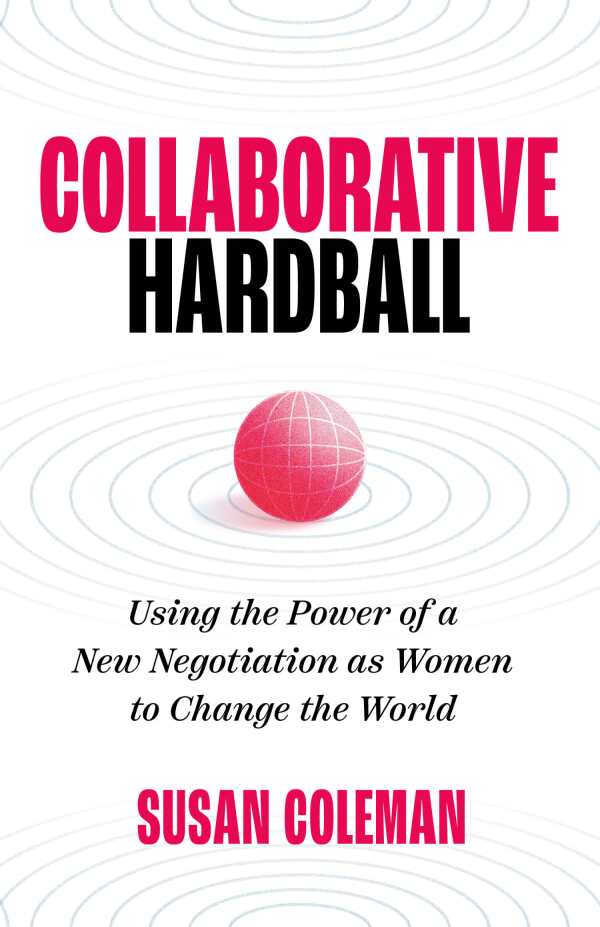
Collaborative Hardball
Using the Power of a New Negotiation as Women to Change the World
Collaborative Hardball is an illuminating career guidebook for women.
Susan Coleman’s transformational self-help book Collaborative Hardball is about effective negotiations.
Set in the context of fighting patriarchal mores in the midst of negotiations, which can generate fighting and anger rather than solutions, this book takes a general approach to understanding conflict. After some historical background on gender inequality, it proposes a negotiation style that blends “masculine” and “feminine” approaches—holistic conflict-solving. Moving from basic concepts of negotiation and conflict through to deeper considerations of the differences between needs and wants, the book explores a variety of communication tactics in depth, considering how each might be used to make negotiations more intuitive and productive.
The chapters are topical and clear, focused on negotiation factors including cultural variables and financial concerns. On the whole, negotiations are presented as an inescapable part of living in society. Further, the negotiation model that the book ultimately suggests is predicated upon decades of research and is well supported by a thorough resource list and extensive endnotes. And even though the book is heavy with information throughout, it remains focused on action items at all times. Indeed, each chapter includes questions meant to stimulate reflection and recommendations for putting its guidance into practice. One chapter—“Pause, Integrate, Apply”—is dedicated in its entirety to two tools for preparing for negotiation.
The prose is colloquial, making the book’s more academic concepts accessible to a variety of audiences. Also humanizing is the fact that the book’s recommendations are illustrated using personal anecdotes. For instance, Coleman discusses her experiences with eating disorders and sexual assault; she also muses on her sister’s decision to refuse to lead the life that people expected her to lead. Each such vulnerable tale is made to relate to the surrounding topics—used to expand upon different types of negotiation styles and outcomes.
However, the book’s delivery is somewhat undermined by its decision to center masculine and feminine concepts. These prove crucial to its ultimate model; while they are built upon observations of the social roles people assume (assertive and aggressive traits are called masculine; nurturing and caring traits are called feminine), they evoke discomfiting gender essentialism. This is particularly true where masculinity and femininity are tied to biological characteristics, as where the book refers to “men’s biological role as the protector of life.” Still, some persuasive arguments are made in relation to this binary, as where the book notes that “feminine” traits are undervalued and underestimated, even though they can be of great use in conflict situations.
An illuminating self-help book for career women, Collaborative Hardball explores effective negotiation tactics in depth.
Reviewed by
Carolina Ciucci
Disclosure: This article is not an endorsement, but a review. The publisher of this book provided free copies of the book and paid a small fee to have their book reviewed by a professional reviewer. Foreword Reviews and Clarion Reviews make no guarantee that the publisher will receive a positive review. Foreword Magazine, Inc. is disclosing this in accordance with the Federal Trade Commission’s 16 CFR, Part 255.


