

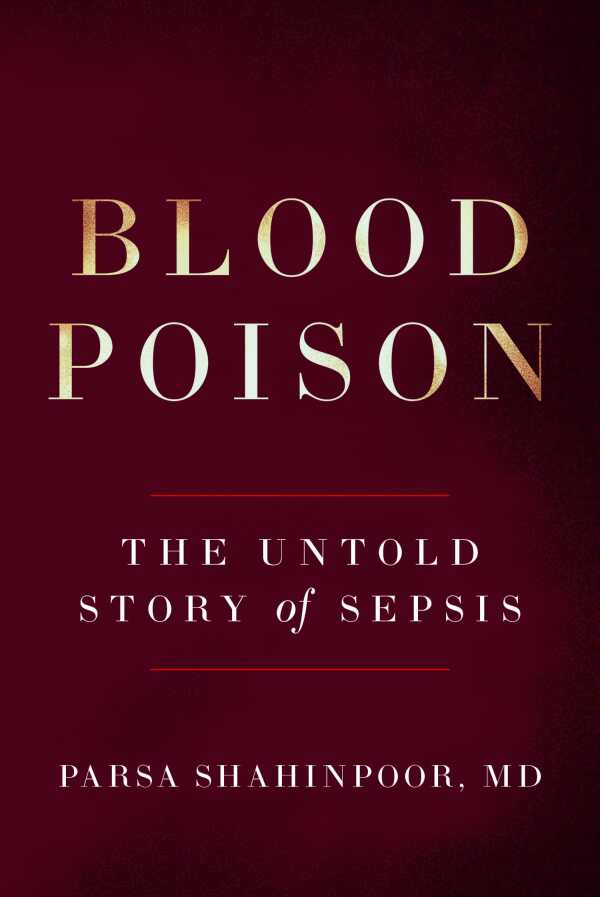
Blood Poison
The Untold Story of Sepsis
In the revealing medical text Blood Poison, the causes and effects of sepsis on the human body are described in minute detail alongside a multitude of illuminating case studies.
Parsa Shahinpoor’s fascinating medical text Blood Poison covers the history and treatment of sepsis.
A leading cause of death worldwide, sepsis was nevertheless unheard of by most Americans well into the twenty-first century and remains misunderstood, the book declares: Symptoms that “may seem relatively nonspecific, such as fever, abdominal pain, or irritability, could represent ‘red flags that someone is on the path of developing sepsis.’” The book dispels some myths surrounding the syndrome while recording its history and place in the medical field across time. In its last third, it also chronicles Shahinpoor’s efforts to increase awareness about sepsis and improve diagnoses and treatment methods related to it.
The causes and effects of sepsis on the human body are described in minute detail alongside a multitude of illuminating case studies. Although the content itself is, by and large, quite technical, the straightforward prose ensures that basic information is comprehensible to lay readers throughout. Instances of specialized terminology do arise, but the book’s edifying charts and figures alleviate their occasional demands.
Information about which demographics are at higher risk of sepsis and why expand the book’s scope, as do considerations of how climate change, poverty, and racism intersect with the condition. US healthcare is critiqued as well. Nevertheless, despite such intricacies, the book takes care to maintain focus on the human component of its work. Each individual patient’s background and personality are attended to in the case studies, keeping people at the center of the dilemma; the medical establishment’s decisions are shown to have life-changing, if not life-threatening, consequences for each. Further, because the patients are all dissimilar to one other, so are their outcomes.
However, there is a repetitive quality to the way the case studies are handled. A patient is introduced at the beginning of a chapter, then the specifics of their case are shared. This is followed by a shift toward considering sepsis as a condition, with elements of history, treatment plans, and information about advocacy wending in before the chapter returns its focus to the central patient. Still, the question of what happened to each sustains ongoing interest. The conclusion, which reveals how the parents of a child who died because of sepsis successfully advocated for changing medical paradigms in the United States, is satisfying.
An illuminating medical text, Blood Poison delves into a common, but ill-understood, medical condition, using real people’s stories to tell its tale.
Reviewed by
Carolina Ciucci
Disclosure: This article is not an endorsement, but a review. The publisher of this book provided free copies of the book and paid a small fee to have their book reviewed by a professional reviewer. Foreword Reviews and Clarion Reviews make no guarantee that the publisher will receive a positive review. Foreword Magazine, Inc. is disclosing this in accordance with the Federal Trade Commission’s 16 CFR, Part 255.


