

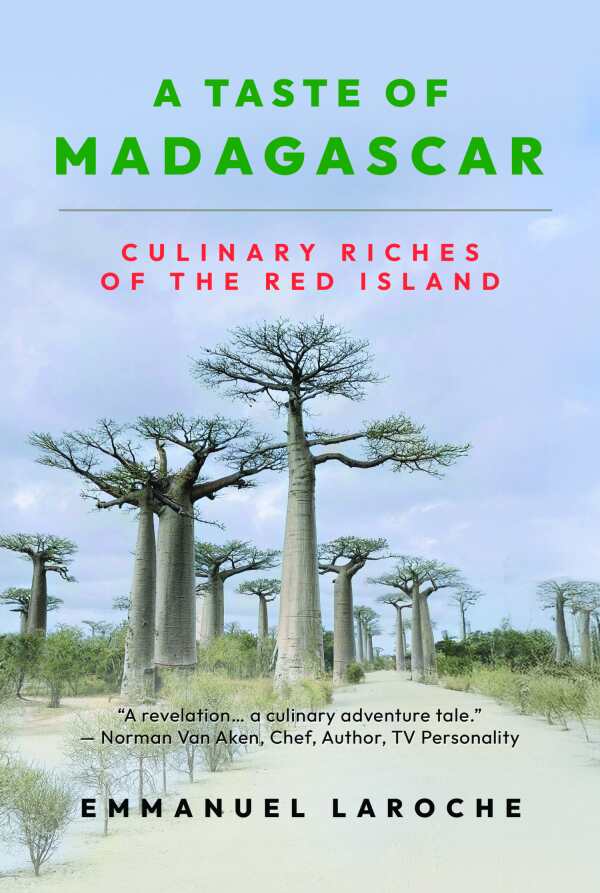
A Taste of Madagascar
Culinary Riches of the Red Island
A Taste of Madagascar is a gastronomically inquisitive travelogue that honors the nation’s diverse culture and history.
Culinary enthusiast and podcast host Emmanuel Laroche’s gustatory travelogue A Taste of Madagascar celebrates the landscape, culture, and culinary resources of Madagascar.
Drawing on travels to Madagascar to learn about the vanilla bean’s origins, this book extols the nation’s people, natural beauty, and wealth of “stunning ingredients.” Malagasy spices, caviar, cocoa, rice, and honey are among the topics it covers alongside salient information regarding historical influences on Malagasy cuisine from Indonesian, African, Arab, and Portuguese seafarers and explorers. Indeed, the book mixes fascinating facts with sensory details in its tales of pleasant travels with views of verdant hills and the Indian Ocean and arduous drives across challenging terrain. For instance, it recalls how, in an area known for illegal zebu cattle rustling, military escorts were needed to protect Laroche’s expedition group.
Throughout the book, specific culinary elements are spotlighted alongside interviews with farmers, entrepreneurs, “food artisans,” and conservationists. Madagascar produces over 80 percent of the world’s vanilla beans, the book states; the precious crop is well monitored by a vigilant man who “sits perched on his worn stool,” intuiting threats of rain and wind while vanilla beans dry in the sun: “At his signal, a ripple moves through the entire curing facility” and workers hurry to save the beans from damage. Rice, another dietary staple in Madagascar, produces a refreshing beverage, ranovola or “golden water,” made from the encrusted rice remains found at the bottom of a pot. And during the heady clove harvest, stems are separated from buds and processed for essential oils.
While some recipes are included to complement the book’s sense of culinary delight, there is a serious element to the text as well. It investigates troubling issues including economic disparity, deforestation, and climate change; it expresses urgency around topics of biodiversity, conservation, and sustainability. A French national, Laroche also expresses feelings of inherited anxiety regarding France’s once rapacious colonial presence in Madagascar.
In all, an impressive range of material is covered. Color photographs and a QR code that links to a soundtrack of lively Malagasy music are used to flesh its coverage out. However, the book is also structured around various corporate and not-for-profit entities and their involvement in Madagascar, and the inclusion of these “featured companies” results in a sense of promotional and invested sponsorship.
An engaging travelogue, A Taste of Madagascar celebrates the humanity and history beyond Madagascar’s extraordinary glories.
Reviewed by
Meg Nola
Disclosure: This article is not an endorsement, but a review. The publisher of this book provided free copies of the book and paid a small fee to have their book reviewed by a professional reviewer. Foreword Reviews and Clarion Reviews make no guarantee that the publisher will receive a positive review. Foreword Magazine, Inc. is disclosing this in accordance with the Federal Trade Commission’s 16 CFR, Part 255.


