

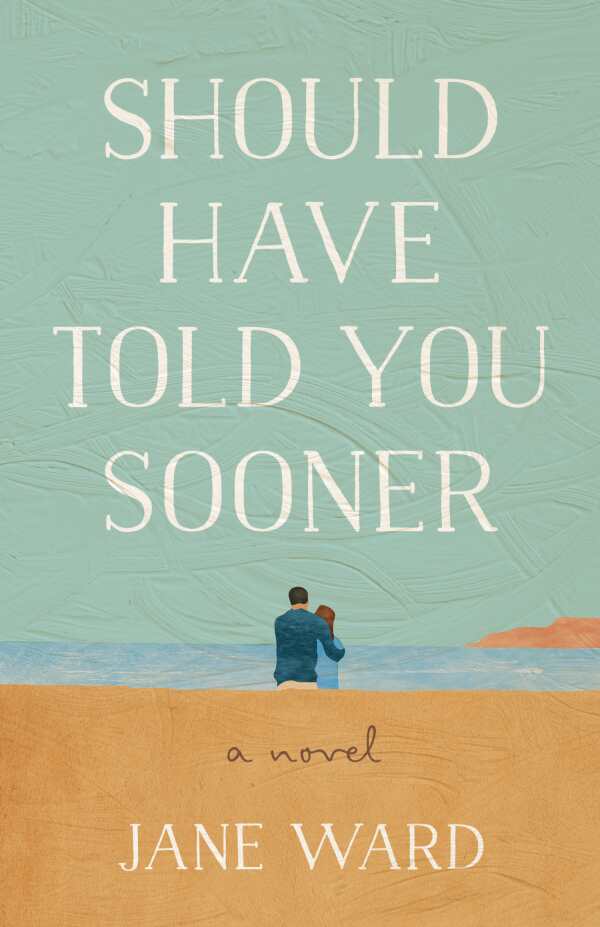
Should Have Told You Sooner
A Novel
In the insightful novel Should Have Told You Sooner, a divorced woman comes to terms with the pains of her past.
A woman confronts her English past in Jane Ward’s eloquent novel Should Have Told You Sooner, about first loves that persist across time.
Born in London and raised in the US, Noel cut her British university years short when her relationship with Bryn, a fellow student, fractured. Noel, pregnant, allowed their baby boy to be adopted. She then moved back to the US with her grandmother for what she believed would be a clean break.
Almost thirty years later, Noel’s Boston museum offers her a secondment with a London gallery. While Noel appreciates her career advancement, the move tests the terms of her pending divorce. Further, her stepdaughter, Alice, is wary about her going so far away. Still, she rejoins London’s art world and becomes reacquainted with an old friend, Calum.
As the novel trades between timelines, the aches left by Noel’s past help to explain her emotional turmoil in the present. In the 1990s, her relationship with Bryn evolved from her early enchantment with his Welsh roots to their eventual estrangement. Unsent letters penned by their son are interspersed throughout the book, covering his discovery of the adoption and his lingering questions. The question of how these varied strands might converge lends the novel tension.
The prose is pensive and languid. Noel is developed in a restrained manner; the disclosures about her past are gradual and revealing. Her son’s first name is not used until she is ready to admit that she had him, and her affinity for swimming is used to shed light on how guarded she is: “Mastering the water doesn’t always mean pushing through it.” Memories tied to London’s landmarks haunt her; a cottage in Wales is a site for tender reconciliation. Evocative descriptions of studios and exhibitions further enhance the art-infused atmosphere, with Bryn’s painting series, for which Noel was the model, serving as a keen analogy for the changes in their relationship.
As Noel learns to face her pain instead of compartmentalizing it, the novel proves satisfying and insightful. However, one of the novel’s “surprise” developments is ultimately too predictable, and some plotlines, as with those related to Noel’s marriage and stepdaughter, are too abandoned. Still, the book’s treatment of Noel’s lost years is lovely, proffering hope for her unknowable future.
In the moving novel Should Have Told You Sooner, an American art historian experiences regret and renewed desire upon her return to London.
Reviewed by
Karen Rigby
Disclosure: This article is not an endorsement, but a review. The publisher of this book provided free copies of the book and paid a small fee to have their book reviewed by a professional reviewer. Foreword Reviews and Clarion Reviews make no guarantee that the publisher will receive a positive review. Foreword Magazine, Inc. is disclosing this in accordance with the Federal Trade Commission’s 16 CFR, Part 255.


