

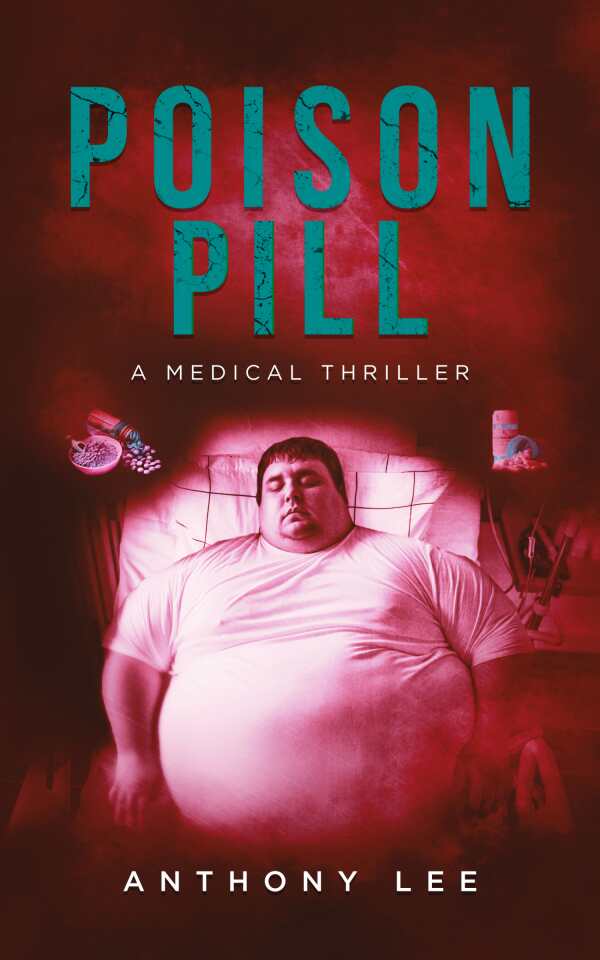
Poison Pill
A Medical Thriller
The cerebral medical thriller Poison Pill concerns both family discord and a broad pharmaceutical conspiracy.
In Anthony Lee’s busy thriller Poison Pill, a physician investigates suspicious patient deaths linked to supplements and prescription drugs.
When a patient in his twenties develops kidney failure, his doctor, Mark, learns about his family history of cardiovascular events. Indeed, the patient’s parents took a herbal supplement, Motileaf, that may have been connected to their health issues. As Mark investigates the supplement, he learns about contaminated and counterfeit pharmaceuticals distributed by a Chinese triad. Meanwhile, his estranged father—a stern immigrant—is made vulnerably by his own health crisis, forcing Mark to confront family tensions even as he pursues justice for his patients.
Variously clinical and action packed, the book’s first half builds tension through the careful accumulation of medical evidence regarding unexplained cardiovascular events in young patients, suspicious patterns of atherosclerosis, and regulatory gaps in supplement manufacturing. The investigative sections are methodical: Mark interviews patients, visits distributors, and researches pharmaceutical trials. But the book’s second half is far more active, and the shift is jarring; for example, Mark is kidnapped and held on a yacht, leading to a Coast Guard raid that is at tonal odds with the previous, foundational investigation.
The prose is clear but quite scientific at times, filtered through Mark, whose voice is direct but procedural. He gives detailed explanations of hemodialysis, differential diagnosis protocols, and cardiac catheterization procedures; he covers his diagnostic thinking processes, too. Sensory details are comparatively scant, placed for strategic value only, as with a description of Motileaf capsules that are filled with fine greenish powder, the smell of dialysis machines, and the sting of gunpowder during the raid. Further, some scenes include repetitive details, as with those at a medical conference.
The book’s conversations achieve varying mileage. Among medical professionals, they are convincing if didactic. Elsewhere, the incorporation of dialectal markers is awkward, though, and involves some off-putting stereotyping of other cultures. Further, while Mark and his father, Harold, are well-fleshed out, the bulk of the cast is dimensionless. Indeed, pharmaceutical representatives, triad leaders, and medical colleagues appear to support particular plot points, but they are vague as individuals beyond these roles. And while the book works toward a justice-focused ending that ties up plot points related to the dangerous medications, criminal enterprises, and family tension, they are quite tidy, forcing an emotional denouement atop the instances of intense action that came before.
An uneven, sometimes cerebral thriller, Poison Pill follows an earnest doctor in a life-or-death battle against a vast medical conspiracy.
Reviewed by
John M. Murray
Disclosure: This article is not an endorsement, but a review. The publisher of this book provided free copies of the book and paid a small fee to have their book reviewed by a professional reviewer. Foreword Reviews and Clarion Reviews make no guarantee that the publisher will receive a positive review. Foreword Magazine, Inc. is disclosing this in accordance with the Federal Trade Commission’s 16 CFR, Part 255.


