

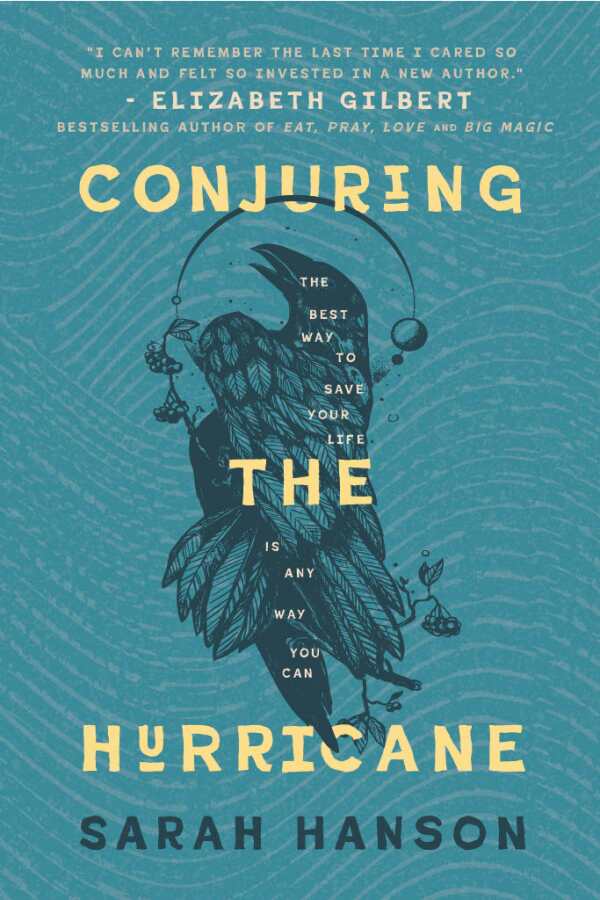
Conjuring the Hurricane
The Best Way to Save Your Life is Any Way You Can
Reflecting on suffering and healing within relationships, Conjuring the Hurricane is a revealing poetry collection.
Sarah Hanson’s moving poetry collection Conjuring the Hurricane cleaves personal suffering from political suffering and then puts them back together.
Love is the subject of many of these urgent poems, including familial, romantic, and platonic love. All, it is suggested, have the potential for danger: Violence, betrayal, and old wounds can erupt within them; language sometimes fails people as they try to articulate the patterns of their lives. Indeed, they depict physical and emotional abuse in an unabashed, defiant manner.
Its tones shifting between despair and subversive humor, as with the tone-setting note that “this is a work of fiction, except for all the parts that happened exactly as written,” the book questions when heartbreak is necessary to save oneself. “There are so many ways this story could have gone,” one poem notes, following a pregnant woman who is threatened with death and faces no good choices. And in poems about family love, the lineage of rage is “an unwanted / heirloom nobody can bear to throw away.”
Abusive relationships are explored in an insightful manner. In “Cheese Dip,” the speaker’s father turns an insignificant potluck contribution into an opportunity for psychological torture: “No explanation for how cheese dip / could set an entire night into fireworks.” Subsequent poems follow this legacy of love entwined with suffering, and the imagery in lines like “devastation / detonates like confetti” make emotional pains visceral. Iconoclastic and subversive, another poem notes “We tell a grown woman / she has daddy issues / instead of telling a grown man / he is a father-sized disappointment.” But tenderness around the human condition is also evinced, as in the “unchanged Depends” in a poem about a father’s dementia.
Musicality is the balm to the suffering evident in these poems. Slant rhymes, alliteration, and assonance are used to highlight hopes of better days. “This is the funeral and last release, / after every burial comes the feast,” one poem reads; another finds that there’s plenty of reason to save oneself when “We are all / trying to make meaning and be believed.”
However, the arrangement and sequencing of the poems is uneven. A poem considering tattoos concludes “permanency is the love we choose / to hold onto”; it is followed by “Impermanence,” which argues that “the best and worst days both end” and “impermanence is one of the sacred truths.” The proximity of these poems to one another represents a shaky acknowledgment of complexity. Elsewhere, poems centered on abusive relationships are paired on facing pages with poems centered on truer connections with lovers and friends. Without the language to support a comparison, this placement calls both types of connection into question, resulting in uncertainty.
The powerful poetry collection Conjuring the Hurricane names emotional maelstroms and practices tenderness.
Reviewed by
Michele Sharpe
Disclosure: This article is not an endorsement, but a review. The publisher of this book provided free copies of the book and paid a small fee to have their book reviewed by a professional reviewer. Foreword Reviews and Clarion Reviews make no guarantee that the publisher will receive a positive review. Foreword Magazine, Inc. is disclosing this in accordance with the Federal Trade Commission’s 16 CFR, Part 255.


