

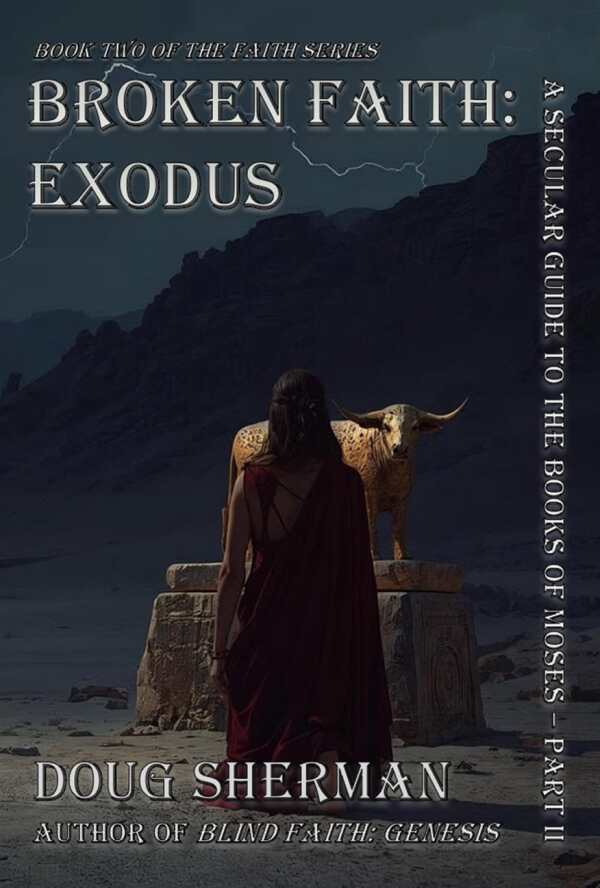
Broken Faith: Exodus
A Secular Guide to The Books of Moses Part II
A keen work of lay biblical criticism, Broken Faith: Exodus uses sharp wit and archaeological evidence to make a case against the historicity of Exodus.
Doug Sherman’s rigorous if concise work of biblical criticism, Broken Faith: Exodus, deconstructs the Exodus narrative, prioritizing historical evidence and logical consistency over dogma.
A systematic examination of the second book of the Torah, the book juxtaposes the biblical account of the Israelite departure from Egypt with the silence of the archaeological record and known history of the Bronze Age. It moves through the plagues, the parting of the Red Sea, and the receiving of the law at Sinai, treating the scriptures as a document subject to the same scrutiny as any other ancient work.
Following the chronological progression of the biblical narrative, the book includes critical pauses to evaluate the physical plausibility of its events. It distinguishes historical facts from biblical mythology, comparing the claims of the text and the findings of modern science. It highlights the vast scale of the biblical claims, too, noting the logistical challenge of moving two million people through a desert—in particular without leaving evidence like physical waste or encampment remains. The military and political state of Egypt under Thutmose III is also considered to argue that the period to which the Exodus is traditionally ascribed was a peaceful one, despite biblical descriptions of a nation ruined by supernatural disasters.
The prose is conversational and direct, utilizing wit to navigate complex theological and historical concepts. Clear descriptions and logical deductions are prioritized, and the general tone is observant and skeptical. In its critique of the Bible’s narrative structure, for example, the book makes the wry observation that the Exodus account of the enslavement “reads less like strategy and more like narrative scaffolding hastily erected to support a miracle.”
Though its breakdown of elements like the Ten Commandments, the construction of the Tabernacle, and the specific requirements of ancient Hebrew law is thorough, the book is short on outside resources to support its scholarship. Further, it is quite brief, making for dense reading. Still, its interrogation of the text is often compelling, encouraging reconsiderations of established religious viewpoints.
Filing the stories of Exodus as folklore rather than history, Broken Faith: Exodus, a secular work of lay biblical criticism, is meticulous in dismantling the historical authenticity of the Exodus narrative, using sharp wit and historical evidence to make its case.
Reviewed by
John M. Murray
Disclosure: This article is not an endorsement, but a review. The publisher of this book provided free copies of the book and paid a small fee to have their book reviewed by a professional reviewer. Foreword Reviews and Clarion Reviews make no guarantee that the publisher will receive a positive review. Foreword Magazine, Inc. is disclosing this in accordance with the Federal Trade Commission’s 16 CFR, Part 255.


