

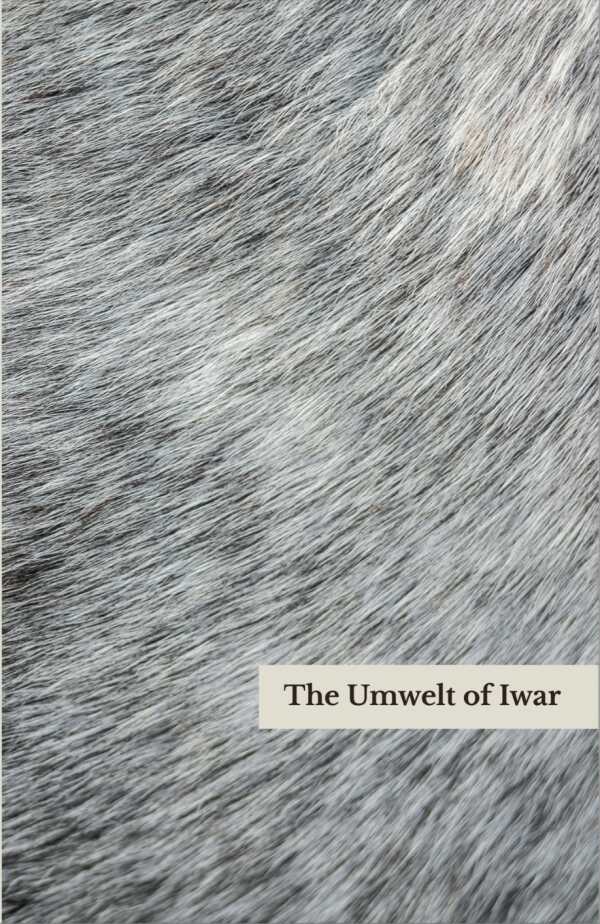
The Umwelt of Iwar
Illumined by tones of animal advocacy, The Umwelt of Iwar is a novel that records the ills of the horse-racing industry via one observant horse.
In The Umwelt of Iwar, Daniel J. Donoghue’s introspective novel about animal cruelty, a retiree’s grief intertwines with memories of his beloved horse.
Lave is a widower who enlivens his days with the company of trainers at a local stable. He is heartened by everything equine related, though he nurses regrets related to his former racehorse, Iwar. Iwar’s heartfelt point of view is included for context: Born among Southern thoroughbreds by humans who hoped to reach the Kentucky Derby, Iwar only wanted people’s experiences of him to be positive, regardless of whether or not he won.
The immersive, circling narration places Iwar at the center of a complex hub of racing traditions, which include “abominations of captive breeding” and a syndicate’s greed. The robust imagery is tailored to each scene. For example, Barracuda, an ex-convict, speaks with a voice that “evokes the chill of a slowly plucked banjo.” When Iwar, a “ribby grey gelding,” is sent to live on Barracuda’s overcrowded Louisiana lot, suspense is generated.
Dark historical references to slavery and the removal of Native Americans hint at the parallels between the extremes that powerful people take to bolster their own wealth and the horse-racing world’s similar auctions and privileges. Philosophical nods to Jean-Jacques Rousseau draw forth additional themes of inequality. These provocative insights are somewhat overt, though. Meanwhile, information about bone injuries and the drugs that are used to enhance performances illuminate the trials that racing horses endure.
Iwar’s narration amplifies the story’s stakes because of his innocence and trepidation. On occasion, the novel’s anthropomorphizing strains credulity, though, as when Iwar senses “manifest and grotesque entitlement” coming from investors. Human characters, including breeders, veterinarians, jockeys, and stable workers, assume comparatively brief roles and are less fleshed out—with the exception of Lave, who is developed in terms of his solitude and his shifting views on racing. He becomes Iwar’s owner at a stage when both he and the horse need rehabilitation, and their connection makes the previously heady novel more touching.
Still, the novel is most an eye-opening exposé of the horse-racing industry. It is sometimes too obvious in its approach, as when a stranger at a diner challenges Lave on the unethical treatment of horses. In time with Iwar’s decline and entrance into lower-stakes races, Lave comes to atone for his choices, his evolution complementing the book’s direct indictments of the industry.
A passionate novel about the horse-racing industry, The Umwelt of Iwar covers a thoroughbred’s sometimes troubled life.
Reviewed by
Karen Rigby
Disclosure: This article is not an endorsement, but a review. The publisher of this book provided free copies of the book and paid a small fee to have their book reviewed by a professional reviewer. Foreword Reviews and Clarion Reviews make no guarantee that the publisher will receive a positive review. Foreword Magazine, Inc. is disclosing this in accordance with the Federal Trade Commission’s 16 CFR, Part 255.


