
Daddy's House
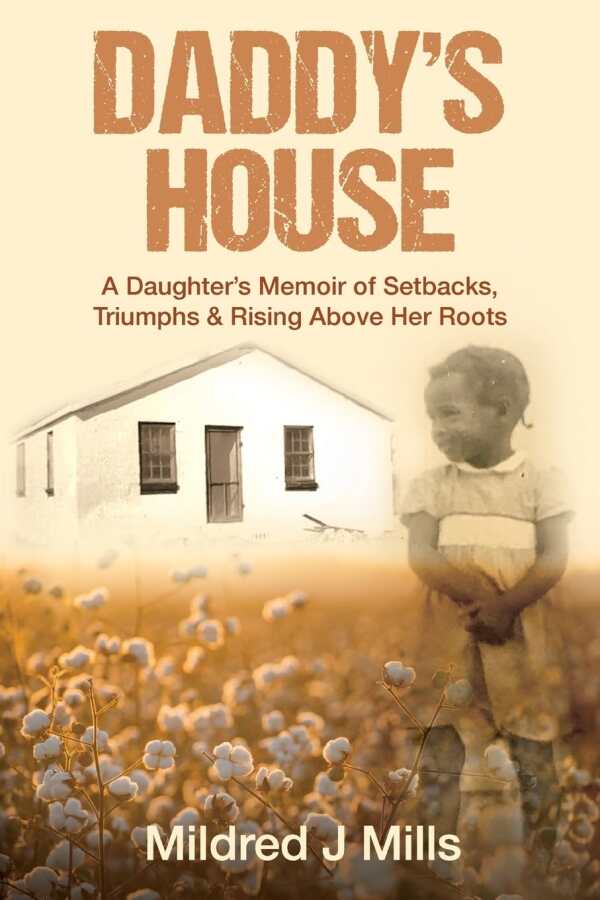
A Daughter's Memoir of Setbacks, Triumphs & Rising Above Her Roots
The evocative, gritty memoir Daddy’s House is about reckoning with the trauma of abuse and forging success fueled by faith and forgiveness.
Mildred J. Mills’s involving memoir Daddy’s House recalls a past marked by poverty and abuse.
Mills, one of seventeen children, grew up in a two-bedroom house on an Alabama farm. During her childhood, she helped with child care and worked in the fields. She also dodged the emotional and physical abuse of her father, an imposing World War II veteran and deacon.
After enrolling in college in Ohio, Mills left her childhood behind. She supported herself with aplomb, excelling in her career despite the challenges she faced. She dealt with unplanned pregnancies, bad relationships, and sexual assault. In time, she became a caregiver for her ailing parents, seeking peace through forgiveness fueled by faith.
The book honors the complexities of those in Mills’s life well, including her father, a Black man who, in the South in the 1950s, ran a white man off his property at gunpoint without negative consequence. But it also names their flaws, as when it recalls how Mills’s father beat her mother, leading to a miscarriage. Mills’s mother is developed in contrast to her husband: Soft-spoken, she is critiqued for leaving her children in their precarious environment. These nuances are teased out as Mills explores her feelings, caught between the harm her parents did and the recognition that her experiences shaped her work ethic.
The prose is marked by evocative and gritty details, as of urine-soaked mattresses shared between multiple children in diapers, Mills’s snappy work wardrobe, and the way an unfaithful lover “braided” his body with another woman’s “like a plaited horse tail.” It reconstructs conversations with a natural cadence and preferences anecdotes that are lively and propulsive. As it shifts between brief sketches, as of a Sunday School teacher’s spirited talk about the devil, and longer scenes, like those covering Mills’s first and frustrating marriage, it holds attention.
However, the book’s sequencing is quite uneven at times. Its early chapters backtrack to fill in Mills’s childhood after an in medias res opening chapter that covers her departure from the family farm. Further, a few major life events, including the death of her teenage brother, are undercut by being presented in the middle of other storylines. Mills’s daughter’s life is also covered in a halting manner, with severe language used about her during her prepubescence, before the context of her later criminal history is shared.
Still, Daddy’s House is a revealing memoir about overcoming a difficult childhood to find success in adulthood.
Reviewed by
Carolyn Wilson-Scott
Disclosure: This article is not an endorsement, but a review. The publisher of this book provided free copies of the book and paid a small fee to have their book reviewed by a professional reviewer. Foreword Reviews and Clarion Reviews make no guarantee that the publisher will receive a positive review. Foreword Magazine, Inc. is disclosing this in accordance with the Federal Trade Commission’s 16 CFR, Part 255.


