
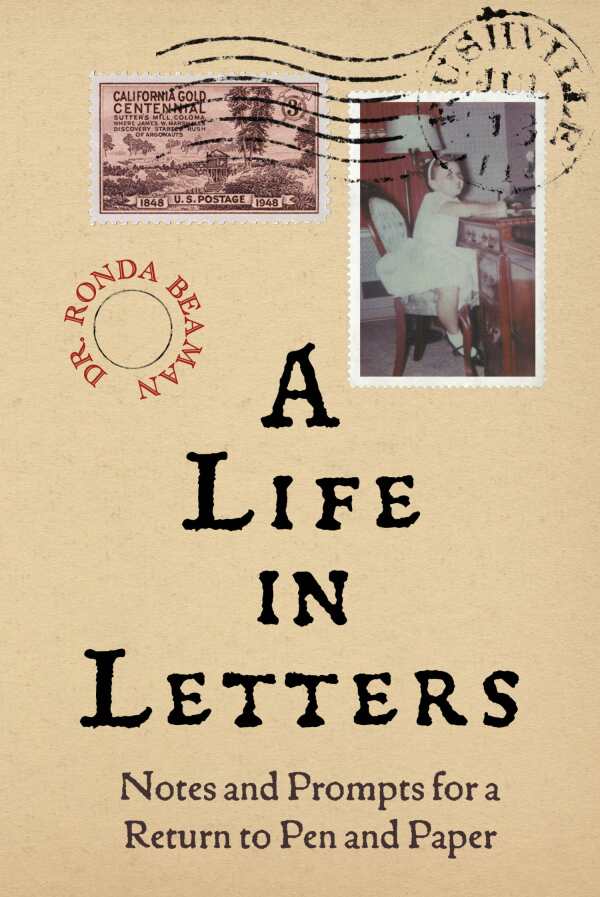
A Life in Letters
Notes and Prompts for a Return to Pen and Paper
Part epistolary memoir, part self-help guide, A Life in Letters models nurturing relationships and one’s sense of self through the neglected art of correspondence.
Ronda Beaman’s inspiring self-help book A Life in Letters is about the healing powers offered through the art of correspondence.
The book is made up of prompts in the form of unsent letters written by Beaman to various individuals and cultures who were significant in her life, including the Olmec people credited with discovering chocolate. Each letter is affixed with an intriguing label referencing qualities or recipients including aloha, hell, and the concept of magnitude; in total, they cover a wide range of circumstances and emotions. Often playful, the letters are arranged more or less in chronological order, beginning with those to her first-grade teacher, a baby elephant she saw in a zoo as a child, and a letter-in-verse to her grandmother.
Elsewhere, a college romance is recalled, in part, through lyrics from Bob Dylan’s album Blood on the Tracks. Other letters cover issues weighty issues from later in Beaman’s life, including illness and her brother’s incarceration, introducing sober and more straightforward tones to the text. Several missives are signed “Gogo”; these celebrate Beaman’s relationships with her grandchildren.
The memoir elements of the book are beguiling and vivid, with keen scene-setting details and bits of evocative dialogue incorporated. They do an able job of fleshing out people like her father with depth. Further, they are an effective complement to the book’s self-help advice, wherein clear arguments are made about the benefits of writing letters by hand. When read in quick succession, however, the letters evince some repetitiveness. Further, most are brief—more effective as standalone prompts or examples than part of a cohesive personal tale. Blank, lined pages fall between each letter as spaces for reflection and action.
Following the letter prompts, the book doubles down on the benefits of writing letters that may never be sent. Its assertions about the therapeutic value of writing letters are bolstered by references to various studies, some of which point to the practice’s usefulness in settings like bereavement counseling and cognitive behavioral therapy. These nudges to compose letters to influential people like a favorite teacher, a celebrity, or a former childhood bully prove persuasive. But the book is embellished by less official sources, like quotes about letter-writing from venerable poets and authors, including Emily Dickinson and Donald Hall. More distinguishing are its specific tips on how to write a meaningful and entertaining letter: Correspondents are urged to include concrete details in their notes and to pay attention to structure, for example. Such tips are well supported by examples from Beaman’s own letters, which serve as useful templates for various epistolary forms.
An inventive self-help guide that’s supported by personal examples, A Life in Letters is a spirited manifesto on a classic art form.
Reviewed by
Suzanne Kamata
Disclosure: This article is not an endorsement, but a review. The publisher of this book provided free copies of the book and paid a small fee to have their book reviewed by a professional reviewer. Foreword Reviews and Clarion Reviews make no guarantee that the publisher will receive a positive review. Foreword Magazine, Inc. is disclosing this in accordance with the Federal Trade Commission’s 16 CFR, Part 255.


