

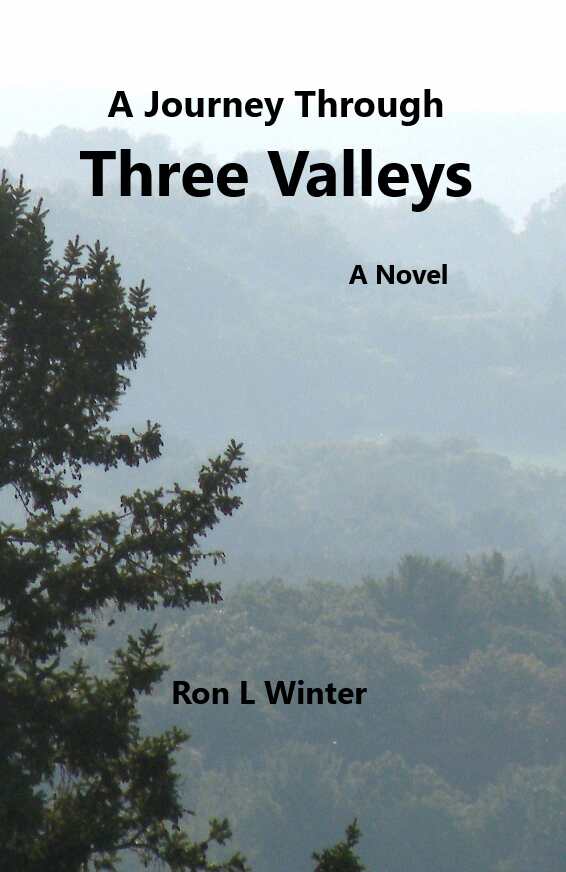
A Journey Through Three Valleys
Love Tragedy Renewal
People change in quiet increments, influenced by forces they can touch and forces they cannot, in the moving novel A Journey Through Three Valleys.
In Ron L. Winter’s character-focused novel A Journey Through Three Valleys, people move through mountains, small towns, and political upheaval, carrying on private battles inside vast landscapes.
In the Peruvian Andes, Paul enters his Peace Corps assignment in the Callejón de Huaylas with a list of planned projects and minimal success. Agricultural ideas stall, technical fixes fall flat, and his early months reveal that the province is shaped by customs, habits, and caution toward outside influences.
The momentum shifts when a priest, José, directs Paul to build a bathroom for the kindergarten, pulling him into the physical work of constructing adobe walls and pouring cement floors amid daily life in Ayha. The project gives him a path into the community and a clearer view of the forces that shape the region.
A later visit to Succha introduces Paul to Elena, Alejandro, and Tàmia. Elena offers a wide sense of Succha’s past and present; Alejandro has a history marked by loss and years of political study, which shape his rigid worldview; Tàmia balances fieldwork, childcare, and family responsibilities while assisting Paul with seed planting and construction. Their stories intersect through shared work, quiet exchanges about Peru’s future, and awareness of the pressure carried by rural families during a period of national strain.
Each major figure steps into the narrative with a defined purpose rooted in service, survival, ideology, or desire. Their small actions gain force as they expose the tensions between individuals and groups. When Paul and José smooth mud walls with their feet and narrow boards, for example, the scene shifts from talk to labor. Construction, teaching, and agricultural tasks become spaces in which conflict, connection, and doubt surface through people’s efforts rather than through direct explanations.
The pacing mirrors the mountains that surround the characters. Time stretches through travels and extended conversations that fill the story with texture and reflection. The deliberate rhythm makes space for details and deepens the sense of immersion in the Andes. Some scenes, including an exchange with Alejandro in Guillermo’s bar and a conversation with Señor Flores, carry ideas forward at a slower pace, their ease suiting the environment and highlighting how thought, history, and geography shape people from within.
The prose is strongest when it centers physical objects, grounding scenes via clear details. These include mentions of the wooden ox yoke that Paul builds, the hand-mixed adobe on classroom walls, the ponchos that shield passengers from mountain wind, and the green sweater that Tàmia wears during her trip to Huaràz. Such tactile factors impart a sense of presence, drawing strength from the land and from the labor that defines much of the characters’ lives.
A Journey Through Three Valleys is a layered novel shaped by the land, work, and conviction.
Reviewed by
Kiana Curtis
Disclosure: This article is not an endorsement, but a review. The publisher of this book provided free copies of the book and paid a small fee to have their book reviewed by a professional reviewer. Foreword Reviews and Clarion Reviews make no guarantee that the publisher will receive a positive review. Foreword Magazine, Inc. is disclosing this in accordance with the Federal Trade Commission’s 16 CFR, Part 255.


