

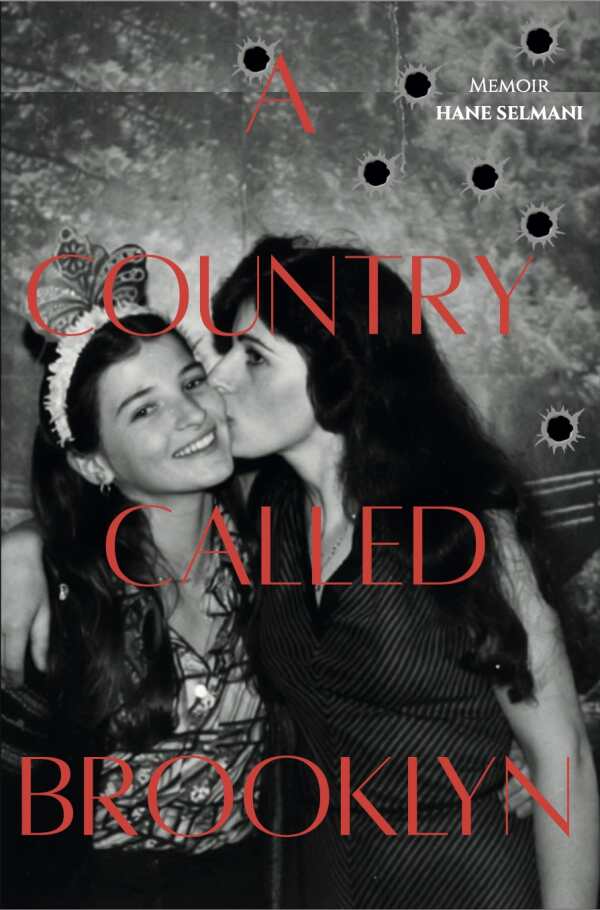
A Country Called Brooklyn
Blood Feuds, Family Honor & My Sister’s Murder
A gripping account of an interfamily blood feud that runs alongside critiques of a patriarchal culture, A Country Called Brooklyn is an involving memoir.
Hane Selmani’s riveting true crime memoir A Country Called Brooklyn details her upbringing in New York’s insular Albanian immigrant community and her sister’s related murder.
The youngest child of an Albanian family, Selmani came to the United States from Kosovo in 1970. After settling in Brooklyn, her family continued to follow the northern Albanian code of laws known as the Kanun. The fifteenth-century Kanun’s patriarchal structure is rooted in strict gender roles and a commitment to morality and honor; within it, transgressions are handled by clans and families, in avoidance of external legal or justice systems.
Selmani’s older sister, Jariyeh, was mired in an unhappy marriage, dressing with flair as she hurried to her evening job cleaning Manhattan office buildings. Tensions built, and her relationship with her husband, Mehmet, deteriorated when he began using and selling drugs. Jariyeh determined to defy the Kanun and “dishonor” her family name by pursuing a divorce. Her subsequent murder is the book’s central focus; a “blood feud” was declared, and her oldest brother vowed to kill Mehmet in retaliation. Selmani was sixteen at the time, navigating her anguish and her duties as an Albanian daughter at the same time.
Alongside her family story, Selmani includes engrossing bits of Albanian history, covering Illyrian paganism, Ottoman rule, and postwar communism. Cultural pride is expressed, even as the book critiques elements of the culture, as that marriage, as decreed by the Kanun, involves complex rules and negotiations, within which a bride must be subservient to her husband and his family. These expectations are juxtaposed with characterizations of Selmani’s family members, including her indomitable matriarch, Nana, and her intrepid yet compassionate father.
Selmani’s account of the interfamily blood feud is heightened by suspenseful details, though some slow the book’s pace. But a scene relating Mehmet’s first drug deal is sharp and compelling; he feels a thrill of “intoxicating” power and immediate financial gain. Manhattan and Brooklyn in the 1970s and 1980s are also depicted with pulsing energy, from bicentennial fireworks to punk rock clubs and Studio 54’s disco debauchery.
The book chronicles Mehmet’s murder trial through an effective and swift-moving blend of court transcripts and emotional remembrances. With the memoir’s poignant conclusion, Selmani notes how, for her, Jariyeh’s death exposed a culture still undermined by “female oppression,” “old beliefs,” and “silences.”
A captivating and harrowing memoir, A Country Called Brooklyn is about how Albanian honor and tradition led to an American tragedy and personal emergence.
Reviewed by
Meg Nola
Disclosure: This article is not an endorsement, but a review. The publisher of this book provided free copies of the book and paid a small fee to have their book reviewed by a professional reviewer. Foreword Reviews and Clarion Reviews make no guarantee that the publisher will receive a positive review. Foreword Magazine, Inc. is disclosing this in accordance with the Federal Trade Commission’s 16 CFR, Part 255.


