
Book of the Day Roundup: April 27-May 1, 2026
Minerva
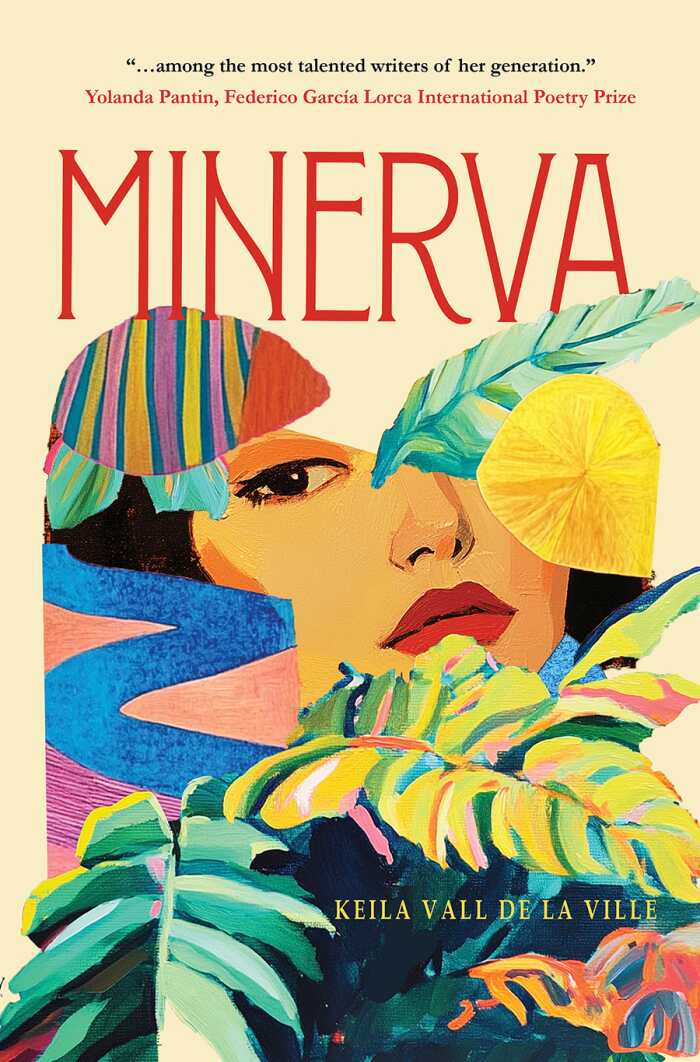
Keila Vall de la Ville
Robin Myers, translator
Regal House Publishing
Softcover $20.95 (282pp)
978-1-64603-673-8
Buy: Local Bookstore (Bookshop)
In Keila Vall de la Ville’s incisive novel Minerva, an aspiring Venezuelan dancer contemplates her artistic future and unusual family background.
Minerva is raised in an unconventional manner: by her mother and two fathers in Caracas. Her mother, Lissa, designs unique fashion creations. Diego and Martín both consider themselves Minerva’s fathers: Diego, a professor from Spain, was imprisoned for being gay during Franco’s regime; theatrical and captivating Martín is a “punk” and a “diva” who likes to dress up as La Mimí, his female alter ego. The trio’s gender roles are fluid, and Minerva grows up in an environment of love, encouragement, and domestic stability.
At school, however, Minerva receives disapproval because of her three-parent home. She’s also fixated on learning the identity of her actual biological father. Meanwhile, Venezuela experiences increasing sociopolitical chaos, crime, and shortages of food and medicine. When Minerva’s safety and ballet career are imperiled, her parents insist that she relocate to the US. Now twenty years old, she feels both guilt and relief as she boards the plane, excited by the prospect of new opportunities.
The swift, compact chapters alternate between enmeshed flashbacks and observations of Minerva’s evolving life in New York. The agile prose evokes the lithe tension of dance; Minerva’s “vital energy” compels her to express internal rhythms. “When I dance, I’m reborn like a lit match,” she notes. “I create the matter that makes me, one pulse at a time.” But upon learning that Lissa is in danger, Minerva rushes back to Caracas, leading the book to a heartening yet tenuous conclusion marked by personal emergence.
Propelled by sensuality, wit, and grace, the novel Minerva concerns the daughter of a distinctive family.
MEG NOLA (February 27, 2026)
Middlemen
Literary Agents and the Making of American Fiction
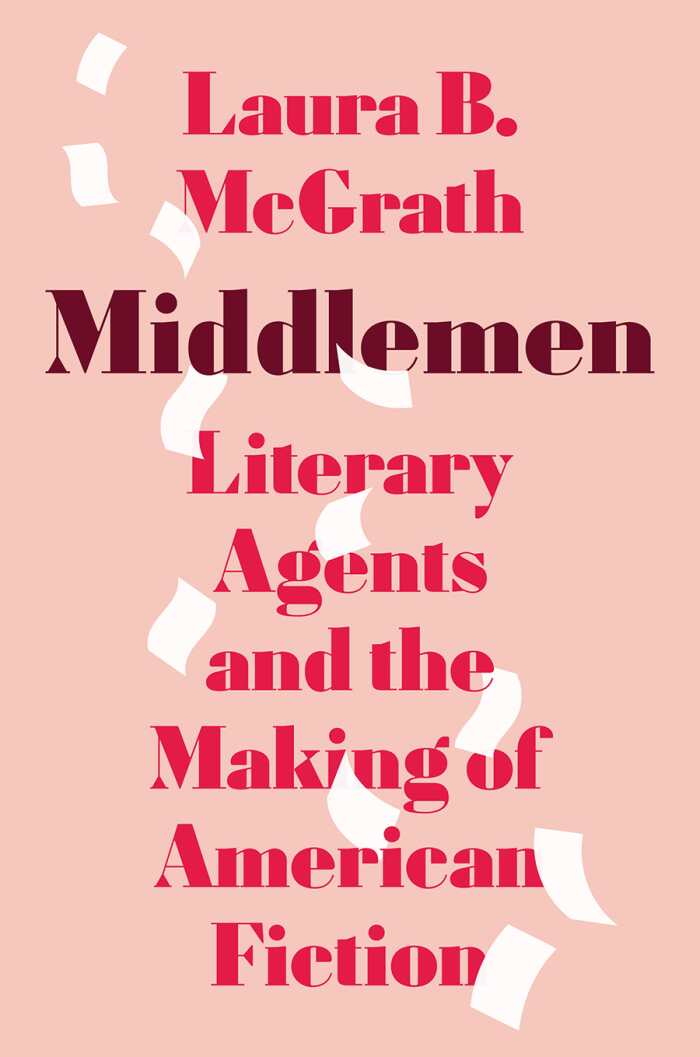
Laura B. McGrath
Princeton University Press
Hardcover $29.95 (256pp)
978-0-691-25616-0
Buy: Local Bookstore (Bookshop)
Laura B. McGrath’s Middlemen is a thorough, diverting investigation of the role literary agents play in the creation of book markets and reader tastes.
“No figure has been more significant, and yet more invisible, in American literature than the literary agent,” the book opens. Agents have operated since 1875 in the UK, but only from 1927 in the US. With a focus on the 1950s onward, the book illuminates how agents function as “the first and the most consequential” gatekeepers of the publishing world. It also demystifies clichés of the profession (like the query letter, slush pile, and publishing lunch). A work of “literary sociology,” it includes extensive endnotes and a lengthy bibliography. However, much is off the record, based on intuition and conversations with 75 agents.
The structure is chronological and thematic. Each chapter spotlights a celebrated agent, starting in 1952 with Sterling Lord, who persisted past a bevy of rejections to secure a deal for Jack Kerouac’s On the Road, earning fame for both. Agents prize plot, genre, and marketability more than writing style, the book reveals. While short story collections are a hard sell, standout individual stories in literary magazines might be taken to presage a successful debut novel, so agents browse them to target potential clients.
Eighty percent of agents are women, and seventy-three percent of publishing professionals are white, the book reveals. Given agents’ “great deal of influence over the literary marketplace,” such homogeneity is said to pose a threat. On the flip side, Nicole Aragi represents multicultural authors, and Black agent Marie Dutton Brown boasts a fifty-seven-year career, both aiming to bypass “common narratives” (such as slavery) that present “a limited vision of Black life.”
Through profiles of famous literary agents and their clients, Middlemen, an invaluable work of literary analysis, goes behind the scenes in the American publishing industry.
REBECCA FOSTER (February 27, 2026)
Jibberjack, Fibberjack
Stefanie Gamarra
Marta Pilosio, illustrator
Marshmallow Tree Press
Hardcover $18.99 (32pp)
979-899886652-4
Buy: Local Bookstore (Bookshop)
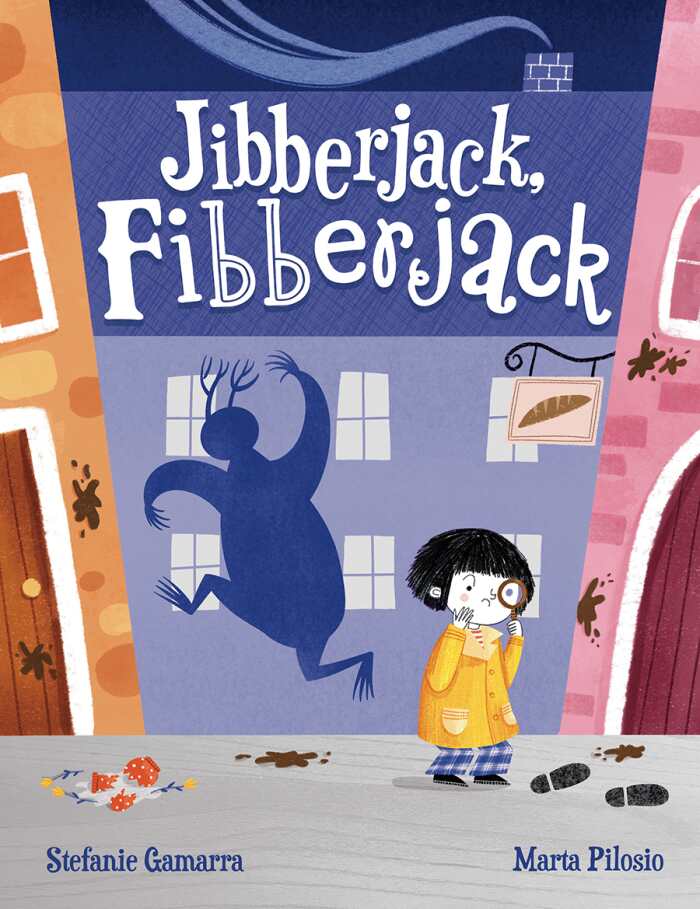
Though dismissed by the adults around her, Frida, an aspiring detective, is on the case of the Jibberjack, a monster terrorizing the town of Rumorridge. Trampled tulips, muddy slides, and missing pigs are all blamed on the menacing Jibberjack, but as Frida pieces together the clues, she uncovers that the real monster is something even scarier: good old-fashioned greed. Bright pinks, purples, yellows, and oranges complement this lively romp, while a variety of textures and techniques add visual interest.
DANIELLE BALLANTYNE (February 27, 2026)
The Radiant Dark
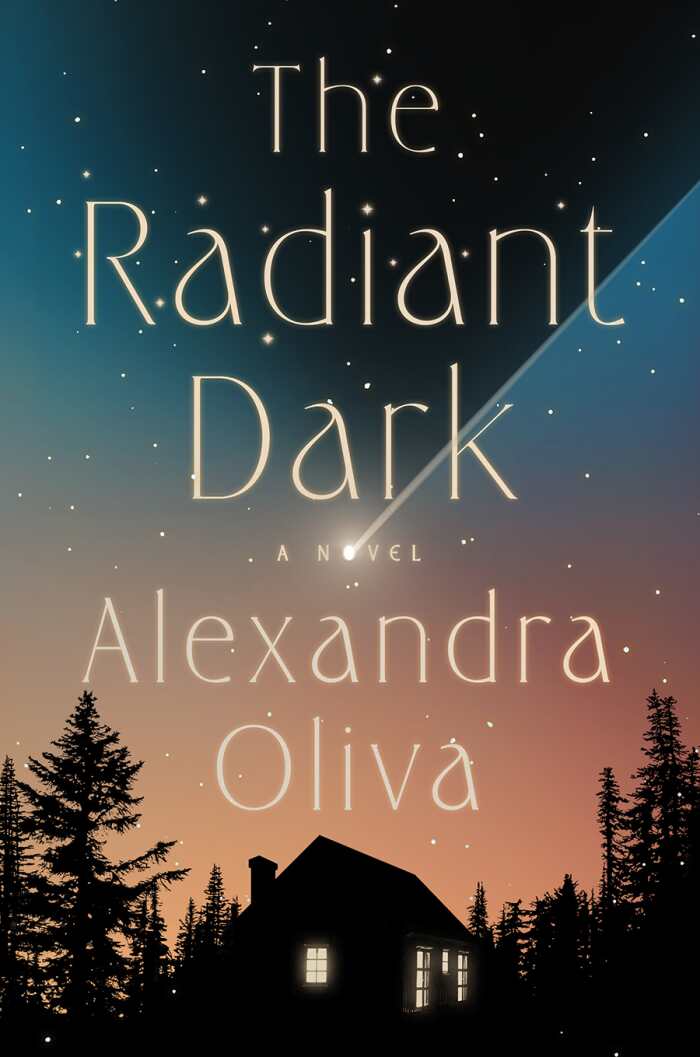
Alexandra Oliva
SJP Lit
Hardcover $28.95 (416pp)
978-1-63893-252-9
Buy: Local Bookstore (Bookshop)
The discovery of an alien communication changes a family’s trajectory in Alexandra Oliva’s rich speculative novel The Radiant Dark.
When scientists announce that a repeating light pattern is a message from extraterrestrials, Carol drops her newborn son, Michael. Later, she names her daughter Rosanna, after the Rossians, the beings discovered the night she was conceived. Overwhelmed by simmering anger and resentment toward her husband, Carol resolves to be the best mother. In the years between the global response to the Rossians and beyond, Carol, Michael, and Ro navigate a world wherein aliens exist, and families still split like light in a prism.
A sense of wonder permeates after the discovery of the Rossians, though the story remains grounded because of its heartbreaking missteps and resonant triumphs. Even as Michael and Ro repeat the patterns of Carol’s childhood, like being adultified, cast as emotional caretakers, and filled with unresolved anger, the trio’s fraught connections to one another are centering.
Explanations of the science underpinning deep space communication are found throughout the book. Concepts in the field of space science are illustrated by the content and analysis of the messages traded between the species. The book’s timeline spans over thirty years, settling on pivotal years that coincide with life events and scientific milestones.
The narrative excavates the emotional and psychological trauma of the core family through their engagement or disengagement with Rossian existence: Carol turns to spirituality, Ro turns to science, and Michael turns to nature. By following their parallel approaches, often in consecutive sections, the book shows how the ties that bind them stretch thin but do not break.
The Radiant Dark is a poignant first contact novel about the universal search for belief, connection, and understanding.
DONTANá MCPHERSON-JOSEPH (February 27, 2026)
Farewell Tangier
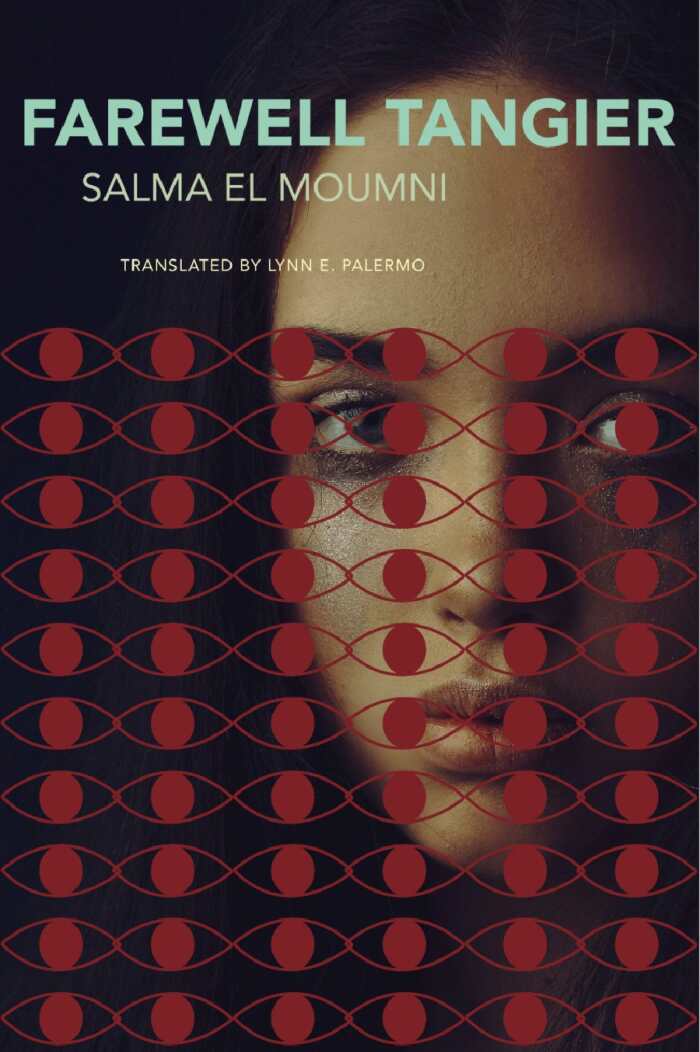
Salma El Moumni
Lynn E. Palermo, translator
Seagull Books
Softcover $21.00 (112pp)
978-1-80309-620-9
Buy: Local Bookstore (Bookshop)
In Salma El Moumni’s sinuous novel Farewell Tangier, a young Moroccan woman struggles with self-doubt, body dysmorphia, and cultural and sexual repression.
From the age of ten, Alia notices men pursuing her with territorial aggression, as, in Tangier, men can fondle, accost, and sexually assault women with relative impunity. The leers and advances increase as she becomes more curvy and mature. Mystified by such behavior in her late teenage years, Alia uses her cellphone camera to take intimate photographs of her body. The photographs are for her own contemplation; she does not share them. She also worries about Moroccan law, which prohibits “voluntary nudity” and punishes violators with imprisonment.
After a brief involvement with Quentin, a fellow student and French expatriate, Alia is shocked to discover her photographs on Instagram. Though she cannot verify whether manipulative Quentin posted the pictures, she watches as the view counts for the images increase with unnerving rapidity. Terrified of being arrested, she also dreads her father’s impending wrath regarding the pictures.
Narrated with detached urgency, the taut and spiraling narrative conveys Alia’s feelings of yearning and entrapment well. After moving to Lyon, she feels like she lives in “the crack” between “two worlds”; though she has more freedom in France, she is haunted by Tangier’s “salty air” and “streets scented with incense.” Further conflicted by neocolonial “inferiority” and her bisexual attractions, Alia’s observation of Lyon’s Pride Parade is depicted with poignant intensity. Amid exuberant crowds and colorful flags, “bare-breasted women” march with confidence; Alia’s eyes flood with tears as she realizes that liberation is “within reach,” if she can “stop feeling shame.”
A sensual and unsettling novel, Farewell Tangier centers a woman moving beyond cultural and technological subjugation to seek her true self.
MEG NOLA (April 20, 2026)
Kathy Young


