
Justice, Guilt, and the Cost of Silence
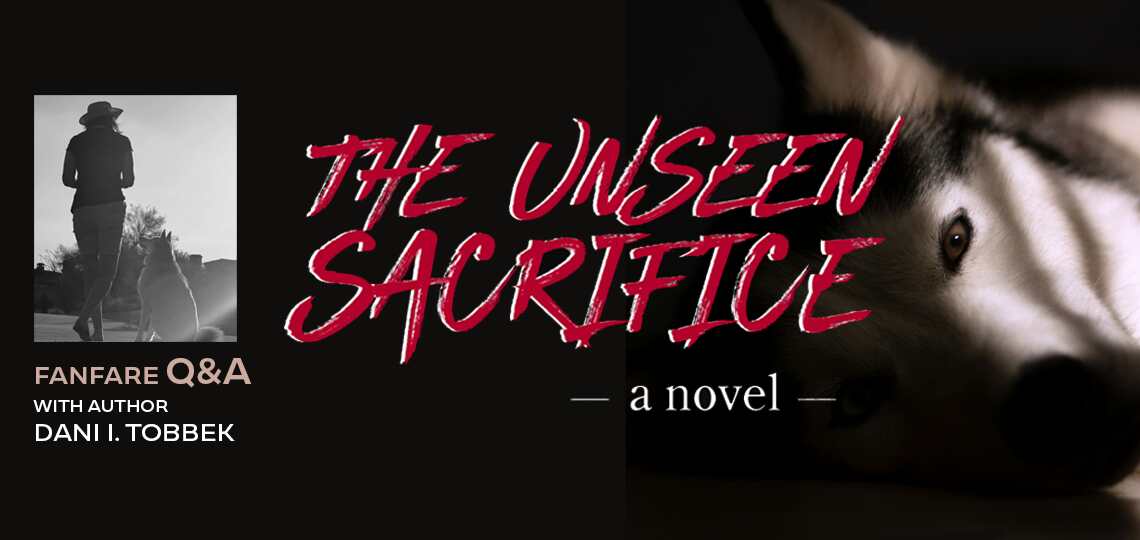
Reviewer John Murray Interviews Dani I. Tobbek, Author of The Unseen Sacrifice
Guilt and regret play a prominent role in the human condition, that’s just a fact. And by nature, they force many of us to hide our struggles from public view due to the shame involved. Sacrifice closely follows in that list of heartaches because our hopes and dreams always face a reality that requires compromises. We never quite live the life we imagine and some of us never come to grips with that realization.
So is it any wonder that our best novelists make use of guilt, shame, regret, sacrifice, and the like to great effect in their storytelling? Dani Tobbek offers a splendid example in her new novel, The Unseen Sacrifice. As she says in today’s interview, “We all reach moments in life where we’re faced with giving something up—whether to protect someone we love, to gain something greater, or simply to grow. Guilt is what lingers in the spaces between those choices. It’s the emotional weight that makes sacrifice both painful and profoundly human.”
John Murray’s glowing Clarion review of the book turned us on to this special novel and we’re thrilled to introduce Dani to the Foreword audience.
Enjoy.
The book is set in the harsh but beautiful desert landscape of Nevada. How did the setting influence the tone and emotional arc of the novel? What drew you to this setting, and how did the physical landscape influence the characters or themes?
The Southwest desert is both harsh and breathtaking—a place where stillness meets intensity. Its calm, laid-back rhythm felt like the perfect backdrop for a story that explores something extraordinary beneath the surface. The brilliant sunrises, the golden warmth of the days, and the watercolor sunsets all evoke a sense of peace and reflection. That serenity became the foundation for Mia’s character—she’s grounded, connected to nature, and guided by inner calm.
What also intrigued me about Nevada is its striking contrast. It’s home not only to this tranquil desert but also to Las Vegas, the vibrant and notorious “Sin City.” I wanted to reflect that duality—the purity and balance of the natural world set against a darker, more chaotic energy. From that contrast emerged the novel’s emotional tension: an evil presence rising against Mia’s inherent goodness, mirroring the eternal struggle between light and shadow that exists both in nature and within ourselves.
The courtroom scenes drive much of the tension. How did you research/structure the legal aspects of the case? Was it difficult to balance authenticity with the compelling narrative?
The inspiration for the courtroom scenes came from many real-life stories I read in news articles about family dogs who had attacked livestock and were taken from their homes, often to be euthanized. One case that stayed with me was about a beautiful Siberian Husky named Luna. The outcome deeply upset me. As someone who has volunteered at animal sanctuaries and shelters, I’ve seen firsthand that behavior isn’t defined solely by breed—it’s shaped by upbringing, environment, and circumstance.
With my background in journalism, I was frustrated by how one-sided many of these stories were. No one seemed to be listening to the other perspective—the dogs had no voice to defend themselves. They’re living in a human world governed by human laws, and that doesn’t always serve their best interests.
As I delved deeper, I began studying various real court cases where attorneys seemed detached from the moral weight of their work—representing clients they didn’t believe in, simply saying, “I did my job.” That phrase haunted me. I spoke with numerous attorneys, judges, and mediators and found that, too often, the focus was on money or notoriety rather than justice. Only a few, in my opinion, were truly in it for the right reasons. That moral tension—between duty and conscience—became central to how I structured the legal aspects of the novel.
Many characters in the book wrestle with guilt. What drew you to explore guilt as a driving emotional force, and how do you think it shapes the idea of sacrifice?
Ah, guilt—those of us who are Jewish know it well. Jewish guilt has a way of weaving itself into our lives, sometimes quietly, sometimes with full force. I’ll admit, I’ve even used it myself, and it’s powerful. It goes straight to the heart.
In the novel, guilt became a thread that connects so many of the characters, shaping their choices and ultimately their sacrifices. But what exactly is the sacrifice? Is it the sheep, Kasey and Luca’s freedom, a child’s self-confidence, a soulmate, the Rabbi’s soul, one’s conscience, or a true friend? Each character gives up something deeply personal.
To me, sacrifice looks different for everyone. We all reach moments in life where we’re faced with giving something up—whether to protect someone we love, to gain something greater, or simply to grow. Guilt is what lingers in the spaces between those choices. It’s the emotional weight that makes sacrifice both painful and profoundly human.

The novel hinges on what is hidden, what is unseen, and how silence or community complicity can hurt as much as the overt conflict. Was this idea of “unseen sacrifice” something that emerged during writing, or something you set out to explore from the beginning?
The novel actually began under a very different title—A Voice for My Dogs—and that was the story I intended to tell. I had my characters mapped out, and I thought I knew exactly where the narrative was going. But once I began writing, the story started to shift. My words pulled me in a new direction, and instead of resisting, I followed. What appeared on the page felt honest, layered, and true to the frustration and emotion I’d been carrying from what I’d witnessed in real life.
The idea of the The Unseen Sacrifice wasn’t something I planned from the beginning—it emerged naturally as I wrote. My process has always been the same: close my eyes, imagine the scene and immerse myself, then write what I feel. As I did that, the themes of silence, complicity, and hidden cost revealed themselves. They became the emotional backbone of the novel, shaping the story far more deeply than I first expected.
The suspicion, the neighbor’s vendetta, the community turning against Mia—those dynamics feel very real and layered. How did you envision and craft the supporting characters (neighbors, the rabbi, the sheriff) to reflect different moral stakes?
People often assume that a dog’s prey drive is the only reason they might attack another animal—and while that can be true, it’s far from the whole story. Jealousy, insecurity, and old grudges still exist in adults; we don’t magically outgrow that green-eyed monster. I wanted the supporting characters to reflect those very human flaws.
The rabbi, for example, became the emotional bridge between the two families and the wider community. She was loved, trusted, and relied on—yet she found herself pulled into the middle of the conflict. She had to decide where her loyalty truly lay: with the family she adored, or with the ones who had supported her dream. That moral tension felt real and relatable to me.
I also spent time speaking with animal control officers about what it’s like to work with both “good” dogs and “bad” dogs—and what those labels even mean. What struck me is that most of them are genuine animal lovers who try to act in the best interest of the animals, even when the public doesn’t see that nuance.
What I hoped to show through these characters is that there are always hidden layers. People make assumptions quickly, but there’s almost always more beneath the surface—more emotion, more conflict, more humanity than meets the eye.
There’s a quiet spirituality running through the book with a sense of faith tested not by miracles, but by endurance. How consciously did you weave that spiritual undercurrent into the story’s moral tension?
I’ve always been a very spiritual person, so that undercurrent naturally found its way into the story. I drew heavily from my own experiences—the small moments that remind me I’m being watched over, like the yellow butterflies that still flutter around me at just the right times. The desert, the mountains, the wind, the animals … all of these elements make me feel grounded and connected to something greater than myself.
So the spirituality in the book wasn’t something I forced; it emerged from that connection. It felt right to explore faith not through grand miracles, but through endurance, quiet strength, and the belief that we’re guided even when life feels uncertain. That gentle, steady faith became part of the moral tension the characters face, shaping how they navigate the challenges before them.
When you finished writing, was there a particular scene or image that stayed with you the most—something you couldn’t quite leave behind? How did you decide where to stop Mia’s journey, and what emotions did you want readers to carry with them after the final page?
So many scenes, so little space! There were many scenes that stayed with me long after I finished writing. I can still feel my heart leap into my throat during the courtroom moment when the judge barely pauses before announcing the dog’s fate—that sense of shock and helplessness stayed with me as if I were standing in that room myself. The scene near the soccer field between the rabbi and Mia stayed with me as well. Writing it was incredibly emotional because I had to step into both of their hearts—two people confronting a painful truth after the damage that had already been done.
And then there’s the real-life image I still can’t shake: a tiny Cocker Spaniel at animal control, taken from her puppies after she bit a stranger who reached for her nursing baby. She was crying for her pups, her milk soaking the towels beneath her. That moment haunted me, and it influenced the emotional tone of the book more than I realized at the time.
I knew Mia’s journey was complete when I felt I had nothing left to add—when her story reached a natural, truthful ending. My hope is that readers will close the final page and think, “Wow, I didn’t see that coming, but I’m glad it ended happily.” I want them to walk away with a deeper understanding that a dog should never be judged solely by its breed, but rather by the life it has lived and the circumstances it’s been placed in. And I hope, too, that readers reflect on our legal system, and the idea that true justice shouldn’t depend on which attorney puts on the better show.
The Unseen Sacrifice
Dani I. Tobbek
Emerald Books (Oct 21, 2025)
Clarion Rating: 4 out of 5
A woman who’s driven by her fierce devotion to her dogs and her family goes up against her neighbors in court in the legal thriller The Unseen Sacrifice.
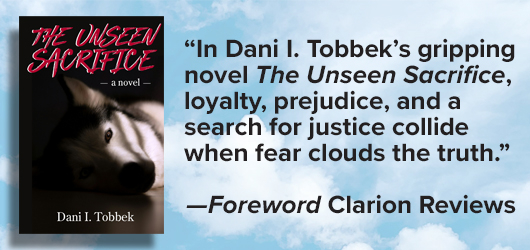
In Dani I. Tobbek’s gripping novel The Unseen Sacrifice, loyalty, prejudice, and a search for justice collide when fear clouds the truth.
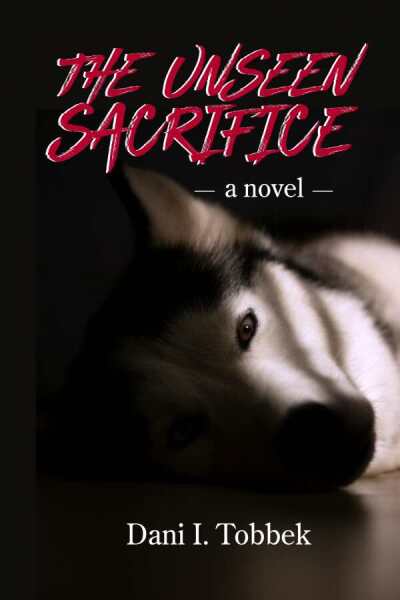
Mia’s peaceful life in Henderson, Nevada, is upended when her aloof neighbors accuse her dogs Kasey and Luca of attacking their sheep. The brutal nature of the attack leads the tight-knit community to shut Mia out. The dogs are detained while legal proceedings and medical investigations proceed.
Mia attempts to fight back, but her neighbors target, harass, and escalate the situation for hidden reasons, making defending the dogs difficult. Even after winning the civil case, Mia endures false reports to the authorities and private investigators. Then her neighbors drag her back into court with claims that the dogs attacked them too.
The book is moved along most by its dramatic, suspenseful courtroom scenes, through which Mia fights to free her dogs and confronts community prejudices. But even beyond these scenes, the narration remains consistent in form and tone: Each chapter begins with a hook and closes with building tension, and each scene—from high-stakes exchanges to fraught conversations between friends and quiet interludes with Mia and her dogs—serves a clear purpose within the larger story, revealing new facets of who people are and what’s behind their conflicts. Details such as the glare of courtroom lights and the hush of dawn flesh the story out further.
A few members of the community are aware of the truth behind the neighbor’s accusations. They keep the information to themselves out of fear of disrupting the relationships, though they see what happens to Mia and are aware of the potential punishment for her dogs. That the community members do not speak up over an issue that proves to be important only to to the neighbors is glaring—a loose end in an otherwise tight tale, forcing Mia and her family to work to reconnect with their community past the outcome of the legal cases.
Mia’s characterization is driven by her fierce devotion to her dogs and family. She experiences self-doubt and vulnerability, seen both in her thoughts and in her subtle physical reactions to tense moments, as with the tremor that appears in her voice while she’s under harsh courtroom lights and the way she pauses to steady her nerves before cross-examination. The secondary characters are also well rendered, including Kasey and Luca, whose gentle loyalty amplifies Mia’s courage. The sheriff is defined by his outward professional detachment and deeper, conflicted sympathy; a rabbi offers Mia warm yet cautious counsel; and the antagonistic neighbor and zealous prosecutor have personal backstories that explain, if not justify, their actions.
The mystery behind the dogs’ alleged attack hangs over the novel, though it is soon apparent that the animals are innocent. The blatant lying of Mia’s neighbors builds tension, as does the question of why Mia was targeted with such relentless energy. The resolution explains why the neighbors blamed the dogs, and the painful confrontation lingers after the courtroom.
The Unseen Sacrifice is a resonant novel in which a mother is driven to protect her family and her pets against her prejudiced neighbors.
Reviewed by John M. Murray
August 14, 2025
John M. Murray


