
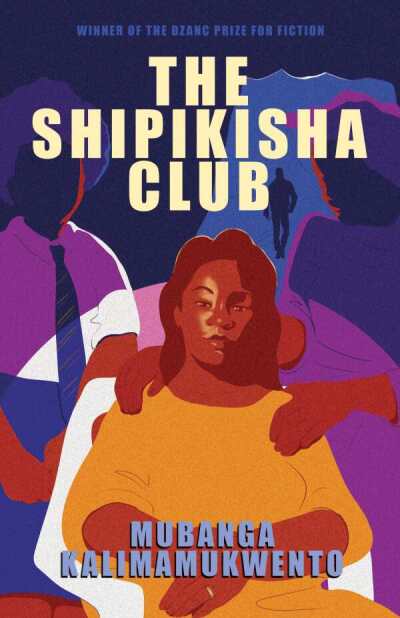
Reviewer Meg Nola Interviews Mubanga Kalimamukwento, Author of The Shipikisha Club
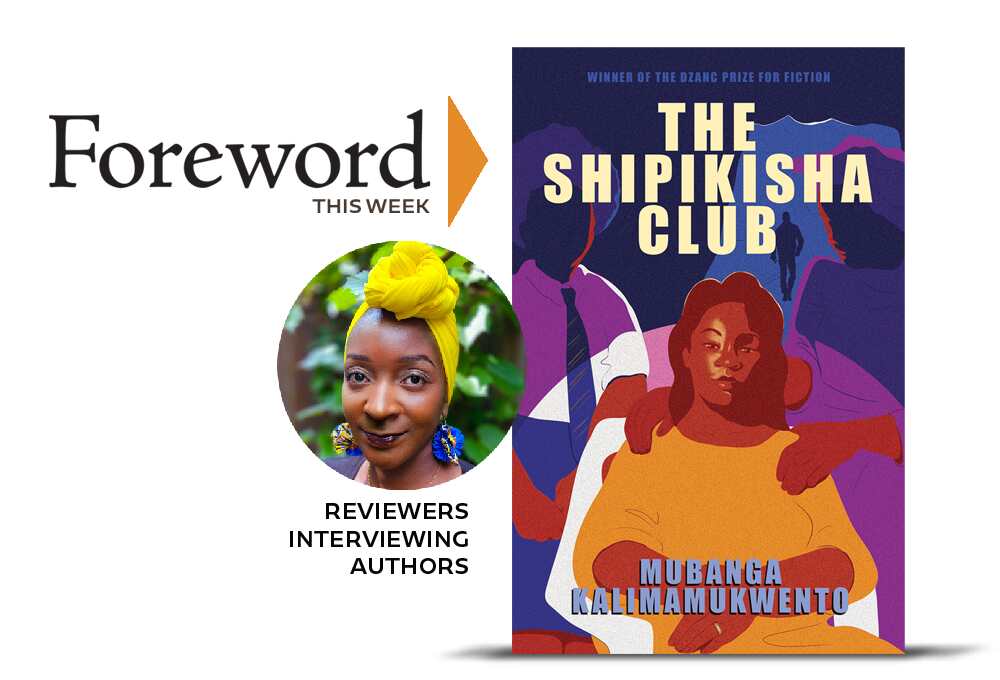
With her sharply-written starred review of The Shipikisha Club in Foreword’s March/April issue, Meg Nola introduces us to the remarkable Mubanga Kalimamukwento, a five-time author and University of Minnesota PhD student (Gender, Women and Sexualities Studies) researching Zambian-women survivors of HIV, even while she mentors at the Minnesota Prison Writing Workshop. With her time so precious, we were ecstatic when she agreed to join us today.
Meg and Mubanga have lots to talk about so we’ll keep this short, but we want you to know that Foreword This Week will now include a link to the Independent Press Top 40 Bestseller List, another important subject of ongoing research by the Independent Publisher Caucus.
When did you first start writing fiction? Were you inspired by any particular authors or events in your life?
Writing fiction, about eleven years old. I was in grade eight, and that writing was for school, so the inspiration was the prompts my teacher gave. But I was always observing, and sometimes I see those observations show up years later. Like, that same year, an aunt of mine gifted me a copy of The Night Swimmers, by Betsy Byars, and I remember reading it so many times that the pages started to tear. Being eleven and having just lost a mother, I don’t know why it didn’t click that reading about children who had also just been orphaned was the pull, but you see that pull in my first novel. I also read a lot of obituaries around that time. Endlessly fascinated by the lives depicted there and then, I’d rewrite those stories, stretching them in different directions. Once I started writing in adulthood, the way I read changed—I love learning new ways to tell a story and then try to do it myself. I re-read a lot of writers now, something I never used to do and I also learn a lot from how my children see and describe the world to me.
As the novel flashes back to 2003, the book’s main character, Sali, is in her late twenties. She’s having an affair with Doc, an eminent cardiologist, and she’s recently discovered that she’s pregnant, while Doc’s wife is “barren.” Sali’s life takes a different and fateful course, but were her hopes of marrying Doc—and moving from “side chick to wife”—realistic in Zambian society?
I don’t have the authority to say what a realistic outcome would be for a woman in Zambia in her exact position, hoping for what she is hoping for. I suspect it would depend very much on the people involved and their exact circumstances. I can, however, venture whether that was a realistic expectation for Doc, specifically because their relationship and its outcome were my creation. If he had lived, I think Sali would have been ready to come out of the shadows of his life and make herself and her child known to his wife as a push to make him marry her, something that was obviously very important to her, but I don’t believe he would have done it. More likely, he would have made sure Sali was comfortable enough not to upend his life in that way.
Sali and her husband, Kasunga, are both flawed yet compelling; though their troubled marriage ends tragically, the book weaves in past moments of togetherness and romance. Baba, Sali’s pastor father, once physically beat his wife because she kept miscarrying during her pregnancies. But after Sali’s diary is used as evidence at her trial, Baba bribes someone to get the journal back. He returns the diary to Sali without moralizing, then begs God to “soften the judge’s heart” when she sentences his daughter. How do you develop such faceted characters?
When I first started developing them, I was reflecting on memories of people who had been harmful to me in adulthood, people I sometimes still had to interact with, and the feeling of disorientation, observing them be completely different people with others. I was thinking about how those people are more than just those injuries they inflicted. How in other people’s stories, they were completely different characters. Without using those people as muses per se, I wanted to show those different shades of personhood, how layered we all are, even the ones we experience as villains.
Sali’s mother has tolerated varying degrees of spousal abuse and adultery for decades. Though Sali is angered by Kasunga’s infidelities—along with his drinking and their financial troubles—as a member of the wifely Shipikisha Club, she too must “endure” and never complain. When the book ends, Sali’s daughter, Ntashé, is almost twenty and becoming more aware of Zambia’s cultural misogyny. Are things improving for Ntashé’s generation?
Yes and no. I think there is a certain arrogance in young adulthood that convinces us we know all there is to know about ourselves, about our parents, and about the lives that lie ahead. Young adulthood is when you start laying in that metaphorical bed you made as a teenager, so it’s easy to reduce everything to 1 + 1 = 2. We meet Sali at that point, where she feels very self-aware and is doing some mental math to get her to a certain point. Even when one number falls out of the equation, she quickly picks it up from elsewhere and thinks it will add up the same as before, but obviously, it doesn’t, and shifting variables change the outcome for her, her children, and her husband.
The similarity between Sali and Peggy is that they are both married under the same cultural blanket. Although time has moved on, the fabric of the blanket has been laundered, and some parts are thinner; it is still the same blanket, and it sometimes scratches in the same places. The difference is that Sali has a bit more movement power, and we see that in how she responds to situations similar to Peggy’s.
Ntashé’s story is still unfolding; she is still deciding what her decisions will be and where they will land her, so the feeling I have through her story is that of hope. Hope that each person who comes next has more mobility, more choices. Maybe they use the blanket with sheets between, maybe they line it with another fabric, maybe sometimes they fold it and set it aside.
At Sali’s trial, the female judge is “stoic” and detached, while Ms. Pichi, the prosecuting attorney, “prowls” around in stiletto heels with a “smug” smile. After listening to part of Sali’s emotional testimony, Ms. Pichi makes the snide comment that Sali should have been “an actress.” If a Zambian man had been accused of killing his wife, would Ms. Pichi be so arrogant?
The first time I litigated a case in open court, I remember being so anxious about the eyes on me and the ever-present possibility of making a mistake. When a case is unfolding in chambers, it’s just the lawyers, the judge, and, if needed, the witnesses, and that controlled environment can feel calmer. A friend of mine quipped before that first day that the gallery is called that because all they can do is watch. Unlike their namesakes in a theatre, they can’t even applaud. That was meant to calm me down, but once I did enter that “stage,” it was nerve-racking.
What I noticed in my years of practice was that people put on a show when prosecuting in open court for that gallery—the questions, as well as how the questions are asked, can elicit a very different response even from the same witness. I framed Ms. Pichi within that, having her react to the responses she gets from her witnesses and ask questions that she thinks will lead her to the outcome she is trying to get. Here, Ms. Pichi’s goal is to get a conviction for a charge of murder, and she believes that the accused is guilty of that crime. Every question serves that purpose. Delivery-wise, it would have depended on a man’s demeanour, how exactly Ms. Pichi approached her prosecution, but I don’t believe she would have been less constrained in her remarks.
Sali’s aforementioned diary contains intimate passages about her struggles with marriage, personal identity, and motherhood; these entries are read aloud during her trial in a publicly humiliating manner. But while the journal reveals the raw truth about Sali’s life, her Facebook posts are filled with curated idealizations and feigned happiness. What made you decide to include a diary in the novel, especially such a candid and pivotal one?
At the drafting stage, I went back and forth between who would be on trial, between Sali and Kasunga, and was gathering information on how they would be presented as people. I really liked the diary as a form because obviously the person writing it is not expecting an audience, unlike social media, where people present their best selves. I am sure if anyone’s diary was presented and compared to their online persona, we would see similarly stark juxtapositions. In the end, what I found was Sali’s character endured. She and those entries survived all my culling of the novel, its structure, and characters in a very Sali-like way, which made it obvious that they needed to be in the final draft.
Are you working on another novel or any new projects?
Always. My main haunting right now is a novel born of the final short story in Obligations to the Wounded. I have a draft that I’m pulling apart and putting together again for the millionth time, but it’s finally starting to feel correct, the story feels right, and the characters are real. Three other voices also demand my attention from time to time, one, a novel about friendship (I think), another about young love (I think), and a third whose form is a bit mixed, essays and poems about home (I’m sure).
Meg Nola


