

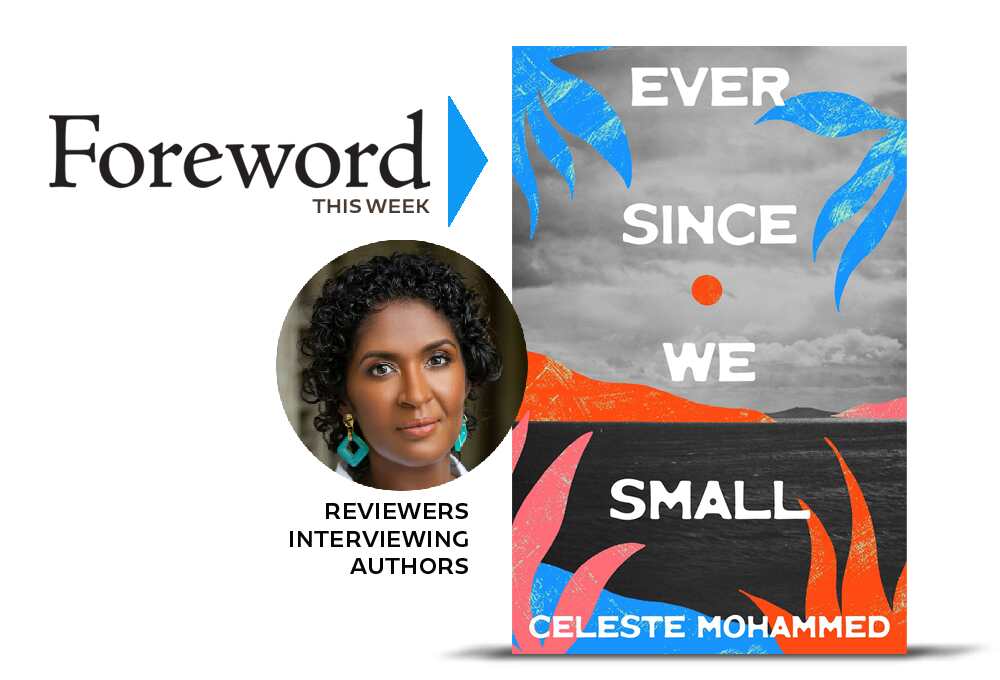
Reviewer Bella Moses Interviews Celeste Mohammed, Author of EVER SINCE WE SMALL
Ready for a new flavor of the immigrant story? Between 1838 and 1917, more than a million young laborers from British India signed deceptive, long-term contracts to work on sugar plantations in the Caribbean. The reason those plantation jobs existed in the first place was because slavery had recently been abolished and, well, you know how that works—“Hey, guys, let’s just continue the system and call it something different. Indentured slavery rolls off the tongue.”
Those contracts or agreements were originally known as girmits, which morphed into girmitiyas as the name of the immigrant laborers—and today’s guest is a descendant on her mother’s side from the island of Trinidad.
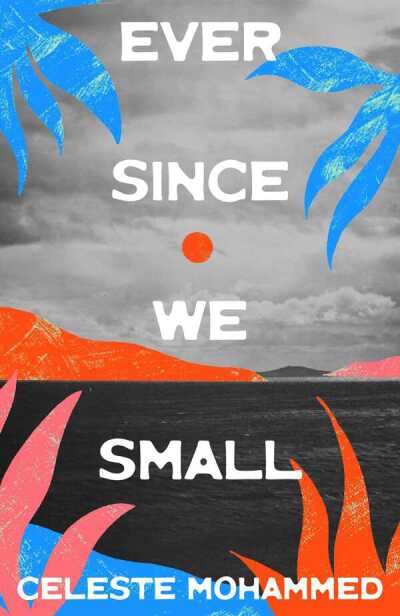
Meet Celeste Mohammed, author of Ever Since We Small, which earned a starred review from Bella Moses in Foreword’s January/February issue.
Ever Since We Small sheds light on a history often overlooked or ignored: that of the girmitiyas, Indian indentured workers in the Caribbean, and their descendants. The novel not only illuminates the stories of women like Jayanti but also explores the nuances of multifaceted identities and relationships to place. How did you decide to write about this particular history of migration, and what felt like the most urgent concerns in doing so?
The history of Indian indentureship and its aftermath in the Caribbean is, for me, a deeply personal one. I am half Indian and was raised primarily by my Indo-Trinidadian mother and her extended family. I grew up immersed in the culture; familiar with the struggles, the codes, the taboos. That upbringing gave me an insider’s understanding of what it means to be a girl, and later a woman, within that world, while my mixed heritage also placed me slightly at its edge. I have always occupied that insider-outsider position.
Because of that dual vantage point, I am also keenly aware of how “Indian-ness” has been perceived and received within the wider society of Trinidad and Tobago, and how those perceptions have shifted over time. One particular aspect that has dominated the public imagination is the role, treatment, autonomy, and sexuality of the Indian woman. Our Caribbean history books often focus on her victimhood—on her treatment as property, on the so-called “coolie wife murders.” University archives, calypso, and chutney music are filled with her exoticization and sexualization. She is frequently rendered as submissive, hapless, and one-dimensional.
Yet the women who raised me did not conform to that narrow portrayal.
What felt most urgent in writing this book was the need to complicate that story: to restore dimensionality, agency, contradiction, and interior life to women like Jayanti. I wanted to explore not only how history shaped them, but how they resisted, adapted, loved, made mistakes, and claimed space within and beyond the structures that constrained them. In doing so, the novel attempts to push against inherited stereotypes and to offer a more lively account of Indo-Caribbean womanhood.
The environment, cadences, and social realities of Trinidadian life across time shine through so vibrantly in this book. Much of this sense of place, I think, is activated by your use of Creole and patois. How do you go about capturing the language(s) of a diverse and ever-changing population? How did you approach finding each character’s voice?
It certainly helps that I’ve lived—and still live—in and among “d people,” as we would say in Trinidad. My life has always involved moving through many different social worlds and interacting across class, race, and culture. From humble beginnings in the south of the island, to studying abroad and working in international law firms, I’ve had the privilege, and sometimes the necessity, of learning how to listen closely and to communicate across a spectrum of languages and registers.
Because of that, it isn’t difficult for me to picture the people I write about or to hear them speaking in my head. The greater challenge has been allowing those voices to come through authentically on the page while remaining readable and resonant beyond their immediate cultural context.
That commitment to authenticity has also made me quick to seek help when a character’s voice moves beyond my personal knowledge. I’ve leaned on language scholars and cultural aficionados like Nnamdi Hodge and Visham Bhimull, on an elderly woman named Miss Julia who sells food in Paramin village, and on friends and family across the diaspora. I don’t believe in pretending to know what I don’t. Getting the voice right feels like an ethical responsibility to these worlds I’m portraying. I’m always conscious that language carries history, power, intimacy, and exclusion, and that Kriol and patois are not ornamental but living systems of meaning.
On the topic of voice, language, and narration, one of my favorite chapters of this book is “Outsiders,” which is narrated by bois, guardians of the forest. What inspired this choice to write from the perspective of this particular narrator, who uses the collective pronoun “we”? How did you approach weaving folklore and myth into these stories?
African writers—particularly Zakes Mda—have long inspired me through their use of the first-person plural to convey the voice of the collective: the community, the multitude, the chorus rather than the individual. It was with that admiration that I chose the “we” of the bois in “Outsiders,” allowing the story to be told not from a single consciousness, but from something older, broader, and more enduring.
There is research showing that Trinidad “broke off” from the South American mainland; our Northern Range is a direct continuation of Venezuela’s mountains. The mountain forest—its flora and fauna—predates all of us. Every group of people, regardless of race, arrived on these shores later and stood beneath so great a cloud of witnesses: the trees. And if, as the island’s indigenous inhabitants believed, nature is a living spirit, then the trees are among the most authoritative storytellers we have.
I appreciate that your question does not presume this book to be an exercise in magical realism. It isn’t. Magical realism is a specific literary mode with its own conventions. In Trinidad and Tobago, however, reality itself is spectrum that moves fluidly between fact, folklore, religion, and superstition. For many Trinidadians, figures like the douen, the soucouyant, or the jumbie are no less real than Lord Jesus or Lord Krishna … and no less real than you and me.
My approach, then, was not to “weave in” folklore as an effect, but to treat all characters—human, ancestral, or supernatural—on equal footing. That plasticity of reality, that coexistence of multiple ways of knowing, is our lived experience in the Caribbean.
This novel spans an expansive time period from 1899 to 2017. How did you approach the historical dimensions of this work? Do you have a research practice?
For much of the book’s cultural content, the foundation was already there. I grew up with inherited stories from my grandmother, aunts, and older family members, and I spent my life listening to elders talk: absorbing idioms, customs, rituals, and the textures of Trinidad’s cultural life. I also conducted targeted interviews, including long conversations with my great-aunt about her arranged marriage, and informal but invaluable exchanges with cousins who helped me think through family memories.
I also came to the work with a formal grounding in history, having studied it as an elective until university. So when I began writing, I had a general thesis in mind as a storyteller. At that point, my other instincts as a lawyer kicked in. I started looking for authorities to support and test that thesis.
There is a Main Sources page at the back of the book that lists the academic texts I relied on, but there were also what I think of as “expert witnesses,” acknowledged by name: people like Jameel Bisnath, an authority on the Muslim Hosay festival, and jeweler Mitch, whose knowledge of Indo-Trinidadian jewelry-making was immense. Beyond that, I allowed myself periods of immersion: following research trails online, reading articles, watching lectures, steeping myself in context. That led me to order a seminal text on Rajputs in India, to track down a rare book on Indo-Caribbean folklore, and even to visit Western Cemetery—the setting of the closing story—so I could understand the physical layout of the Muslim section for myself.
The challenge with research, of course, is abundance. You quickly accumulate more information than any narrative can hold. Again, my legal training helped me here: learning how to sift, weigh relevance, and include only what truly served the story. I took the view that use of research, in the end, didn’t have to aim for exhaustiveness—this is a work of fiction—but for deepening character, sharpening setting, and allowing history to resonate without overwhelming the human lives at the centre of the story.
Told in interconnected stories, this book explores questions of lineage, ancestry, and inherited trauma. What compelled you about writing such a multi-vocal book whose characters are both distinctly independent and tied together by blood and shared history?
Isn’t that how life actually works? We experience ourselves as distinct, self-contained individuals, yet we are always bound to others by blood, memory, and shared history. In the contemporary moment, there’s a renewed obsession with uncovering those buried connections—visible in the rise of DNA testing and genealogical research—as people search for explanations, origins, and belonging.
I’m interested in the way perspective shapes moral understanding. Each of us is the hero, or at least the victim, in our own story, while in someone else’s narrative we may appear to be the villain. Our words and actions ripple outward, often in ways we never witness or intend.
The multi-vocal, novel-in-stories form allows me to hold all of that complexity at once. It mirrors the tension between connection and disconnection, intimacy and distance, inheritance and autonomy. Characters can stand fully on their own while remaining entangled in a shared history that neither begins nor ends with them. I used this form in my debut, Pleasantview, and return to it in Ever Since We Small because it most closely approximates how lives intersect across generations.
What were the thorniest or most challenging aspects of writing this book? Where did you find the most joy or excitement?
Writing the book itself was, in many ways, a joy. I loved testing my conviction that a slender novel-in-stories could still deliver the heft of a multi-generational family saga. Entering the lives of the characters, listening to them, following their contradictions and desires—that process is always deeply meaningful to me. In quieter moments, I could feel how aspects of myself echoed through them, and I was conscious that I was working toward a book that might honour not only my own ancestors, but a much wider and often underrepresented history.
The thornier challenges were less about craft than about containment: deciding what to leave out, resisting the urge to explain too much, and trusting readers to make connections. Holding that restraint required discipline.
Beyond the writing itself, the most difficult part of bringing the book into the world was finding publishers willing to take a chance on something formally unusual and unapologetically Trinidadian. It required patience and faith to hold steady to the book’s vision rather than sanding down its edges for comfort or familiarity. In the end, that persistence made the book’s journey, and its reception so far, all the more affirming.
This book was first published in the Caribbean, on the 180th anniversary of Indian Arrival in Trinidad and Tobago, before being published in North America and the UK. Do you have a particular audience in mind while you write? What do you hope readers from these diverse geographical locations take away from this book?
It may sound like a cliché, but I am always the first audience I have in mind. I write the book I would want to read, trusting that I represent a certain kind of reader—intellectually curious, attentive to language, interested in people and complexity—who can be found not only in the Caribbean, but across the world. I never want to talk down to readers or over-explain. I assume openness and generosity on their part. My hope is that, as I wrestle honestly with my own personal and cultural history, others will find moments of recognition—some foothold, some point of entry—within the layers of the story that allow them to reflect on their own. Humanity is diverse, but our deepest internal questions are often the same.
The Caribbean-first publication was a deliberate choice. It was a way of prioritizing Caribbean readers and asserting their centrality. As George Lamming famously argued, the Caribbean writer must first and foremost address their own people. For much of our literary history, that ideal remained more aspirational than practical, with local readers often forced to wait months for costly, imported editions. A Caribbean-first release signals a shift: Caribbean people are not merely subjects within the narrative, but its primary audience, fully deserving of access, immediacy, and respect.
Bella Moses


