

Horses, Heroes, and Herodotus: J. M. Elliott on "Of Wind and Wolves"
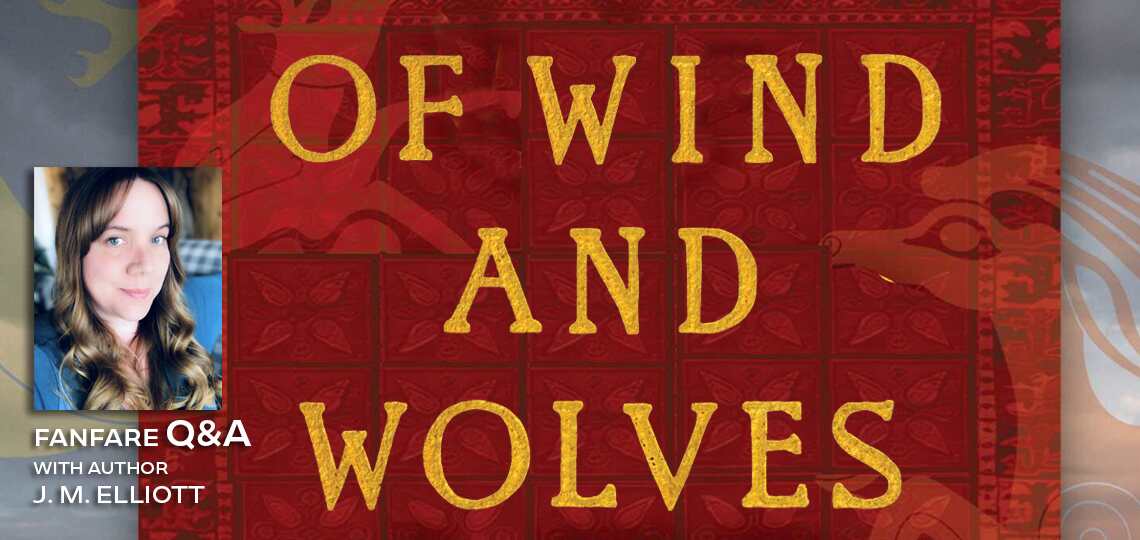
Reviewer Vivian Turnbull Interviews J. M. Elliott, Author of Of Wind and Wolves
Novels that earn five-star Clarion reviews happen about as often as a blue moon. Even rarer is when one of those books tells an epic tale about an era in ancient history that is so lost in time as to require a years-long odyssey of research by a passionate explorer of the ancient world.
Such is J. M. Elliott’s commitment to her Scythian trilogy, the Steppe Saga. Remarkably, those years of study and preparation included practice in the traditional archery used on the Eurasian steppes three thousand years ago—the fact that J. M. was raised on horseback doesn’t come as a surprise at all.
Reviewer Vivian Turnbull bestowed those five stars on Of Wind and Wolves, the first book in the Steppe Saga series, and was thrilled to connect with J. M. for a conversation about life on the steppes for a young woman warrior, Scythian culture, and what’s next in the trilogy.
Your author’s note says that you began drafting the Steppe Saga in 2011, and that your desire was to write the story you hadn’t been able to find. Can you walk us through some of the highlights of the past decade in bringing this story to life in your debut novel? Did anything you learn along the way significantly alter your original vision for the saga?
It’s been a long road, and the whole thing has been a learning process. I probably shouldn’t admit this, but before starting this trilogy, I’d never written any fiction at all—not even a short story. I honestly have no idea what made me want to write a novel—or three—other than the fact that, as I mentioned, I kept hoping to find a story like this. I can’t say that anything I’ve learned significantly changed my vision, but every new piece has fueled the creative fire. In researching and writing this trilogy, I’ve uncovered a past world that has completely captivated me.
I don’t know if these count as highlights, but I started writing the books that would become The Steppe Saga when a song I was listening to stirred up a vivid image in my mind. I wrote a scene around it that would develop into a key moment in the trilogy. The entire story grew outward from that first scene. I kept working on it but didn’t share it with anyone. I didn’t even tell anyone about it. The writing was for myself—a sort of mental exercise and meditation. It was like putting together a jigsaw puzzle—something I did occasionally for fun, as a challenge, hoping to see a complete picture take shape someday. But after a while, I guess I got curious: would anyone else want to read it? I attended a writer’s conference in 2018, and to my disbelief, I found an agent for the book. However, finding a traditional publisher wasn’t in the cards. I set it aside, but it kept nagging at me. By then, my family knew I’d written the book and encouraged me to publish it independently. It was intimidating to finally share this private project, but I’m glad I took that leap. I’ve been amazed by the positive response it’s received.
Of Wind and Wolves expands on Herodotus’s account of Heracles and his son Skythes, forefather of the Scythian kings. What was it about this particular myth that intrigued you?
Herodotus recounts three distinct origin stories of the Scythians. Aside from the events involving King Ariapeithes and his sons, each of the trilogy’s three books centers on one of these myths. I found it interesting to imagine a world where these legends are a vital part of the culture. The main myth—which depicts a hero’s encounter with a chthonic, anguipede water goddess that establishes a royal line through their youngest son—stands out on its own. But a closer look reveals the deeper dynamics of the broader story I aim to tell.
For starters, even though it’s clearly a Scythian myth, this version centers around Greek Heracles. The use of interpretatio graeca appears throughout The Histories, a common practice where foreign gods are equated with Greek equivalents to bridge cultural differences or legitimize authority. It might serve to make the foreign seem familiar or as propaganda. Either way, the existence of this version is intriguing. More importantly, it raises questions about how the Scythians felt when hearing their origin myth retold with a Greek hero as the founding father of their nation and royal lineage.
But for me, the myth stands out for what it reveals about the Scythian worldview. It outlines their claims to sovereignty over the steppe and celebrates aspects of their nomadic lifestyle, including archery, while granting rule to the one who proves his worth—here, the third son, rather than the first. Though the goddess holds the power, all terms are negotiated. I found this all fascinating. And, of course, I couldn’t resist evoking its imagery of horses lost in a blizzard and the encounter of the hero and the goddess in the cave.
Horses play an important role in both the book’s plot and the prose. At one point Anaiti describes the steppe as an “unbreakable horse,” its people “wild.” I know you’re an equestrian yourself and have a background in archaeology. Is your fascination with the natural world part of what drew you to craft this story?
Oh, absolutely. Horses are my first love, and I’ve been involved with them in some way for most of my life. I started riding when I was five and worked professionally with horses for many years. But at age seven, I saw ancient ruins and petroglyphs for the first time, and it blew my mind. After that, I also spent my non-riding hours reading about the ancient world and teaching myself to read hieroglyphics. Yeah, I was a weird kid. I planned on becoming an archaeologist, having quaint notions of what that would be like. But academia wasn’t for me. I decided to make do with a library card and go back to working with horses. I guess the archaeology bug is still there, though, and I try to keep up with new discoveries and join digs when life allows.
The steppe cultures of the late Bronze and early Iron Ages are a perfect match for my interests. I understand the harsh realities of pastoralism, but I also dream of a primeval world with vast pastures and no fences—where animals still outnumber people. Spending time in such a world, even just in fiction, has been a joy. Near my childhood home, horse farms were common, but they’ve been sold to developers. The remaining few rarely have pasture, and horses are confined to their stalls 24/7 unless they’re being worked. I’ve since moved to a rural area to give my horses space to graze and run, but developers are encroaching here too. Recently, a foreign energy company bought the 170+-acre farm next door and cleared a mature forest to build a power plant. Open land rarely stays that way for long. So, Anaiti’s fear of the steppe being torn apart in the name of “progress” is an age-old worry. This is what civilizations do—they grow; they build. And in the process, they also destroy.
The story draws out this paradox through the Scythians, who differ from other peoples in that they build nothing permanent except tombs. To the Greeks, their lack of enduring culture made them seem primitive, animalistic, and ignorant. However, Herodotus explains that the Scythians intentionally chose this spare existence. There’s beauty in the fleeting nature of their nomadism. We transform everything we touch. We record even our most trivial thoughts and moments for posterity. Yet, an entire empire lasted a thousand years and left few traces and no records. Selfishly, I wish they had done so, just to satisfy my curiosity. But they weren’t concerned with us. The Scythians relied on future generations to preserve their traditions, poetry, and prayers—or not. Maybe they understood the futility of holding onto things beyond the reach of their torchbearers. There’s a certain wisdom in that, even for someone who loves books, museums, and ruins as much as I do.
Part of what makes your characters so compelling is that their passion and vitality stand in stark contrast to the harsh, barren lands of the steppe. What was it like writing this dichotomy? Other than Anaiti, is there a particular character that resonates with you?
It’s interesting because, though it might seem odd, I think their passion and vitality partly come from their tough environment. Near the end of The Histories (Book IX, 122), Herodotus describes a moment when Cyrus’s soldiers, after some victories, think about relocating to more lush lands. However, Cyrus warns them that “Delicate men spring from delicate countries.” In the end, they agree it’s best to stay in their barren homeland.
In the book, Anaiti finds Aric about to bathe in icy water. Aric invites her to join him, not for romantic reasons, but as a test. She could refuse, but her curiosity about his willingness to endure such discomfort encourages her to try. When she does, she feels invigorated.
I can’t know what it was like to be a Scythian warrior, but I know what it’s like to wake up before dawn every day—whatever the weather—to ride and care for horses. Through scorching heat, freezing cold, and pouring rain, I’ve faced frostbite, torn ligaments, broken bones, and more. When you fall, you just get back on—no excuses. Even though I don’t do it full-time anymore, I’d still rather be outside in the weather than stuck in a sterile office staring at a screen. As crazy as it sounds, I miss feeling my day’s work in my bones at night.
Like Cyrus’s men, the characters might wish for relief from their harsh environment, but Aric draws strength from adversity; it fuels his feral intensity and sharpens his body and mind. For Anaiti, living rough and constantly testing herself makes her feel more alive than she ever did in her father’s court, safely sheltered behind fortress walls. She gets to truly live. Take risks. Know herself. Fight for what matters to her.
Maybe that’s why I really enjoyed writing Antisthenes, the Greek character in the warband. It’s easy to imagine barbarian characters wanting to join the civilized world, but it’s rare to see the opposite. It was fun to imagine what a Greek who chooses barbarism might look like. He grew up in Athens, and like the Roman exile Ovid, he hates the harsh steppe climate and envisioned a very different life for himself than becoming a nomad. But unlike Ovid, instead of wallowing in self-pity or waiting for a savior, he asks, How can I make the best of a bad situation? He’s no optimist, but he’s a survivor who values his freedom. He cares deeply for his fellow warband members. Most of all, he’s determined to find meaning and purpose in a life and place he never expected to inhabit. In many ways, he’s my hero.
We’d be remiss not to mention Anaiti’s slow-burn romance with Aric, leader of the warband. What is it about Aric, in all his brooding glory, that you think complements fiercely independent Anaiti so well?
Ooh, great question! Anaiti and Aric challenge and balance each other in interesting ways. He’s bold where she’s cautious; he’s a believer where she’s a skeptic. She grew up in a fortified settlement, and in many ways, he’s the embodiment of the wilderness of the steppe. He’s a powerful character both physically and politically. But he can also see potential strengths in others. Anaiti initially compares him to a predator sizing her up like wounded prey.
I think what she finds so compelling about him is that he doesn’t simply accept her or tolerate her flaws; he sees potential in the things that cause her the most fear and shame within herself—like her disturbing “spells,” or seizures. That’s incredibly disorienting but also intriguing. He offers her purpose and a reason, however dubious, to hope.
But perhaps even more fundamental is that they’re both damaged individuals, quite literally. Each bears significant scars, and the way the world reacts to these visible defects has social and psychological consequences, depending on the context. In some places, they’re a badge of honor, in others, a liability. Their feelings about these wounds are understandably complex. But it’s their shared understanding of these marks they bear that bonds them when they’re eventually able to see each other not just as bodies, but as whole people.
In the West, I think we often view Greece as the pinnacle of ancient civilization. Yet Greek culture looms in the background of your novel as a threat to the Skythian way of life. As you discuss in your author’s note, “there are two sides to every story.” What were some of the challenges of developing and researching this alternative perspective?
Researching and writing this story was especially challenging because I deeply respect ancient Greek civilization. My aim is not to cast ancient Greece as a villain or to criticize any culture. After all, I owe a lot to Greeks like Herodotus. I don’t view history as a zero-sum game or a Manichaean struggle between good and evil—that would reduce history to mythology. I’d even say the legacy of ancient Greece is more meaningful when we acknowledge its connections with surrounding cultures. The real challenge was finding an honest Scythian perspective that didn’t unfairly demonize the Greek side.
Although these cultures were different, they coexisted for centuries through a close trade relationship along the northern Black Sea coast. Yet they remained mostly separate worlds: Greeks lived within their towns; Scythians on the steppe. That divide explains many of the tensions woven into the novel. Most of our written sources come from the Greek perspective, especially Herodotus, whose accounts of Ariapeithes’s sons or the philosopher Anacharsis attribute conflict to Scythian xenophobia. I found that interpretation a bit reductive. I wanted to bring more nuance to both sides.
The material evidence suggests a more complex reality. The Scythians valued Greek art, often placing imported objects—sometimes decorated with figures like Heracles and Achilles—in their tombs. Ariapeithes had a Hellenic queen. Later writers like Lucian even cited Scythians as examples of openness to foreigners. There seemed to be more to the story than simple hostility. In the novel, I came to the idea that the Scythian resistance isn’t against Greek people or Greek civilization itself—Aric openly says he admires them—but is grounded in the belief that Greek culture simply doesn’t belong on the open steppe.
Part of the misunderstanding comes from what we think culture is. It isn’t just a matter of tastes or customs that can be mixed and matched. Culture is a survival strategy shaped by environment and encoded in shared beliefs, institutions, traditions, taboos, and stories that help a society function in its particular context. Greek colonists who came to those shores built cities and grew crops because that’s what their culture and religion were structured around. But those systems don’t translate easily to a nomadic landscape. On the steppe, that way of life could be fatal. The Scythians understand this, and they resist it.
This tension reminded me of Tacitus’s description of Agricola using the soft power of baths and banquets to win over the Britons—luxuries of civilization that seduced them into Roman subjugation. In the novel, the Scythians fear a similar process. Their culture is suited to a harsh environment and demanding gods; it keeps them alive, but only barely. The comforts and ideas of Greek life are tempting, yet they worry that gradual Hellenization could erode the very traits that allow them to survive. Their resistance, in that light, becomes not xenophobia but self-preservation.
Perhaps the most impressive aspect of your novel is the sheer breadth of detail and research which you weave so beautifully throughout the story. The main plot line, of course, is Anaiti’s quest with the warband to claim a scalp, but within that, you draw out political tensions between the various tribes, cultural clashes as the ancient world becomes more interconnected, and challenges to traditional gender roles. How did you balance highlighting all these historical realities without letting them subsume the narrative and its characters?
I’m really glad to hear the balance was effective. I’m only half-joking when I say I wrote the novel as an excuse to do the research because it was one of the most enjoyable parts of writing it. Mentally reconstructing ruins or landscapes and imagining what they felt like for the people who lived there—trying to put myself in their shoes—has always occupied me. I think that’s what first drew me to archaeology, and it’s also what interests me about fiction.
To recreate a version of ancient Scythia that felt authentic, I gathered all the evidence I could, drawing on ancient sources, archaeological findings, ecology, and comparative studies in anthropology, history, linguistics, etc. I even taught myself traditional archery. Once I had the world clearly in my mind, I set it aside and got into character mode. Those details became part of the characters’ backgrounds unless they were relevant in a scene, because culture is sort of second nature to those who live by it—until it isn’t. I just trusted that instinct.
My goal was to make Anaiti’s immersion in these scenes feel natural. She seemed like the perfect narrator because she was both an insider and outsider in this world. She could empathize with and recognize much of what she saw but also find a lot of this world new, which allowed her to comment on or question things for the reader’s benefit. Through her perspective, we learn about and experience these political tensions, gender roles, and cultural clashes that threaten her position. She wouldn’t have the luxury or desire to focus on everything. She’d have certain priorities, biases, fears, and interests. I let her be my filter, hoping that what mattered to her would matter to readers.
The book closes with a haunting reflection about the clash of fate, duty, and desire. Anaiti realizes that “Hope is like a draught of bitter-sweet haoma, swelling the breast with boldness and urging the flesh into battles it cannot possibly win. Even then, I think we knew, but we were already drunk.” How did your own perspectives on destiny versus will inform the book’s themes? What drew you to capture the quintessential human struggle against often inevitable outcomes?
That’s a great question. Unlike in fiction, I don’t believe there’s an author plotting our story. It’s clear that much about our physical selves and the environments we’re born into is predetermined or beyond our control. But this isn’t the same as the divine fate of ancient times. Instead, I believe Heraclitus was closer to the mark when he suggested that character is fate. Our inner selves shape our outward destiny.
In most ancient cultures, fate was governed by external, supernatural forces. The Greeks believed in moira, with gods frequently intervening in their destinies. For Iranian peoples like the Scythians, gods mainly maintained the existing cosmic order rather than shaping individual destinies. In the story’s context, the Indo-Iranian concept of Arta—the “right order”—is central; individuals are obliged to honor this order to stay in harmony with the cosmos. A person’s character and actions either align with or oppose this natural and moral order, leading to good or bad fortune in a karmic sense. For them, character truly determines destiny.
While I don’t fully subscribe to this idea of a cosmic order, it does appeal to me. As I grow older, I see more clearly that most things in the world and about others are beyond my control. I can’t change them, no matter how much I might want to. All I really control is myself—how I act and respond to everything around me. If I have to choose between fighting a losing battle against the world and mastering myself, there’s no question which I’d choose. Some argue that free will is an illusion and that even our choices and intentions are predetermined. But take conscious choice from a human, and what’s left?
A story isn’t meaningful if a character can’t make decisions, and the same goes for life. The ancients understood this. Even when gods pull the strings, Achilles consciously chooses his fate, making his end all the more poignant. Anaiti is a fiercely independent character who doesn’t easily accept others’ designs for her life but who understands that her actions have consequences. Maybe more than anything, being human means taking responsibility for our choices. These decisions often revolve around who we want to be in a world beyond our control—a world full of wonder, horror, heartbreak, and joy. That theme of resilience runs throughout the book, rooted in the idea that we can play whac-a-mole with fate but can’t fundamentally change the world. Life is both terrible and beautiful, and we get to decide how to face it—or at least we’re meant to try.
Of Wind and Wolves is the first book in a forthcoming trilogy. Can you hint at what’s next for Anaiti? Her time with the warband imbued her with newfound strength but it also gave her an exhilarating taste of freedom that seems foreclosed by the story’s end. How will these experiences carry her forward?
Without giving too much away, I can say that Anaiti ends up in a place where she can’t rely on the same freedoms or skills she had with the warband. But those experiences changed her, and they keep shaping the choices she makes. In many ways, she has to learn a new kind of resilience—one that doesn’t always look heroic on the surface but is just as hard-won. She has to figure out what strength looks like when she’s not holding a bow or riding across the steppe, and that becomes a big part of her journey.
The Gifts of Heaven, the second book in The Steppe Saga, is scheduled for fall 2026, and I’m excited to share more of this story with readers!
Of Wind and Wolves
J. M. Elliott
Warden Tree Press
(Sep 1, 2025)
Clarion Rating: 5 out of 5
Both violent and feeling, Of Wind and Wolves is an intricate historical novel about warfare and love.
Saturated with breathtaking cultural details, J. M. Elliott’s historical novel Of Wind and Wolves is a passionate, violent tale in which a young woman discovers what it means to fight for the tribes and customs she loves.
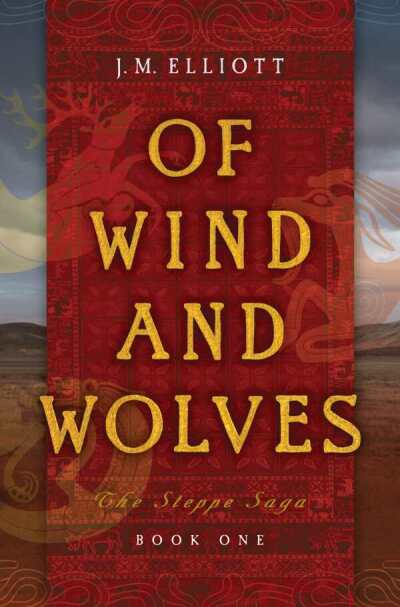
To save her tribe, Anaiti is betrothed to marry the aging Scythian king. First, however, she must take the scalp of an enemy. Though she was raised as a hamazon, a woman warrior, Anaiti is not seasoned in battle. To complete her mission, she is sent out with the warband, led by the king’s son, Aric. As she trains, Anaiti is drawn into a world of cultural clashes, politics, and bloodshed. She comes to love the warband’s way of life and resents the influence of the Hellenes.
The story is set in the steppe, an unforgiving land. Parts of the plain are barren; all of it poses danger. Here, all struggle to survive, reaping their keep from the land or moving from camp to camp. Yet it is not a desolate setting: Cool rivers flow, wild horses roam, and Anaiti—whose narration is enchanting, emotive, sharp, and poetic—describes the various landscapes in lush detail. The cultural and political tensions between the steppes’ various tribes are also explored in immaculate detail, with notes about articles of clothing, ancient gods, houses, and decorations, including nauseating skins made of tattooed human hide.
While Aric and Anaiti’s budding relationship propels the plot, their bond forged of mutual respect and longing, Anaiti’s personal growth and self-discovery are also centered. She remains deeply human in the midst of her heroism, and the couple’s tender moments stand in stark relief to the harsh background of the steppe, which also highlights people’s fragile humanity. The tribes fight each other to survive, and there are instances of rape, scalping, and capture. The gore of human sacrifices and bloody battles is juxtaposed to people’s soft, emotive sides: A kind seer, Erman, helps Anaiti understand her own divine powers; Anaiti learns to kill, but she also weeps, longs to be held, and is gentle with horses, whose goodness she remarks upon.
The contrast between routine violence and ordinary friendships and families raises uncomfortable but thought-provoking questions. Anaiti in particular wrestles with issues of honor, justice, and when death is preferable to life. In a scene following a decisive battle toward the story’s close, she reflects that she has reached a place of neutrality toward the bloodshed that her people’s way of life demands. She carries “neither the desire for peace nor vengeance” and accepts all that comes as “merely one more consequence.” The undercurrent of stoicism prepares Anaiti to face her fate in the book’s final pages, in which she stands on the cusp of a life she once tried to escape.
Extrapolating on Herodotus’s account of the Scythian people, Of Wind and Wolves is a historical novel of extraordinary complexity set against a harsh background of tribal warfare, love, and survival.
Reviewed by Vivian Turnbull
August 13, 2025
Vivian Turnbull


