
Foreword This Week: Best Of 2025: July–December
As we do at the very beginning of every year, last week and this week we’re offering you an assemblage of favorite questions and responses from the previous year’s fifty-plus interviews between reviewers and authors. Hopefully, you’ll find a few nuggets of wisdom to help make 2026 a year of personal gains and growth.
Reviewer Jeff Fleischer Interviews George Frazier, Author of Riverine Dreams: Away to the Glorious and Forgotten Grassland Rivers of America
In exploring these areas firsthand, what most surprised you? What did you experience that you didn’t expect?
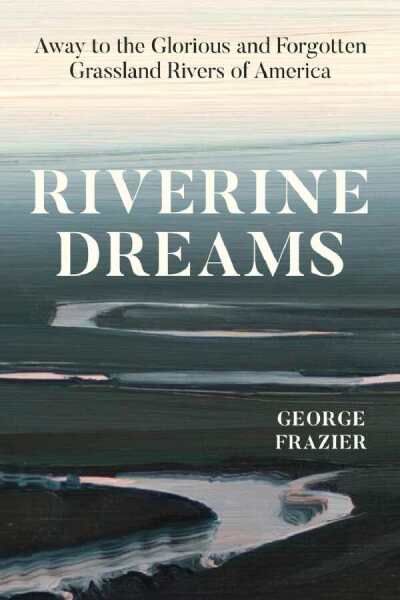
What surprised me the most was how alive, complex, and culturally layered these rivers are. Wildness persists even in the heavily farmed landscapes of the Midwest. Prairie rivers still shelter rare species, complex ecosystems, and pockets of peace and beauty—often within a bullhorn’s yell of populated areas. I met people who had quietly built their lives around these rivers—they “knew” them in ways people rarely know the land in modern times, even if they didn’t own much of it. I was struck by how much the type of prairie influenced the character of each river, and how every river had its own personality and mood. These rivers changed me, not just in how I understand riverscapes, but in how I think about my own place in the prairie landscapes where I have spent much of my life.
You start Riverine Dreams by saying, “I believe America is at the beginning of a grassland revival.” Given the current anti-conservation shift in government, what can individuals do to make that revival happen?
When I say, “I believe America is at the beginning of a grassland revival,” I’m talking about a cultural shift that starts with awareness, connection, and personal action. Even with political headwinds, individuals can make the revival real. Spend time in grasslands and along prairie rivers so you know what’s at stake. Support local conservation groups doing the quiet, steady work of protecting land and water. Get to know the private landowners who steward native prairie. And tell the stories of these places, because the more people understand their beauty, history, and ecological value, the harder they are to ignore or destroy. Revival doesn’t begin in the government; it begins when enough of us decide these places matter.
*****
Reviewer Isaac Randel Interviews Dagomar Degroot, Author of Ripples on the Cosmic Ocean: An Environmental History of Our Place in the Solar System
The idea of “precarity” seems to be at the heart of Ripples on the Cosmic Ocean. Your book explores how Earth sits at the nexus point of unseen and frequently dangerous influences from all corners of our solar system—many of which went unknown or unappreciated for millennia. Some readers might find the enormous scale and range of these existential threats a bit disorienting (not to say alarming). How do you think everyday people can properly respond to the large-scale threats that your book investigates without feeling helpless or overwhelmed? (Or, on the other hand: do you think everyday people ought to be more actively concerned about these threats than they already are?)
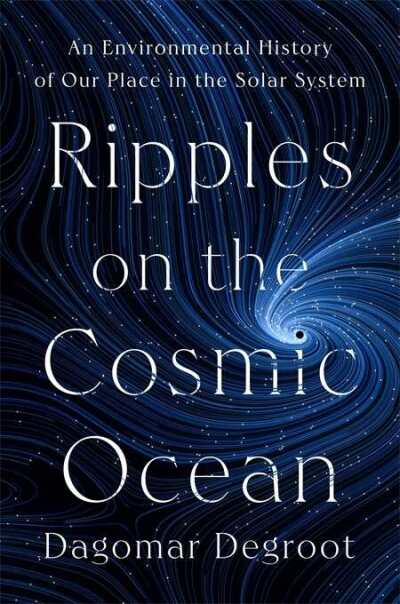
Many people assume that space is somehow separate from everyday experience. The solar system and the rest of the cosmos are out there, but human lives take place down here. As an environmental scholar, I often hear that we should focus less on space exploration, and more on what seems to matter on Earth.
In Ripples, I argue that, in fact, space science originally revealed many of the worst threats to our lives on Earth. Some of those threats originate in outer space (solar storms and asteroid impacts, for example) while others disturb our relationship to cosmic flows of energy (such as global warming and nuclear winter).
The isolation of Earth from other cosmic environments is just an illusion. And because Earth is connected to fluctuating cosmic environments, its stability, too, is an illusion.
These are illusions we should now discard.
It may be a little overwhelming. In the book, I describe my own disquiet as I saw, with my own eyes, how much the Sun could change in real time. I view our little planet as a mote drifting for the moment in a tranquil eddy of the raging cosmic river. There’s not much we can do about that.
Still, we’re not powerless—not anymore. Ripples also offers hopeful stories, describing for example how governments successfully reduced existential risks such as the ozone hole.
The simplest advice I have is to consider the big risks—the existential risks—when you vote. Governments can slow down or even reverse global warming. They can work together to reduce the risk of nuclear war, or even the impacts of solar storms. The overwhelming majority of people don’t think about such matters when they vote. But if you do, and if you can convince your friends and family to as well, then you may make us all a little safer.
*****
Reviewer Rebecca Foster Interviews Davis Shoulders, Editor of Queer Communion: Religion in Appalachia
In multiple pieces, there’s a tension between queer people sticking with religion or leaving it to find freedom. How has that struggle played out in your own life, and how do you see it as providing an overarching structure for the anthology?

I have found my peace with that tension through a more mystical paradigm of spirituality. I don’t see myself as having “left” anything. I just don’t attend that convening of folks anymore, and I’ve developed a cosmology and theology that would be limited by remaining in those spaces. I experienced a fundamental evangelical religious paradigm in childhood as a preacher’s kid in a multigenerational connection to that faith tradition on both sides of my genealogy. By the time I was an adult and outside of that bubble, it’s like I had to learn the world from scratch. The leap required to explore your own identity as an adult means that we can be drawn to certain safe spaces and easy landing pads that imitate those early communities of faith. There’s a psychological understanding that being raised in a religious cult or an abusive household makes you more susceptible to being taken advantage of again. I was so entrenched in a religious paradigm that I find myself highly critical of other options. I’ve had to do all this creativity in expressing my own queer identity, so it feels equally complicated finding a “new home” for all of my spiritual energy to go. The expectation that queer folks have to defend or explain their migration of faith betrays a core sense of belonging. I think all religious structures could learn from this collection and queer voices in general about how we make meaning out of ritual and mythology. Our queer spirituality isn’t marginalized from ourselves; Christianity has—for the most part—marginalized us.
*****
Reviewer Luke Sutherland Interviews Syr Hayati Beker, Author of What a Fish Looks Like
What a Fish Looks Like places you in a growing tradition of queer writers thinking about climate. What links queerness to ecological writing? How can it challenge our cultural understanding of nature?
I want so badly to answer that every queer person was bitten by a radioactive spider and now we’re all climate change superheroes that meet other superheroes on rooftops to figure out how to take out oil pipelines and so you should absolutely read our fiction!
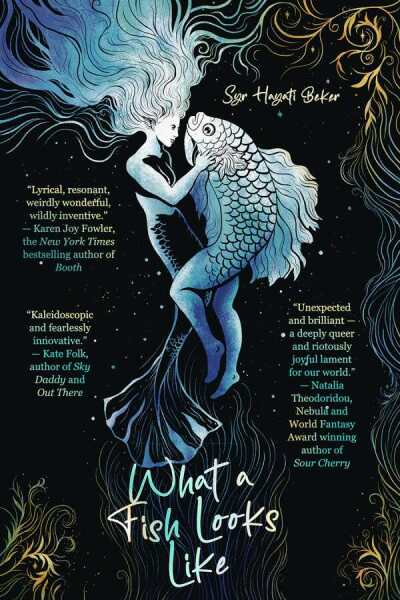
How about this: instead of a radioactive spider, maybe it begins for a lot of us the first time our natures, desires, and bodies conflict with the programming we are told is obligatory. We are, to borrow Addie Tsai’s title, Unwieldy Creatures, and if we’re queer, our bodies and desires tend to revolt early and often. If we were very very lucky, we were able to find moments of euphoria or belonging outdoors. Charlie J. Stephens’ book A Wounded Dear Leaps Highest describes this so beautifully. Sabrina Imbler’s How Far the Light Reaches is another example. I was so lucky to have the ocean. The ocean didn’t care about my gender expression or that I was in love with all my best friends. I felt like the ocean and I had a special bond, and so when I started seeing more and more plastic, more jellyfish out of season, I had a sense of climate change that was as embodied to me as my own dysphoria.
In lieu of swinging across rooftops or other superpowers, I also think there are frameworks the queer community can offer. I know this could sound trivializing, but I think queer loves, and queer breakups, have a lot to teach people about climate change. My book begins with Seb, who was in one of those queer relationships that wasn’t just about love, but about mutual becoming. When that relationship ended, Seb felt like their habitat had been destroyed, or like they’d gone extinct. They’d say things like “my world is over,” but queer communities don’t do endings. In queer communities, your ex is right there across the table from you painting banners. It’s a weird new world. It’s maybe not exactly the world that you wanted, but it’s strange and wonderful and continues. Yes the world has ended and everything is lost, no, we’re all still here, and we are responsible for every living thing at the party.
In The Future Is Disabled, Leah Lakshmi Piepzna-Samarasinha talks about disability technology, as comprising not just all the technology we are lucky to have that evolved because of disability activism (like talk-to-text) but also the technology of community care, mutual aid, checking in on one another. I want to think that queerness—as it connects to other movements like disability justice, intersectional feminism, Indigenous movements, abolitionist and liberatory movements throughout history from Black Lives Matter to Free Palestine—all of these bring their own technology and frameworks. We need them all to trouble the traditional binaries of “will we survive,” or “will the meteor get us,” or “us” vs. “nature,” and ask: how could it look instead, how were we caring for one another, how were we celebrating our entanglement, when the world was ending, were we planting a tree? I am so very thankful for presses like Stelliform that hold space for these conversations, and for publications like Foreword for supporting indie presses. Thank you so much for letting me visit.
*****
Reviewer Brooke Shannon Interviews Catharina Coenen, Author of Unexploded Ordnance
You describe English as “the shovel” with which you could dig for your mother’s childhood. How did writing in English, rather than German, change your relationship to these stories and to your own sense of identity?
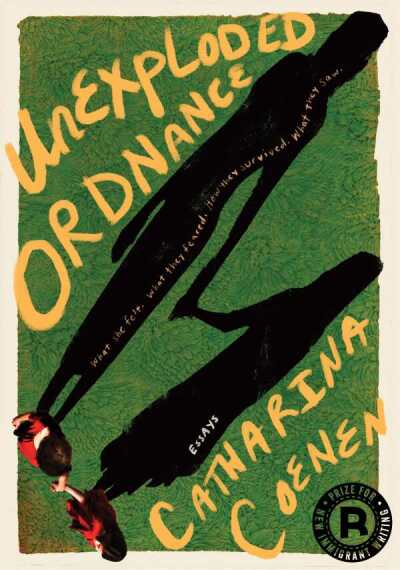
For me, having an English-speaking audience—first close friends and instructors, then students in writing classes, and later readers and editors—was key to putting my mother’s and grandmother’s stories on the page. In German, everyone already knew some version of these stories, because they lived in family memory. In English, I found listeners who wanted me to explain, to take them into experiences they had never known. That meant I was no longer just the keeper of my grandmother’s stories, but their translator.
Writing in English also made me visible as “German” to my friends and readers in a way that felt deep and connecting rather than shallow and alienating. For decades, I had grown used to my German accent, when detected, prompting remarks that made me feel my home country was seen mainly as a tourist attraction (“I’ve always wanted to live in a castle” or “I’ve always wanted to drive on the Autobahn”). But now, the people who asked questions about my stories truly wanted to learn about me and my family’s experiences. Their questions felt genuine, connecting my own emotional experiences to those of my readers rather than alienating or “othering.”
By writing in English for the people who surrounded me in an English-speaking country, I became less alien, more fully seen, and more at home in my chosen community.
In exploring your grandfather’s life as a German soldier, you confront questions of inherited guilt and complicity. What responsibilities do descendants carry when telling such histories?
I hesitate to make generic statements about “descendants,” because the experiences that shape us—and the circumstances under which we tell the stories of those we came from—differ widely. Even when I want to say that the responsibility of anyone telling histories of any kind is to tell the truth, to the best of their knowledge, I wonder if there may be circumstances in which the “contract” between storyteller and audience includes a shared understanding that truths may always be slanted, partial, or metaphorical.
So, speaking strictly for myself, I felt a responsibility to find out what I could about how my grandparents might have contributed to the horrors of Nazi Germany. I also felt responsible for acknowledging that any truths I commit to paper are imperfect, incomplete, and colored by my own experiences. I believed that what I owed my grandparents (and perhaps my readers) was to approach the past with genuine curiosity.
To write about German suffering during the war without acknowledging the much greater suffering that Germans caused feels deeply irresponsible. Talking about German suffering at all feels both necessary and problematic in ways that stalled my writing again and again. At the same time, not giving voice to the suffering of ancestors who caused suffering is to deny these ancestors their humanity. And I am convinced that lasting peace requires that we see each other as fully human.
*****
Reviewer Rebecca Foster Interviews Leah Altman, Author of Cekpa: A Memoir in Beaded Essays
How have rituals mediated your rediscovery of your Indigenous roots?
Ritual is a big part of Lakota spirituality, as I wrote about in the chapter “Hemblecha.” The repetition of actions, prayers, and songs is calming, meditative. For me, it’s a lot like hiking. There are many different ways I connect with nature and the land, and while I don’t subscribe to a particular religion, I do consider myself a deeply spiritual person; my spirituality really centers on that connection to the land.
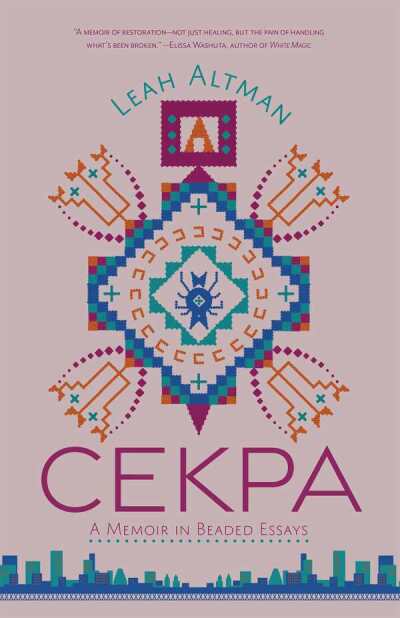
At work, I meet with a lot of non-Native funders. I work for a Native-led organization that amplifies Native voices along the Columbia River, and we work at the intersection of art, education, and environment. But a lot of the funders I work with want to put our work in one box. For example, they frequently ask me if we are an art organization or an education organization or an environmental organization. They want me to pick one label for our work. What I am always trying to explain is that Native cultures don’t separate our connection with the environment from our art or anything else we do. The land is always at the center of things, it’s where everything we are comes from. When I try to think of my connection to the land as separate from who I am as a person, it feels like my head is going to pop because I just can’t think that way. My brain won’t do it.
So if that’s what it means to be an Indigenous person or to “reclaim” my culture, I guess that’s how I would describe it. It’s that relational worldview, as opposed to a Western, linear one. And I was definitely raised in a Western worldview, but I’ve been immersed in a relational worldview for so long, I don’t think I could ever go back. But I do fall back on my strengths in linear thinking when I need to … like for deadlines. Linear thinking is very helpful for deadlines.
*****
Reviewer Kristen Rabe Interviews Michel Leboeuf, Author of Lost Songs of Nature: Nature’s Symphony in the Age of Noise Pollution
Your book is organized into symphonic movements—and your writing often refers to human music. What’s the link between musical compositions and the natural world? Does the practice of listening to music make us more attuned to the sounds of nature?
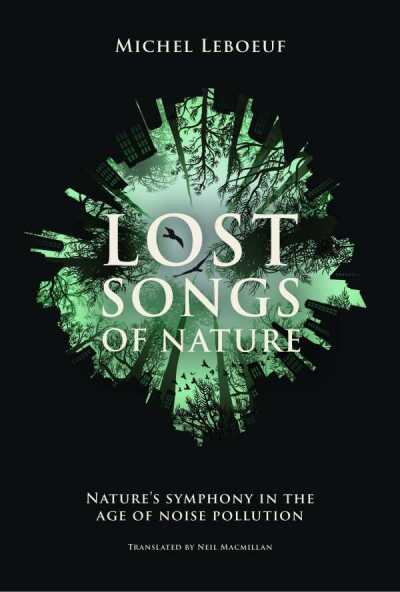
Absolutely! The ability to compose and enjoy listening to music comes from the depths of time, inspired by the sound environment of the natural world. The rhythm of the drum is that of life beating; and the breath of the flute comes to us from the thrushes.
*****
Reviewer Hannah Pearson Interviews Rob Hopkins, Author of How to Fall in Love with the Future: A Time Traveller’s Guide to Changing the World
Can you share a little about your most recent visit to the future? Was there something new that surprised you?
I travel there quite a lot as you can imagine. I think for me the thing that is always a surprise, or rather the thing that I never get bored of seeing, is the look in many peoples’ eyes in this future. I observe in many people this strong sense of “I think we might just do this.” It’s hard to imagine from where we are in 2025, but in the very near future, the one that resulted from our doing everything we could have possibly done, there is such a tangible collective sense of possibility and excitement. It’s not the finished article, of course, but it is a world that has changed direction, a world in which emissions have fallen sharply, in line with the Paris Agreement. It’s a world where a new economy is being built, one rooted in degrowth, fairness, and equality. It’s a world where people can see mental health improving, air quality increasing, and biodiversity bouncing back. It’s a world where people are doing more meaningful work, and that mental dissonance of feeding your family through a job you know is destroying your kids’ future is no longer one that people have to live with. It feels like the unclenching of a fist. I think it’s that look of anticipation, pride and curiosity that always surprises me because in 2025 it was so hard to imagine.
*****
Reviewer Kristen Rabe Interviews Priyanka Kumar, Author of The Light Between Apple Trees: Rediscovering the Wild Through a Beloved American Fruit
You note the importance to your family of experiencing “micro-wilderness” areas. What advice do you have for those interested in reconnecting with nature?
Sociologists caution that many of us are retreating too far into digital solitude. This phenomenon, underway right now, is changing how we interact with each other—and with nature. Human communities are fraying, and our relationship with nature has become impoverished. A recent study estimated that our connection to nature has declined by 60 percent over the last two hundred years. When we lose our personal connection to nature, we more easily overlook the loss of biodiversity among insect, bird, and tree communities—at our own peril.
On my hikes, I’ve found feral and historic apple trees in all kinds of unexpected places—the spaces between where we live and work and where nature and forests are circumscribed. I call these spaces the “micro-wild.” We can reap significant benefits from spending time there. I also encourage people to garden as though they are creating their very own micro-wild.
Apple trees have a magnetic power that can draw us back into nature. They come in magically diverse shapes, sizes, colors, and flesh. Some of the most entrancing orchards I researched—where I felt like Alice in Wonderland—were nestled against a forest. The same principles that lead to healthy orchards—biodiverse flora, living soil, and pollinator diversity—also make for healthy forests. So, orchards not only bring us physically closer to nature, but they also help us better understand our forests.
*****
Reviewer Carolina Ciucci Interviews Carry Somers, Author of The Nature of Fashion: A Botanical Story of Our Material Lives
You warn of the dangers of seeing nature as a resource separate from humanity, and offer perspectives from cultures who think otherwise, like the Guaraní. How do you think people could be encouraged to step away from this narrative they’ve been told?
We’ve been taught to see nature as separate—as a resource rather than a relationship. Even our name, human beings, suggests a static state. In The Nature of Fashion, I return again and again to the Guaraní concept of becoming instead of being. In their Amazonian home, they traditionally used the red seeds of achiote to mark their path through the forest: colour as a living map, guiding them toward an ever-unfolding future. Life was an ongoing act of transformation. And while we may not navigate by colour in the same physical way, we, too, rely on cues in the natural world to orient us. When those cues vanish—through deforestation, floods, or any other aspect of our changing climate—we lose a sense of who we are.
Ultimately, I hope this book is more than a history of how we transformed plants into cloth: it is a map towards our material future, one where plants are again revered as the very foundation of life—as they rightfully are. In a curious twist of etymology, the word map derives from the Latin mappa, meaning a signal cloth or flag. Just as a flag marks direction, the unfurling story of textiles offers clues to the paths we might choose tomorrow.
Encouraging people to step away from the old narrative begins with a different way of seeing, a map back home—not to a physical location, but to a new way of being. If we can revive that mindset, we can start to imagine fashion, and our place in the world, as part of this continual transformation. Becoming rather than being.
*****
Reviewer Peter Dabbene Interviews George Takei, Author of It Rhymes with Takei
One of the most moving and memorable scenes in It Rhymes With Takei is a visual metaphor that shows you coming out of the closet as gay at age sixty eight, but only after a lifetime of walking down the corridor that leads to that door. It’s much more truthful to many people’s experiences than a simpler visual metaphor that only shows the actual opening of a closet door. Can you take us through your thought process in creating this sequence?

By the time I’m thinking of coming out, I’ve gained some control over my life, but at the same time, I’m not prepared for the dramatic flood of changes that’s going to come. And so that long walk down the corridor is a very limited, dark space. It allows for some light to come in, and you get an idea of what’s beyond that corridor, but not the whole thing. And then you go a bit further and you add more exposure, and you get more light coming in and more knowledge, and then the final stepping through the door, which brings the whole flood coming in. And that whole flood is overwhelming.
You really hadn’t prepared for that much, and it takes a lot of adjustment and creative response to the flood of light. In the same way that when you have that bright California sunshine suddenly on your face, you have to make a physical adjustment.
*****
Reviewer pine breaks Interviews Arie Kaplan, Author of The Encyclopedia of Curious Rituals and Superstitions: Ancient and Remarkable Traditions that Will Captivate Your Mind
From the evil eye to the power of salt, some rituals appear globally in various forms. What do you think this cross-cultural commonality says about human nature?
I honestly think that it says that we—as people—are more alike than we are different. There are some things about human nature—certain fears, wants, needs, etc.—that almost every culture has in common. Because of that, some superstitions are pretty universal. Every culture has some variation on the vampire myth, for instance, and so most cultures have superstitions about vampires. Many cultures have superstitions involving salt. And hamsas are popular in both Judaism and Islam. Then there’s that superstition that if your hands itch, it means you’re about to come into money. That superstition (or at least, a variation of it) is popular in many different countries, such as Kenya, Nigeria, India, Russia, the US, and Turkey.
*****
Reviewer pine breaks Interviews Brian Jones, Author of Black History Is for Everyone
Was there a particular story or figure you uncovered in your research that stayed with you long after the book was finished or wanted to include but decided against, maybe because of it being too politically charged, for example?

Imagine being kidnapped and brought to an island where cruel people speaking a strange language and inhabiting a strange culture rule over you, you don’t speak the languages of people toiling alongside you, and you are all literally worked to an early death. I can’t get out of my mind the fact that the majority of people who overthrew slavery in the French colony of Saint Domingue and created a new nation, Ayiti (Haiti), were people from Africa who experienced both the kidnapping and the revolution in the lifetime of a single generation—captives who remembered their homelands, not the children or grandchildren of such captives.
Through fourteen years of war and revolution, they fought off the strongest European armies, forged a common language, religion and culture. They broke the wheel of Atlantic racialized slavery and established a new truth in the world, a model of freedom that struck fear in the hearts of enslavers and hope in the hearts of the enslaved. A single generation of Africans! It’s an incredible story, and everyone should know it.
Kathy Young


