

Book of the Day Roundup: March 9-13, 2026
The Shipikisha Club

Mubanga Kalimamukwento
Dzanc Books
Hardcover $27.95 (298pp)
978-1-938603-75-4
Buy: Local Bookstore (Bookshop)
A Zambian woman is prosecuted for murder in Mubanga Kalimamukwento’s gripping novel The Shipikisha Club.
After shooting her husband in self-defense, Sali faces the public fervor of a trial. Her teenage daughter and two young sons adjust to their mother’s scandalous imprisonment and the loss of their father.
Through alternating flashbacks, the book details Sali’s life as a jailed spectacle and reflects upon her more liberated past. As a young schoolteacher, she had an affair with an eminent, married cardiologist, Doc, whose sudden death left Sali grieving, pregnant, and overwhelmed. Realizing that her adulterous baby would evoke disapproval from others, she married Kasunga, an amiable police officer who agreed to accept Doc’s child as his own.
The book’s treatment of Sali and Kasunga’s relationship is complex: poignant moments of intimacy and happiness are contrasted with later infidelities, resentments, and violence. Sali’s wedding preparations center various ceremonial rites; she receives guidance that her husband’s well-being and raising a family should take precedence over her personal needs. After her marriage, she joins the “Shipikisha Club,” an informal society of wives named after the Zambian verb “to relentlessly endure.” Later, while in prison, beleaguered Sali is raped by an inmate who was arrested by her husband years ago; terrified of contracting HIV, she fears another vengeful assault.
Other characters face compelling shifts as well, with the perspectives of Sali’s mother, Peggy, and Ntashé, Sali’s daughter with Doc, included. Through them, Sali’s trial is depicted with suspenseful intensity; flawed yet appealing, she is both repentant and resistant as she struggles to avoid a fatal sentence from the biased justice system.
A strong-willed woman contends with patriarchal entrenchment following her husband’s death in the riveting, nuanced novel The Shipikisha Club.
MEG NOLA (February 27, 2026)
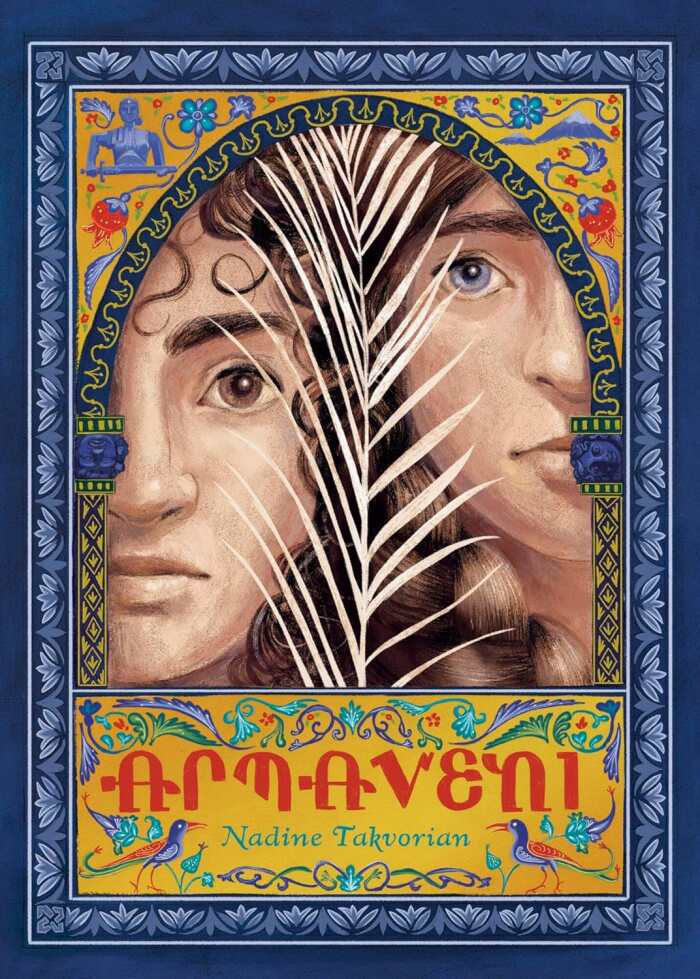
Armaveni
A Graphic Novel of the Armenian Genocide
Nadine Takvorian
Levine Querido
Hardcover $24.99 (344pp)
978-1-64614-636-9
Buy: Local Bookstore (Bookshop)
Nadine Takvorian’s devastating and important graphic memoir Armaveni unpacks the generational traumas left by the Armenian genocide.
A teenager in 2001, Nadine is desperate to learn about her family’s time in the Ottoman Empire. Her parents are resistant to her demands, knowing the emotional burdens of these tales; still, they relent. They reveal that Nadine’s grandmother, Armaveni, was sixteen in 1915; she lived and sang happily in Marsovan. Though the city was half Armenian, those citizens had no true protection from the racism, rapaciousness, and violence of Turkish forces. To save her life, Armaveni was married off to the miller—a man deemed “essential,” forced to convert, and thus spared from the firing squads.
Nadine is haunted by her grandmother’s story and by the stories of other relatives marched off into the desert to starve and be forgotten. She persuades her parents to let her and her brother join a church trip to Armenia, with a side trip to Turkey—where, she is warned, it is still not safe to speak Armenian. She visits the sites of her cultural past as well as memorials to the genocide. Turkey itself both feels like home and doesn’t: it is lovely and warm, but “underneath you never know what someone thinks.” A sense of latent, perpetual danger suffuses Nadine’s experiences there. Her mind roiling with new knowledge, she returns home with refreshed cultural pride—and the newfound courage to stand up to a duplicitous teacher’s erasure and lies.
Brilliant images of a phoenix run throughout Armaveni and Nadine’s tales. A symbol of Armenian resilience and memory, it rests in a nest of “flowers and honey and cinnamon” and connects Nadine to her ancestral past. Elsewhere, the illustrations, in their shades of violet, vivify unforgettable scenes as of a church burning with women and children inside and the righteous flashing of Nadine’s eyes.
Memorializing the Armenian genocide alongside its searing tale of family wounds and survival, Armaveni is an exemplary graphic memoir.
MICHELLE ANNE SCHINGLER (February 27, 2026)
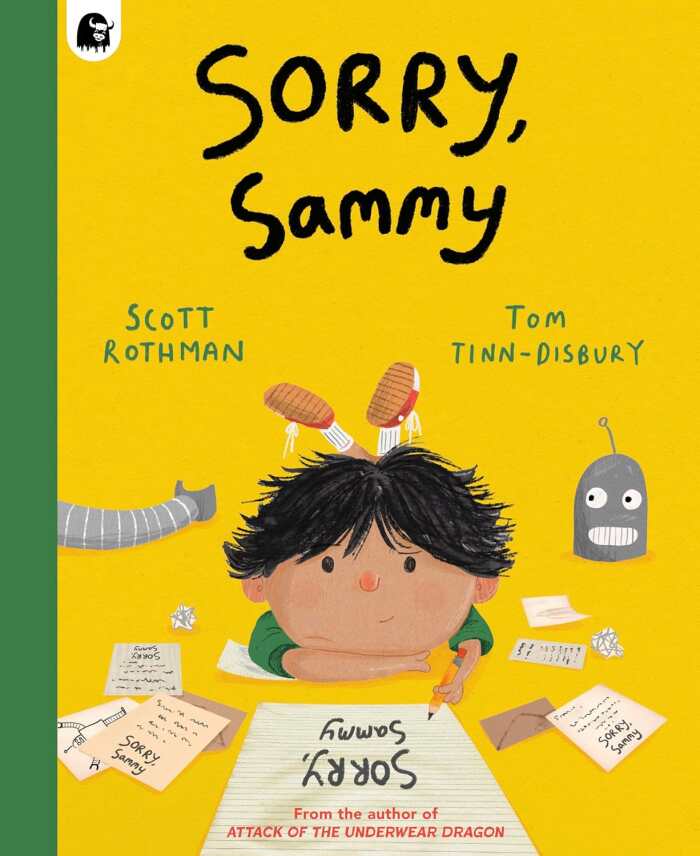
Sorry, Sammy
Scott Rothman
Tom Tinn-Disbury, illustrator
Happy Yak
Hardcover $18.99 (32pp)
978-0-7112-9891-0
Buy: Local Bookstore (Bookshop)
An amusing picture book written in epistolary form, this story covers an accidental robot invasion in reverse. Sammy’s intentions when building his robot were pure, which is why he resents his mother asking him to apologize to those whose help he solicited—and whose lives he impacted when he unleashed his creation on the world. Sammy cajoles, reasons, and prevaricates; elements of his inventive, creative personality (and truly sweet spirit) are revealed, though sincere apologies are delayed by his pride. The bright illustrations center the exasperated and befuddled expressions of the surrounding cast, driving home the book’s humor.
MICHELLE ANNE SCHINGLER (February 13, 2026)
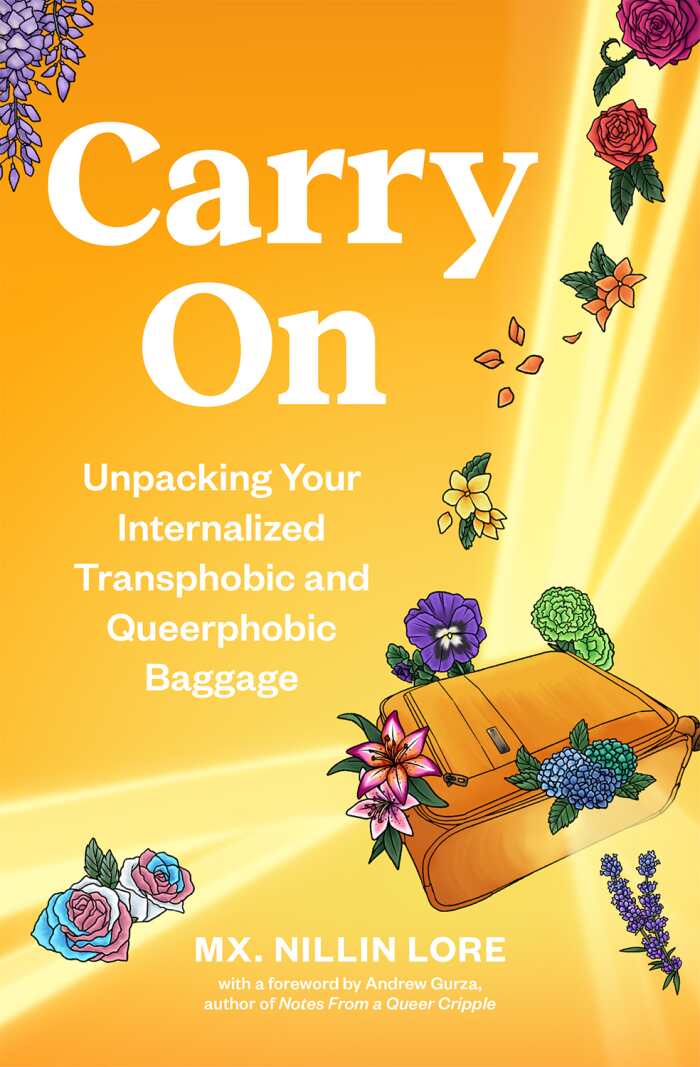
Carry On
Unpacking Your Internalized Transphobic and Queerphobic Baggage
Nillin Lore
Thornapple Press
Softcover $19.95 (264pp)
978-1-990869-82-2
Buy: Local Bookstore (Bookshop)
The warm and informative self-help book Carry On brims with supportive words for queer and trans people, drawing on scholarship, stories, and advice from activist Nillin Lore and others.
The book’s eight chapters cover leaving the closet, self-advocacy, finding community, and social issues including queerphobia, racism, disability, and lateral violence. Throughout, questions are asked to prompt introspection and nurture self-preparation. Topics including body positivity and stepping up against racism in queer communities are covered, alongside mentorship in the form of quotes from queer scholars and artists.
Inclusive of Indigenous stories, the book references award-winning author and artist John Brady McDonald, who is bisexual and Nehiyawak-Métis and survived residential schools. Its introduction to Two-Spirit people includes the perspectives of Tyler George, Two-Spirit Headperson of the Ochapowace Nation, and researcher Tiberius Fayant- McLeod, who is also Two-Spirit. And Lore includes moving personal anecdotes, as of the stress placed on them by family members and strangers, in addition to the triumphs of doing advocacy work, moving to the city, exploring their attractions, and finding their people and fashion sense.
Well-supported by references to American psychiatrist William Glasser and psychological resources, this informative resource includes a glossary of terms related to sexuality, psychology, and social justice. Further, though some of its passages are prefaced with trigger warnings, its work is joyful on the whole. It celebrates queer heroes in accessible, sometimes punchy language, and it notes that “Choosing to be affirming, welcoming, uplifting, inspiring and caring in the face of all the adversity that we experience is a true fucking power move.” It even closes with five final affirmations.
A compassionate self-help book, Carry On gathers advice from diverse role models on navigating contemporary queer life.
MEREDITH GRAHL COUNTS (February 27, 2026)
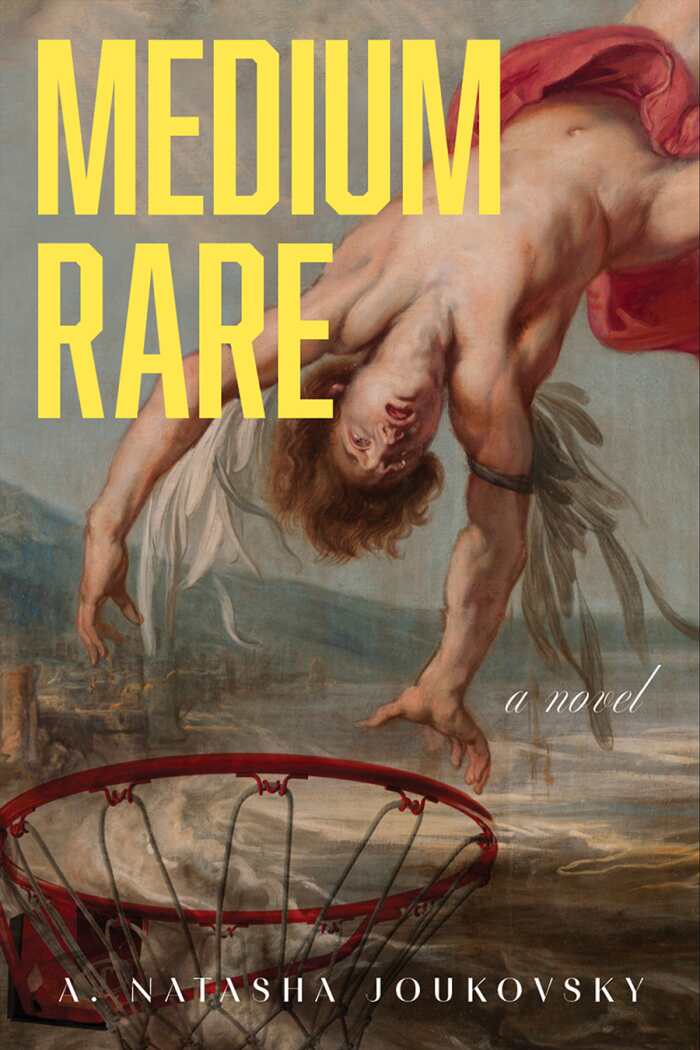
Medium Rare
A. Natasha Joukovsky
Melville House
Softcover $19.99 (304pp)
978-1-68589-247-0
Buy: Local Bookstore (Bookshop)
A. Natasha Joukovsky’s delicious, multilayered novel Medium Rare muses on contemporary American culture through an average man’s foray to unimagined heights.
Phil, a discontented lobbyist of middling employment, happens to predict a perfect NCAA bracket in the spring of 2019. The story follows his meteoric rise to fame due to the mathematical unlikelihood of such a feat and the lure of the billion-dollar prize offered by a technology CEO who experienced stratospheric success. Phil’s pregnant wife, Raleigh, is pulled along, as is Cassandra, who first met with Phil and Raleigh in college and reencountered them in Washington DC’s back-biting congressional social scene, which is defined by appearances and relative social hierarchies, and wherein perceptions are more important than reality.
Cassandra looks upon Phil and Raleigh with amusement and disdain until she realizes that their situation is a story worth telling. She recalls her own unheeded prophetic advice and is curious to witness whether her instincts prove accurate. Her narration relishes in foreshadowing events; her voice is sure and fluid, using playful language and liberal doses of satire, irony, and wry observations: “It was strictly vicarious drama I craved, but my actions were ultimately rendered in the service of maximizing it.” Through her, the absurdities of society and human nature are revealed.
The book’s pace varies well—accelerating via sentence fragments to reflect the action and excitement of moments like basketball games, and slowing to enhance the tension of interpersonal drama. Throughout, erudite references to mythology, literature, and art convey additional humor and insight.
A joyful satirical novel, Medium Rare follows an ordinary man’s experience of extraordinary success with nuance, wit, and deep appreciation for the arts of language and storytelling.
WENDY HINMAN (February 27, 2026)
Kathy Young


