

Book of the Day Roundup: January 19-23, 2026
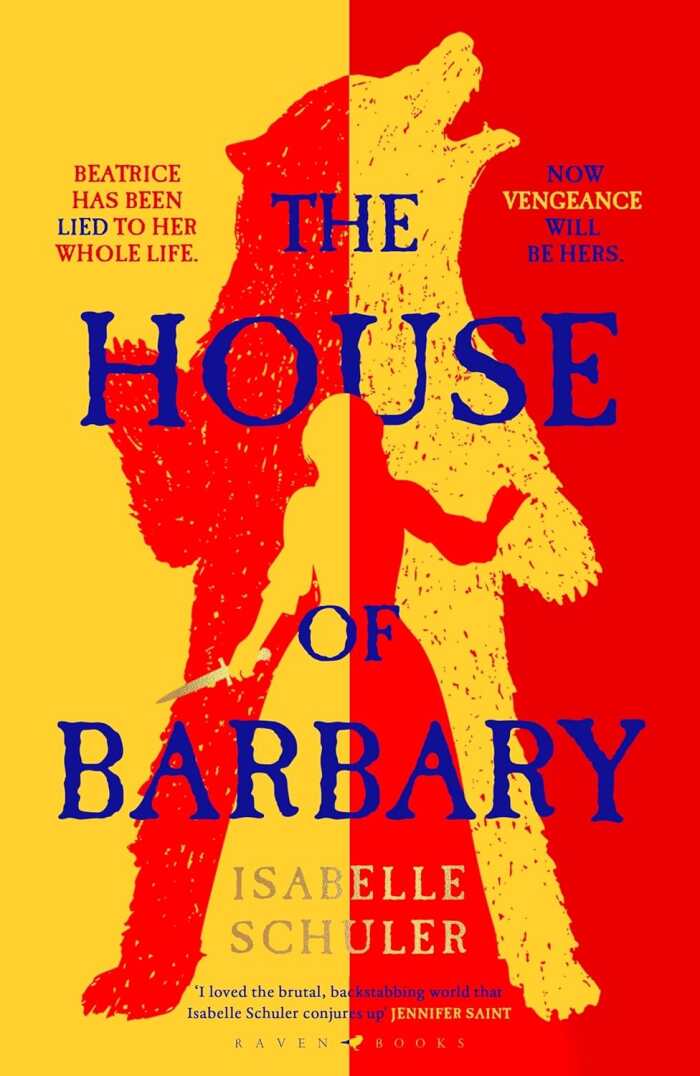
The House of Barbary
Isabelle Schuler
Raven Books
Hardcover $29.99 (368pp)
978-1-5266-4729-0
Buy: Local Bookstore (Bookshop)
A sheltered, orphaned heiress begins to question the secrets in her estate’s basement in Isabelle Schuler’s riveting mystery novel The House of Barbary.
Bern’s citizens marked Beatrice as strange in her childhood. Cut out of her deceased mother’s womb, she was raised apart from most of her neighbors. Her father indulged her curiosity to the point of overseeing her dissections, and he told her that she would never have to marry. By twenty, she was a formidable head-of-house. Or so she believed until her father, Bern’s feared mayor, was murdered in 1653, at a time of revolt.
With the powerful men whom her father protected closing ranks around her, Beatrice starts to ask dangerous questions. Unsure of whom she might trust, she turns to Johann, who painted her father’s portrait when she was young. Then naive, he did his best to think of his subjects in terms of “colour and shape an light and shadow” and to forget what he saw one night in the Barbary cellar. Still, he has keen memories of that season of bacchanalian release. Through his hesitant revelations and the disclosures of others, Beatrice learns about the murderous Order of St. Eve, led by influential local men.
Its cast made up of duplicitous beings, including the town’s violent leaders; Albrecht, once a hopeful for Beatrice’s hand, who finds his easy influence “incapacitating”; and the specter of Beatrice’s bold, charming mother Magdalenie, this is a captivating, feminist take on the legend of Bluebeard. Its mysteries roil around what those in positions of authority might do to command more power. Though their aspirations are supernatural, their methods prove vicious and banal. Determined Beatrice is the first woman in decades with a true chance at upending the Order of St. Eve—but even she has lessons to learn about the futility of seeking vengeance.
Initiated by a murder and leading to the undoing of corrupt men, The House of Barbary is an arresting novel that exposes those who prey on vulnerable women.
MICHELLE ANNE SCHINGLER (January 8, 2026)
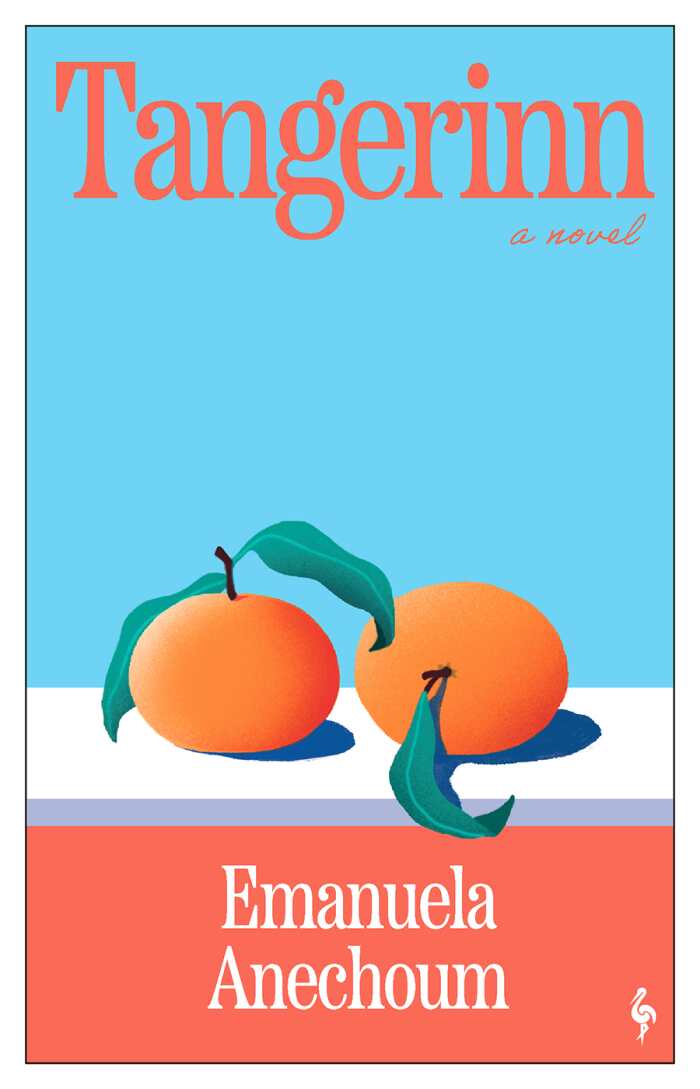
Tangerinn
Emanuela Anechoum
Lucy Rand
Europa Editions
Softcover $19.00 (256pp)
979-888966160-3
Buy: Local Bookstore (Bookshop)
In Emanuela Anechoum’s nuanced novel Tangerinn, a Londoner returns to her Calabrian hometown after her father’s death, seeking closure and emotional clarity.
Mina grew up in a “provincial mafia-run” town near the sea. Her mother is Italian; her Moroccan father, Omar, ran a local bar, Tangerinn. A welcoming place for other migrants, Tangerinn gave Omar the chance to recreate “the atmosphere” of his homeland, with plentiful offerings of tagine, koftas, and mint tea.
Now almost thirty, Mina has lived in London for several years. After learning that her father has died, she returns to Calabria, where she discovers that Omar left Tangerinn to her and her sister. As Mina grieves Omar’s passing, she finds herself struggling with remembered family and personal conflicts while reflecting upon her father’s life.
The book’s sensual yet exacting prose delves into Omar’s past, revealing how poverty and a lack of opportunity hindered his ambitions. Other intriguing characters enhance the narrative, including Mina’s diligent yet kindhearted sister, Aisha, and their fiercely political grandmother. Omar’s quirky uncle, Boubakar, resembles a “Moroccan John Lennon,” and Liz, Mina’s privileged London housemate, is detailed with skewering intensity: A white liberal “digital activist,” Liz cultivates select experiences to enhance her online presence and plans to have attractive “mixed-race” children with an aesthetically appropriate man.
As the intricacies of memory and heritage evolve into future possibilities, Mina contemplates her own sense of purpose and individuality. Her gradual emergence from an inner “tangle of arrogance and solitude” is consistent with her reserved yet acute personality. Though she inherited her father’s “darker” skin and rootless intensity, Mina realizes that her exile is self-imposed rather than driven by economic circumstance or geopolitical fate.
With burnished, penetrating eloquence, the novel Tangerinn explores the entwined complexities of cultural and personal identity.
MEG NOLA (December 18, 2025)
Time to Go, Sid!
A Picture Book
Isabel Greenberg
Abrams Books for Young Readers
Hardcover $18.99 (32pp)
978-1-4197-7109-5
Buy: Local Bookstore (Bookshop)
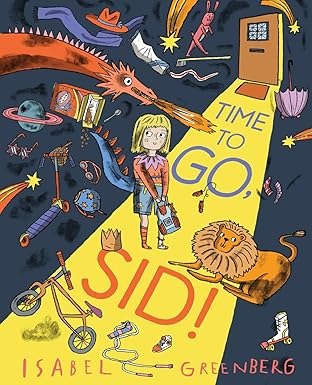
This sympathetic, energetic storybook-length graphic novel focuses on a bright hero with possible attention deficits: for Sid, getting out of the house is no easy feat. Though Sid is encouraged to get ready for the park, their efforts are impeded by the great ideas that arise in the process. Indeed, there are complications galore, including silly costumes and flights of fancy; they want to take all of their toys, and they have to go to the bathroom, too. The illustrations are flush with proof of Sid’s wide imagination, ensuring a fun adventure, whether or not they leave their front door.
MICHELLE ANNE SCHINGLER (December 18, 2025)
Peace in the West
The Rustic Luxury Interiors of William Peace
William Peace
Suzanna C. Hamilton, contributor
Gibbs Smith
Hardcover $65.00 (272pp)
978-1-4236-6938-8
Buy: Local Bookstore (Bookshop)
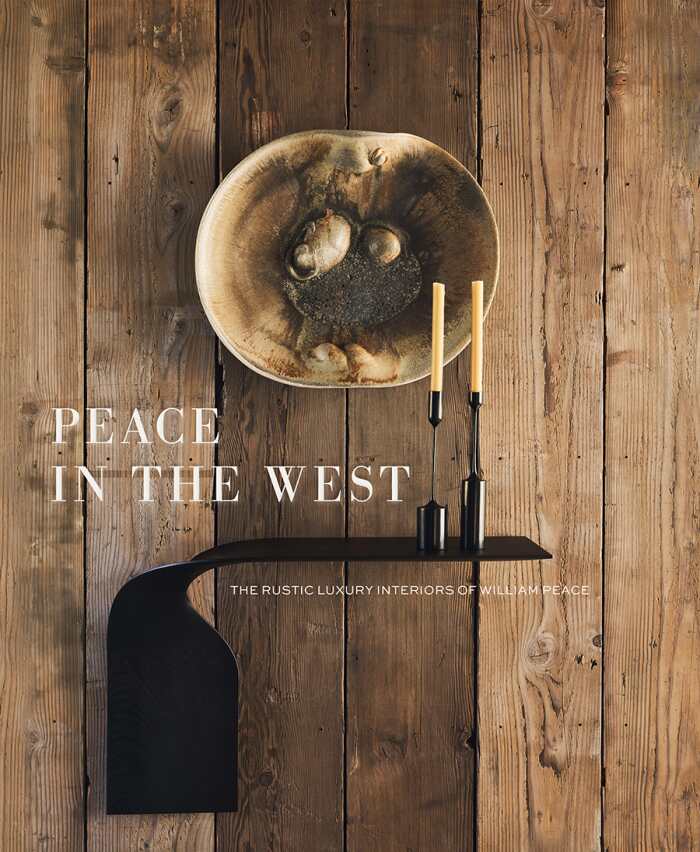
Stunning photography and thoughtful commentary highlight this tribute to interior designer William Peace, whose “rustic luxury” style reflects the history and landscapes of the West.
This beautiful book features ten of Peace’s interior design projects, with a focus on vacation homes and hunting lodges for wealthy clients. An iconic Montana steakhouse is also included. These luxurious spaces, often situated on remote acreage with spectacular mountain, forest, and water views, are honored with natural materials including reclaimed wood, moss rock, limestone, iron, and slate. Vaulted ceilings and expansive views are complemented by spots of comfortable warmth and intimacy. Carved antiques, bronze casts, Native American art, mounted animal trophies, and leather upholstery lend some a rugged, timeless quality.
Eras and styles are often juxtaposed: A porch on a secluded log home in Montana’s Gallatin Canyon, for instance, incorporates beamed walls, an elk antler rack, nineteenth-century Southern pottery, a vintage leather-and-wicker rocking chair, and a Navajo floor runner. Similarly, a ranch in the Texas hill country combines rustic and modern industrial styles; in the foyer, a brutalist console contrasts with an early twentieth-century giltwood chandelier, an abstract midcentury painting, and an ornate sixteenth-century Italian Renaissance table.
The integration of natural beauty with artistic interiors is consistent throughout. For each venture, the book explains, Peace studies the light and sight lines and considers the seasons, storms, and the animals that “might transit a property.” While the book focuses on a handful of exceptional homes, the designer’s creative principles—such as balancing shapes and textures, eclectic mixes of old and new, and mirroring the outdoors inside a home—are appealing for any home decorating project.
Peace in the West is a lush, fascinating designer’s retrospective featuring ten extraordinary properties and their rugged interior designs.
KRISTEN RABE (December 12, 2025)
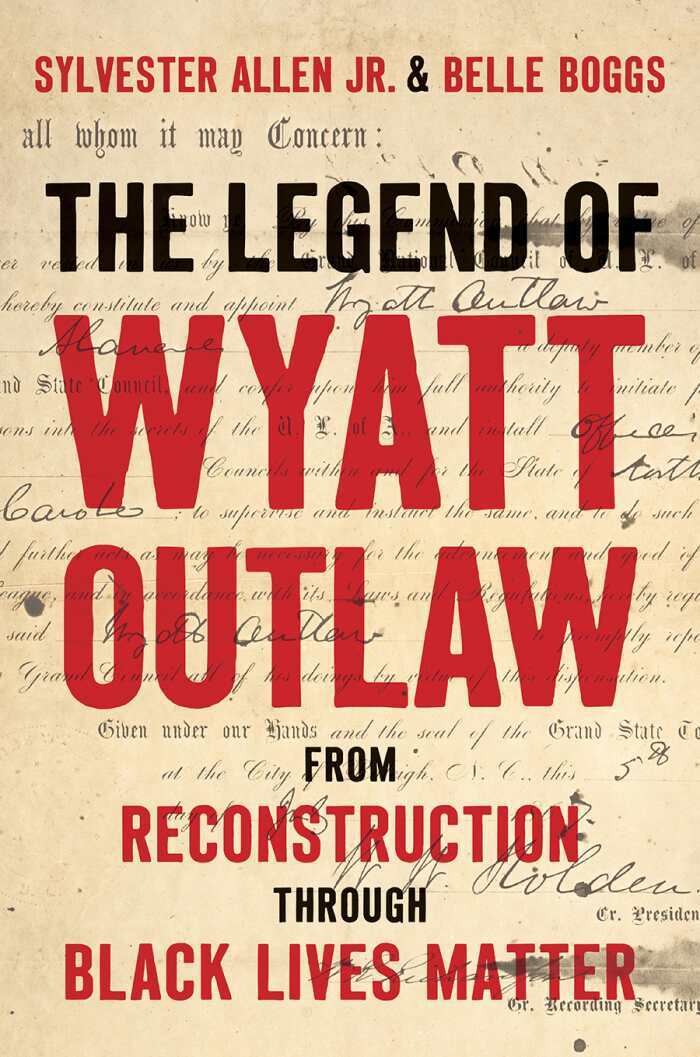
The Legend of Wyatt Outlaw
From Reconstruction through Black Lives Matter
Sylvester Allen Jr.
Belle Boggs
The University of North Carolina Press
Hardcover $30.00 (296pp)
978-1-4696-8999-9
Buy: Local Bookstore (Bookshop)
A murder in the Reconstruction-era South is excavated in Sylvester Allen Jr. and Belle Boggs’s history book The Legend of Wyatt Outlaw.
Following the conclusion of the Civil War, small-town citizens in places like Graham, North Carolina, struggled with the expansion of human rights and success stories for its Black citizens, including Wyatt Outlaw, a business owner and the town’s first Black constable. Tensions in Graham were pressurized by rampant Ku Klux Klan activities in the years following the war’s end, which led to Outlaw’s lynching by KKK members, a historic fact that is uncommemorated by any public designation.
Having for years walked by the site of Outlaw’s death without ever hearing about it, Boggs and Allen unpack why atrocities like Outlaw’s murder are buried beneath a century and a half of misinformation and erasure. They also explore the archetypes of their Southern upbringings in an effort to reconcile their dissatisfied experiences as Black US citizens. The book covers their research processes, too, telling Outlaw’s story and explaining why it remains almost unknown.
Writing separately in some chapters and together in others, Allen and Boggs share powerful, intimate commentary on the ways that truth is obscured and how history is written and remembered. Of particular and affecting note is the story’s framing of the racial temperature of Alamance County in the Reconstruction era, drawing a line all the way from the late nineteenth century to the racial justice protests of 2020 in the wake of the murder of George Floyd, among other injustices committed against Black people.
The Legend of Wyatt Outlaw is an enlightening history book about a lynching, contemporary racism, selective memory, and institutionalized impunity in the United States.
RYAN PRADO (December 18, 2025)
Kathy Young


